Showing posts with label Sci-Fi. Show all posts

Sunday, 12 April 2020

Alien: Covid-19 and Quarantine under Capitalism

Well, the times have certainly changed since my last article, which was basically a year ago.

I won't try recap everything that has happened in the past 11 months since it would be impossible considering we live in the cursed timeline where each week feels like a month but four months ago feels like only yesterday, but it is worth putting things into context for what I want to discuss. Therefore, I'll give a brief summary of the moment we are in.

Currently, we are facing a global pandemic due to Covid-19 with countries shutting down to stop the spread. This pandemic is putting the failures of neoliberalism in stark view for all to see, as free market capitalist governments ineffectively scramble to react within a system completely ill-prepare to respond to such crises.

A looming economic collapse is just on the horizon as the billionaire class hide away and governments look to give stimulus packages for big business instead of providing welfare for the working class and most vulnerable in society. To some it seems like the end of the world and we are all watching it unfold while under quarantine.

So naturally, this is the perfect time to talk about Ridley Scott's 1979 film, Alien.

A face only the corporate interests of capital could love.

Wait, what does a 41 year old horror sci-fi featuring an murderous alien killing off the crew on a spaceship have to do with a global pandemic and impending economic crisis? Oh, you sweet summer child. Far too much for comfort.

Horror has always been a genre that explicitly reflects and explores the anxieties of society. For instance, monsters are potent symbols for aspects of society, physical manifestations of our existential fears or societal concerns. We see this from vampires representing the liberal bourgeoisie elite to the social outcast. Similarly, zombies can symbols of relentless consumerism or the loss of agency, depending on how the film decides to use them or what message it wants to get across.

However, it isn't just the monsters in horror which can reflect our societal anxieties or comment on our political moment but also the narratives within horror. This can be obvious, such as the allegorical exploration of liberal racism in Get Out (2017), directed by Jordan Peele, or oblique, such as the critique of middle class anxiety and fear of the other in Us (2019), directed by Jordan Peele.

With Alien, the obvious connection is that the events of the film are literally about a quarantine break. The crew allows an infected person onto the ship which results in the death of all but one of the crew. To be specific, it's the Science Officer Ash who actually breaks quarantine but we'll get to him later, don't you worry.

In our current moment, self-isolating and maintaining quarantine is paramount to prevent the spread of Covid-19 and avoid the illness or death of our loved ones and neighbours.

I mean, she's not wrong.

"Okay, sure." you might say. "So, there's a broken quarantine in the film Alien which results in people dying, an important lesson for us to learn as we have to live in quarantine in real life but that's like one scene in the film. It's not like you can really extrapolate much more from the film to our current situation than that."

"And how does this relate to capitalism? You mentioned capitalism in your title. Did you forget? By the way, what does capitalism even have to do with the Covid-19 pandemic or quarantine, anyway?"

Thanks hypothetical reader asking the specific questions I'm about to answer. You're correct, one scene about not breaking quarantine is not really enough to connect Alien to the pandemic, aside from teaching us not to break quarantine. Luckily, I did not in fact forget about capitalism and actually have more to say about both it and the film.

Unfortunately, so many of us do forget about capitalism, and this is intentional. Capitalism affects all aspects of our lives to the point it is just invisible background white noise - as just the way things are and can only be. People do not question it or even think that any alternatives are viable.

"Can you hear that? For a second it sounded like the bourgeoisie exploiting the proletariat."

This is literally what Mark Fisher termed 'capitalist realism', the "widespread sense that not only is capitalism the only viable political and economic system, but also that it is now impossible even to imagine a coherent alternative to it". We have become so conditioned to seeing capitalism as the only way of doing things that we no longer question it or even see how it shapes our lives everyday.

Just like the "invisible hand" of the market, capitalism shapes our lives in seemingly arbitrary ways unless we understand the fundamental goal of capitalism is to accrue more capital by any means. Capitalism does not care about people, only profit.

This is particularly the case since neoliberalism has been the dominant ideology of the past 30-40 years, an ideology which sees privatization and free market capitalism as not only ideal but natural. Neoliberal capitalism is the extension of the "profit, not people" ethos to the extreme. It's literally the idea that society works best when it's run by the free market, despite literally all evidence to the contrary.

As this article by Organise Aotearoa outlines, "Under neoliberalism, austerity is everything. The existence of everything, often including human life, has to be justified in terms of cost-effectiveness, self-reliance, and interoperability with the rest of the system."

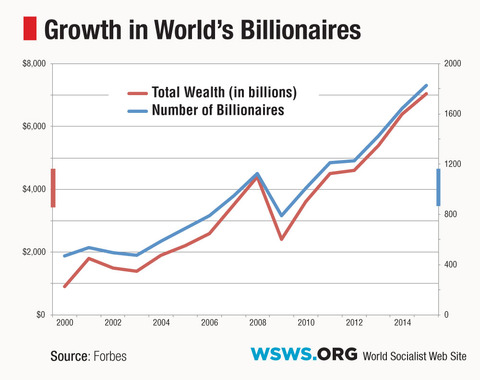
This is why wages have remain stagnant for the past 30 years despite the fact that productivity has increase exponentially, resulting in the Productivity-Pay Gap. It's why social benefits have been relentlessly cut due to austerity policies. It's why the gap between the rich and the poor has grown so insurmountably massive in recent decades. It's why, although the amount of billionaires has sky-rocketed, the working class still bear the brunt of taxes. That's neoliberalism, baby.

Left: Employer has $$$$$$ from which to pay the Worker.
Middle: Worker is paid $$ by Employer.
Right: Privatised Housing & Healthcare is charges the Worker $$.
Now, I'm no mathematician but I think this leaves the Worker with, uh, let's see... bugger all.

The above image comes from a neat video by Carlos Maza, which very simply and succinctly breaks down how neoliberal capitalism, specifically in the US, is uniquely unequipped to deal with crises such as the Covid-19 pandemic. I don't want to rehash his points here but suffice to say, it's hard to argue otherwise. I mean, have you looked at the world lately?

But what does all this have to do with Alien? Quite a lot actually or I wouldn't have brought it all up. The message from neoliberal governments in the face of this pandemic after only a few weeks of shutdown is "get back to work", to get things back to normal as soon as possible.

Even in Aotearoa New Zealand where I live, a country which has been praised for its response to the pandemic and has been under shutdown for nearly three weeks, there have been grumblings from some sectors that the shutdown has worked well enough and everyone should get back to work shortly in order to save the economy.

Bear in mind, we are supposed to be in shutdown and self-isolation for at least four weeks and they can barely handle a fortnight before wanting to risk people's safety and lives for the market.

Which brings us back to Science Officer Ash.

I told you I would get round to him. 

In Alien, Ash is revealed to be an android [spoilers for a movie from 1979, I guess] operating on secret orders from the Weyland-Yutani Corporation that his number one priority is to bring back the alien life-form and to consider the crew "expendable" in achieving this goal.

Put a pin in that for a moment.

Remember when I discussed how we tend to forget about capitalism since it's all around us? Well, that extends to class consciousness. We don't see each other as all belonging to a shared class but rather as isolated individuals operating within society. Which is ridiculous of course, class is a huge factor in the quality of our lives and our material conditions. But why am I talking about class?

Since we are conditioned not to think about class, most people don't really acknowledge that the crew of the Nostromo are working class folk doing a working class job. In space!

As the late great Roger Ebert said in his retrospective review of the film, "These are not adventurers but workers, hired by a company to return 20 million tons of ore to Earth." And he's right.

Ripley putting in the appropriate level of effort for a wage slavery job.

By the way, this is also why the Nostromo looks less high-tech than the ships in the prequel films Prometheus and Alien: Convenant - it's a bloody freighter, not a luxury cruiser. This tangent has no relevance to my argument but I thought I'd point it out. It just bugs me when people complain about the Nostromo being low tech in comparison as though this is a flaw in continuity, when they are comparing top of the line scientific vessels to what is basically an intergalactic truck.

Getting back on track, the fact we ignore the crew's class is kind of fascinating since the movie repeatedly hits you over the head with its awareness of class, specifically through the engineers Parker and Brett. Parker is forever trying to haggle better wages on behalf of Brett and himself, who, as the blue collar workers of the crew, have been stiffed on their contracts compared to their crew members.

However, although Parker "is vocal about his desires to be equal to the rest of the crew", as this article by Film School Rejects points out, "he is constantly shot down or ignored" due to his status as both a blue collar work and a black man.

The article goes on to state, "Within Scott’s examination of capitalistic power structures lies a critique on race as well and how those who are not white are even further exploited for their labor; Parker should work for less money and be happy about it."

"So, you're saying I should just accept racial oppression and capitalist exploitation?
Sounds like a crap deal to me. Can I talk to my union rep?"

Now, since we don't acknowledge the crew as working class people being exploited by the capitalist corporate elite, we tend to view them merely as individuals trying to survive a murderous alien. The problem with ignoring class is that it becomes easier to miss how they are all similarly exploited by the corporation which cares more about profit (procuring the Xenomorph) than people (the crew).

Let's take that out that pin now. As we know, the crew are viewed as expendable by the Weyland-Yutani Corporation. And who is the representative of this corporation? A soulless synthetic android. It couldn't be more on the nose if they tried.

Ash has been ordered by the corporation to bring back the Xenomorph at the expense of the crew, essentially to sacrifice the crew on the alter of capitalism. Remember, these are orders he cannot disobey since he is an android. He is merely a cog in the machine, the ideal worker under capitalism, and as such, he treats the human workers as beneath him.

The rest of the crew have value only when they are useful to achieving the mission. Once they are no longer useful, they are disposable. For instance, Kane's body is used up and broken in order to transport the alien fetus on board the ship. He is reduced to a vessel and once he has achieved his job, he is discarded.


Of course, I linked the chestburster scene. It's an article on Alien, I think it's contractually mandated that every discussion of Alien should include the chestbuster scene. Coincidentally, it's the capitalist bootlicker who prevents the working class hero from killing the alien. Funny that.

Now, let's contrast Ash's dispassionate and inhuman treatment of the crew with Ripley's reaction when she finds out what Ash's secret orders are. She is not only shocked and upset but angry and disbelieving. Her reaction is emotional, visceral and, well, human. I hope I making the point clear.

I would also say it is not insignificant that it is only when the surviving crew members, Parker, Lambert and Ripley, work together that they are able to decapitate Ash and learn the truth about how they have been exploited by the corporation. It's almost like they need to build solidarity or something...

So, how does all this relate to Covid-19? Well, just like the Weyland-Yutani Corporation and Ash, the conglomerates and politicians who serve them are saying that people should not only sacrifice themselves to save the economy but be happy to do so, as outlined in this Washington Post article.

"Let's get back to work, let's get back to living... and those of us who are 70 plus will take care of ourselves but don't sacrifice the country." - An actual Lieutenant Governor, and not a cartoon villain, apparently.  

The Trump administration has repeated downplayed the severity of the Covid-19 pandemic even as the US has the most cases of any country, with just over 500,000 confirmed cases at time of writing.

Not to mention, we have Republican senators like Richard Burr, who, after having being briefed about the impending pandemic in January, decide to sell off millions of dollars in stocks before the market dropped due to fears about the pandemic. He of course did this while simultaneously keeping his constituents in the dark about the scale of the threat.

Naturally, he is not the only one, as at least three other senators were caught in the act, including a Democrat Dianne Feinstein because liberals are also capitalist stooges and not immune to crass opportunism in the midst of a pandemic. A pandemic which will inevitably disproportionately impact the working class and poor they are supposed to represent. Of course, neither Barr or the other senators will face any genuine consequences, legal or otherwise, from the current system.

Just like Ash and the Weyland-Yutani Corporation, under neoliberal capitalism, politicians and multi-billion conglomerates will sacrifice us at a moments notice to maintain their capital. They will happily let us all be brutally murdered one by one by a perfect organism whose structural perfection is matched only by its hostility than sacrifice a penny of their profits.

This is the lesson that Alien teaches us in this time of quarantine under capitalism.

I hope it is one we heed and learn well.


P.S. After I finished writing this, I watched Thought Slime's "Top 5 Anti-Capitalist Horror Movies" video and they described the capitalist horror of the Weyland-Yutani Corporation in Alien far better and more succinctly that I do here. Typical. Give the video a watch by the way, it's great.


References:

Alien (1979) - Wikipedia

Alien (film) - Xenopedia

Covid-19 and the new era

The Productivity–Pay Gap

Growth in World's Billionaires

Coronavirus and the American death cult

Capitalist Realism: Is there no alternative?

Great Movies: Alien (1979)

In ‘Alien,’ Horror Comes In The Form of Labor Exploitation

A viral plea to let grandparents sacrifice themselves captures a truth about Trump

Republican senator urged to quit after report he sold stocks before Covid-19 market plunge

US senators accused of insider trading

Sunday, 26 August 2018

The Last Jedi Backlash - The Lost Art of Understanding Themes

It's been a while and a lot has happened and there are many things to discuss. So many things. But one thing I want to focus on is how a large number of people seem to fail to understand how to watch a film thematically.

And I really wish that people knew how to watch films and understood what a theme is. It honestly makes watching films more enjoyable and allows you to empathise with different points-of-view or experiences to your own. But I guess enjoying things is too hard or something?

I don't know where this failing occurred. Maybe it has something to do with the rise of nitpicky pseudo-film criticism such as YouTube channels like CinemaSins in the past half decade or maybe people only know how to watch films literally and not thematically.


This is literally something David Benioff said about Game of Thrones. Weird that someone adapting one of the most thematic rich fantasy series of all time would think that themes aren't important. 

First, let's define our terms. A theme is the main idea or underlying meaning of a text. It is the central topic a text examines. For example: If the topic of a text is loneliness, then the theme would be what the text says about loneliness. Furthermore, themes can be divided into two categories:
·        Thematic concept - what readers think the text is about
·        Thematic statement - what the text says about the topic

If you don't know what a film's theme is, you don't know what the film is about. Maybe it's time people learnt that films exist to tell us stories and communicate ideas through theme. Since the ideas that a film is trying to convey are far more important than whether or not things literally make sense in the world of the film

This is not to say that films get free reign to put whatever bullshit they want on screen and for us to just accept it because of the idea they are trying to convey. The world of a film still needs to exist and work within its own internal logic, as long as that internal logic is clearly established.

For example, Superman can fly because he's an alien. No more explanation is required or necessary. We don't need to know that his body converts the light of the sun into kinetic or propulsive energy. The audience learning the hows and whys of his ability to fly doesn't add anything of value to the character. He flies because he's Superman and Superman can fly.

Image result for superman flying
He's an alien and a superhero. That's how.

However, I think another problem linked to this literal watching of film is that people often think not liking a movie means it is therefore bad and poorly made. Since if a film doesn't fit this narrow view of what you think films should be, then its a failure and "just bad writing", right?

The fact that few people seem to be able to articulate what they mean by "bad writing" says more about how we fail to watch films then about writing of the film itself.

For example, let's talk The Last Jedi. I know so much has been said about The Last Jedi that at this point I'm just adding to the ceaseless cacophony of the void but here we are.

Firstly, The Last Jedi is a competently made film. It simply is. The visuals look great, the editing is fluid, it's a well-directed and the story addresses a number of interesting themes that challenges our expectations of what a Star Wars movie can or should be.

Not to mention that each character in the trio of Rey, Poe, and Finn has an arc and is positioned between two other characters' worldviews (Rey: Luke and Kylo, Poe: Leia and Holdo, Finn: Rose and DJ), and that is just great storytelling and narrative structure.

Wow, it's almost like the guy who wrote this knew how to structure narrative and set up character arcs or something.
Now, you can argue on how successful it was in its execution of these themes and whether or not the narrative or character arcs landed for you but it is a well-made film.

Because here's the thing, you can dislike something and still recognise it was good. Just as you can love something while acknowledging it has flaws. Things are rarely perfect and nothing is going to please everyone, regardless of how well-made it is or what ideas it is trying to convey.

And that's okay. Citizen Kane is a fantastic film that deserves its reputation as a masterpiece due to its innovation in storytelling and technique and place in cinema history. It also fails to move me or make me care. This does not diminish its status as well-crafted and design film. It just means I don't like it.

Unfortunately, some people, especially fanboys, can't seem to think critically about movies. They can only criticise, which is not the same thing. Which is odd reaction towards something you claim to love but I digress.

As per the ever eloquent Film Crit Hulk, "It is downright impossible for them to think the storytelling of the film is on-point as hell, all because it does not reflect their emotional experience of watching it". It doesn't matter that the film is well-made on a technical or narrative level, their emotional response to it renders it moot. They didn't like how they felt watching it, therefore, it was badly made.

I think part of it is because of that side of fandom which claims ownership over the content they love. Since they tie the content so closely to their own sense of identity that Star Wars becomes a 'part of who they are', not a franchise owned by Disney or a movie directed by Rian Johnson. It's THEIRS.

So if they don't like a Star Wars film, the filmmakers have failed them because they are not catering to their sense of self. Because if you can't relate to the content you defined your identity by, then who are you? If the character you identify with is shown to be wrong or mistaken, what does that say about you? Case in point: "Why didn't Holdo tell Poe [me] her plan? This is bullshit!". This is why they get so angry, any subversion of expectation or familiarity feels like a betrayal.

"What?! They made Luke grumpy and drink green milk instead of blue! How could they ruin the franchise like this?!." 

On a side note, this why I have a problem with people who defined their identity by the pop culture they consume. Art should supplement and enrich your sense of self, not BE your sense of self.

Now please don't misunderstand me, I am not saying you shouldn't be proud of what you like or celebrate your nerdiness or geeky interests. We are all in part shaped and identified by the content we consume and love.

And I love Star Wars. My childhood favourite movie was Return of the Jedi. My favourite movie for most of my twenties was A New Hope. However, I always recognised that Empire Strikes Back was a far better film, in terms of story-telling, the development of character, and deepening the mythology of The Force. It simply is a better film.

I only had a stronger emotional reaction to A New Hope but this did not make A New Hope a better film in my eyes. It was just the one that made me happy watching since it suited my sensibilities more than Empire (that said I love Empire so very much).

I will never stop laughing myself silly at this bickering couple.
This scene simply makes me feel things.

Let's circle back to themes and The Last Jedi. So what are its themes? What is it trying to say. Well, lucky for us the film wears its themes on its chest and often states them loud and proud.

Luke Skywalker tells Rey that "This isn't going to go the way you think" (not fall victim to our expectations), Yoda wisely impacts to Luke that "Failure, the greatest teacher is" (the importance of failure and what we learn from it), and Rose informs Finn that "That's how we're gonna win. Not fighting what we hate. Saving what we love" (love is how you win the war, not hate). Even the Kylo Ren's one from the trailer about "Letting the past die" (letting go of those things in your past which are preventing you from moving forward").

So it's odd that so many people often critic aspects of the story even though they are entirely in line with the themes that the film is trying to explore. "Canto was a waste of time, it didn't even work" is a criticism I've seen repeatedly. And it makes no sense to me since of course it was a waste of time, that was the point. It's what they learnt from their failure that was important.

It's Poe learning that he can't keep going through this war as a hothead when he has people under his command who depend on him. That it is better to fail and lose the battle in order to save your people and continue the war than it is to sacrifice their lives just to win.

And I know some of you weren't on board with Rose's and thought it was stupid. Well, not only was it not stupid, it's been a significant theme for all of Star Wars as this thread succinctly articulates.

I'm not going to rehash what she says in the thread but will just pose this question: how is Rose's line not directly in line thematically with Luke's refusal to kill Vader in anger at the end of Return of the Jedi? Luke's refusal to give in to anger and hate leads to Vader's redemption, it's kinda the thematic climax of the original trilogy.

It also is the thing that distinguishes the good guys from the bad guys in Star Wars. The Empire or First Order are fascists, using their power to destroy those they hate. Literally, the thing that turns Anakin Skywalker into Darth Vader in the first place is losing himself in anger and then hate.

It's like you win by saving the ones you love, not by fighting those you hate or something.

And this is the thing when people don't watch films thematically, they criticise without considering context, being uncharitable to the material and the story. If you only watch films literally and in terms of plot, being only concerned with what events happen, you are missing what the movie is about.

Which is fine, I guess, if you don't want to allow movies to move you or get you to think about things differently to how you did before. There are many films which have strong plots but are boring as hell since their characters are just devices to move the plot along and they don't say anything.

And I don't know. Maybe that's a good thing. Probably not, since it fosters an environment where plot is more important than character, where a film's ideas are less important than whether or not it satisfied a fan theory or expectation. And that seems like a bad time.

I'd rather enjoy films, allowing them to take me on a journey and explore their themes with them. But that's just me.


Note: There is so much more I could say, especially about The Last Jedi. I only watched it twice in theatres but it has resonated so much with me that I could talk about it forever. If I didn't get round to your specific nitpick, sorry about that. Maybe next time. 

Friday, 26 August 2016

007 Lazenby & Dalton: Licence to Bond

When one thinks of James Bond, they think of Sean Connery or Roger Moore, the men who played him the longest. If they are of a certain age, they might think of Pierce Brosnan. Of course, Daniel Craig may also come to mind as the most recent Bond.

Very few think of George Lazenby or Timothy Dalton.

Both took over Bond from actors who had extensive runs on the character and had defined him for a generation. Both were criticised in comparison to the actor who came before, their films were forgotten or considered missteps without the 'proper' James Bond, namely Connery or Moore.

It's a little telling that this is the third image when I did a Google search for "james bond actors".

My point is that Lazenby and Dalton are often forgotten where James Bond is concerned. To be fair, there are only three films between them, perhaps not enough to leave an impression. I know I had never seen any of Datlon's films before, although I had seen snippets of Lazenby as Bond on television. So, are their films deserving of their maligned status?

Let's begin with George Lazenby. Charged with the near insurmountable task of following Sean Connery, Lazenby is... fine. There's nothing exactly wrong with him but he's not particularly good. I heard that he was predominantly a model at the time, which makes sense since the man looks like Bond. Too bad his acting doesn't match his looks but maybe we should discuss his sole outing as 007.

On Her Majesty's Secret Service is an amazing Bond film. Or rather there is an amazing Bond film within On Her Majesty's Secret Service because it is a film that is begging for a re-edit. The pacing is a bit mixed and needs some trimming in places. There are some great scenes but they don't quite come together as well as they could have with more time in the editing room.

For example, the masturbation scene was great but it really did slow down the plot.

The movie is long. At an hour and 22 minutes, it's one of the longest Bond films. While it doesn't drag exactly, there are at least 20 minutes that could have been cut to tighten it up. On Her Majesy's Secret Service has some highly watchable scenes which are quite engrossing but the transition between those scenes is a bit off and not as smooth as it should be.

Similarly, on a narrative level, the focus is split unevenly between the romantic plot and the villain plot, causing both to suffer and feel a little half-baked. We start with the romantic plot which then just stops for a good forty minutes or so while Bond is investigating the big bad, Blofeld in Switzerland before it's picked up again.

Because why would we want more of this?

Which is a shame since Contessa Teresa di Vicenzo, a.k.a Tracy, is wonderfully brought to life by Dianna Rigg. She does suffer from Rich White Problems, namely boredom and a desire to act out against the patriarchal paternal control of her father, but she's a capable woman and shown to be Bond's equal as a romantic partner. However, just read how Wikipedia sums up the plot,
In the film Bond faces Blofeld, who is planning to sterilise the world's food supply through a group of brainwashed "angels of death", unless his demands are met for an international amnesty for his previous crimes, recognition of his title as the Count De Bleuchamp (the French form of Blofeld), and to be allowed to retire into private life. Along the way Bond meets, falls in love with, and eventually marries Contessa Teresa di Vicenzo.
He falls in love and eventually marries her "Along the way"? Like an afterthought? Believe me, Tracy Bond is no afterthought. This is the woman who ensnares James Bond's heart. James Bond, the man who sleeps with every woman he meets, is captivated by Tracy. And watching her poise and assertive confidence, it's not hard to see why.

"I'm so captivated by your her poise and assertive confidence." - Bond, probably

It's clear that with On Her Majesty's Secret Service that they were trying to go for something a little different than the established Bond formula with Connery, although at times it feels as though they decided to rein it in instead of fully embracing the changes.

For example, the theme song is an instrumental. An amazing instrumental using Moog synthesiser bassline and a flourish of staccato strings, it is everything a great Bond theme should be. But opening with an instrumental was a break from the previous three films' opening songs and it was a different take on what a Bond theme could be.

But this originality or desire to break with Bond tradition is undercut by the opening credits sequence itself which shows clips of previous James Bond films in the background. It's almost like they were saying, "here is something new but don't be afraid, it's just the same as always". Despite that hesitation to complete embrace change, the credit sequence is one of the best.


Which could be said for the film as a whole. There are some truly great moments in On Her Majesty's Secret Service that rank with the best that Bond has to offer. While there is nothing truly bad in a cinematic sense, there are plot issues in terms of pacing and Bond's trademark sexism and racism is on display, although only really during the scenes in Blofeld's allergy-research institute.

Blofeld has gathered a number of allergy-riddled women to be his "angels of death", brainwashed sleeper agents who will unleash his deadly virus or whatever on the world's food supply. So, naturally Bond has to sleep with them for information, although his cover is supposed to be gay.

He first sleeps with one girl, after saying he isn't usually attracted to girls but she's different, gets the info he needs and then leaves to find another girl waiting in his room. Of course, he proceeds to sleep with her, after saying he isn't usually attracted to girls but she's different!

Goddammit, James! Have some class, don't repeat what you said to one girl to another. That's not only gross in a dishonest way but just lazy. You should be better than that. You're the best spy in the world, surely you could think of something else flirtatious and seductive to say.

Moving on, there is, of course, the racism.


In case you didn't watch the video, that is a dinner scene where the women suffering from food allergies are eating the food that they were allergic to. I started the video at the point where the Asian lady is eating rice, which isn't so bad on it's own since that isn't a completely terrible assumption, if a somewhat lazy stereotype. But then it is followed by the African woman eating a banana.

A banana. And that's her entire meal, a banana. I'm sorry but even including all the blaxploitation that run rampant in Live and Let Die, this might be the most blatant example of racism in a Bond film.

The sad history of people of African descent being described as ape or monkey-like in a derogatory way is too well-known for this not to be anything more than institutionalised racism. At least the moment was blink and you miss it but still, come on.

But what did I think about George Lazenby as James Bond? Like I said he was fine. An average Bond in a great Bond film. There are scenes in here that are begging for an actor with serious chops like Daniel Craig to breathe them into life. Lazenby does his best but somebody does it better.

But he did inspire Austin Power's wardrobe which was a gift few greater than we could have ever known.
Never forget.

And so we come to Timothy Dalton.

Unlike Lazenby, I had never seen anything of Dalton's James Bond, not even passing glimpses on the TV so I didn't really know what to expect. I did hear that his Bond was supposed to be quite dark but I hadn't seen him in action.

Well, I loved The Living Daylights. Seriously. I thought it was great. And coming off the heals of the glorious mess of a film that was A View to a Kill, it must have felt like a breath of fresh air. This was a Bond who was serious. Just was as dangerous as he was dashingly good looking.

I had heard criticisms that Dalton's Bond is considered a bit too dry and boring but I don't see it. Maybe it was a hangover from Moore's light-hearted take on the character at the time, which became just what everyone had come to expect from James Bond? I dunno.

However, I really liked Dalton's more downplayed, and yes dryer, take on Bond. To be fair, he still drops some great lines, but with a deadpan sigh instead of a raised eyebrow. For example, I love the deadpan reply to Kara's declaration they're free after he knocks out the guards,

Kara: "You were fantastic – we're free!"
Bond: "Kara, we're inside a Russian air base in the middle of Afghanistan."

One highly pleasing change was that Dalton's Bond was respectful to women, or at least not anywhere as sexist as his predecessors. Perhaps it was because his two late 1980s films were set in a post-AIDS crisis world but this was a monogamous James Bond.

Over the course of both The Living Daylights and Licence to Kill, he sleeps with just four women. In contrast, in his first two films, Moore's Bond slept with six women. Also, the context is different. In The Living Daylights, he sleeps with a woman pre-credits but spends the rest of the film courting and wooing Kara.

Let's discuss Kara, played by the delightful Maryam d'Abo. I have a real soft spot for her, not least because she shares her name with the lead female protagonist in my online science fiction comedy serial novel. A Russian cellist who is unwittingly caught in political espionage, she's used as a pawn by both sides.

First, she is asked to pretend to be a sniper to sell the fake defection of the KGB officer General Georgi Koskov, then later by Bond himself, who pretends to be Koskov's friend to gain her trust, as a lead to find Koskov.

However over the course of the film, Bond starts to feel for her, perhaps drawn to her wholesome sweetness and buoyant optimism. She is really sweet, like a true cinnamon roll. While it's a bit condescending how she is treated as a dupe for a large chunk of the film by the final act, she's more than shown her worth.

Just look how sweet she is!

Unlike more badass Bond girls, she is not James Bond's equal. She's not a fellow spy or double agent, she's an innocent cellist wrapped up things she can't truly comprehend. She's not as smart as him and unable to spar wits like Vesper Lynd or even Tracy did. She's also too naive and trusting, not really what most people think of when they think of a 'strong' woman.

However, this is what endures her to me. Despite not being that 'strong' in the sense of being a dangerous physical fighter or tactical/intellectual genius, she is far braver than she has any right to be as a simple cellist and helps Bond as best she can. Furthermore, although she was betrayed by Koskov, she never loses that spark of sweetness which is her real strength.

When Bond is trapped on the truck with the cocaine and the bomb that is going to use to blow up the shipment, it is Kara who leads the charge on the Soviet camp, not the leader of the Afghan rebels. Grabbing a gun (which she has probably never held before) and galloping on her horse after him causing the Afghan rebel fighters to follow because "Women," amiright?

I really believe her relationship with Bond too despite the short amount of time. Even she herself comments that it's only been two days and she is starting to develop feelings for him, yet is feels believable. And he in turn seems to develop a real fondness for her that extends beyond just wanting to sleep with her and be on his merry way.

All of which was a nice change from Connery and Moore womanizing and was something hinted at previously with Lazenby, and then later picked up with with Craig's Bond and Vesper.

What can I say? This Bond was a music lover.

And what about the villains? Well, Koskov is played to comic perfection by Jeroen Krabbé who just toes the line that prevents him from going over-the-top. At first I didn't know what to make of his performance but once you realised what he was trying to do, it makes sense. Especially when you find out his character is himself putting on a performance during his fake defection.

The less said about Brad Whitaker though, the better. An arms dealer with delusions of military grandeur, he's a bit of an annoying blowhard. He's also on the periphery for much of the film and the climax suffers from the confrontation scene between Bond and Whitaker since it feels superfluous.

Also, Necros is a great henchman in the grand tradition of blonde blue-eyed Aryan musclemen who pose a menacing threat, both physically and as a spy, a trend which started with From Russia With Love's Red Grant.

The plot starts off promisingly and straight-forward but gets unnecessarily convoluted, particularly in the final act where who is doing what for whom and why becomes increasingly difficult to parse out. And while Dalton's Bond was supposed to be more realistic than Moore's, this is a film where Bond's car has a laser which cuts another car in half so there's that.

However, despite those quibbles The Living Daylights is an highly enjoyable Bond film and Dalton is great in the role. But then we come to Licence to Kill.

"Did I do something wrong?"

Licence to Kill is not a good film, especially following The Living Daylights. Most of it feels like action B-movie and the plot is a complete mess. It's also really dark and almost gratuitously so for a Bond film. Before the opening credits the villain gets his henchmen to rip out the heart of man who cheats with his girlfriend and he beats her with this heavy whip rope thing. It's kinda uncomfortable.

There is also some terrible acting. I don't often comment on the acting in Bond films aside from the villains, female leads and whoever is playing Bond himself but the extras in Licence to Kill are something else. They are all sound like they're in different movies and I have no idea what they are trying to emote.

For example, Della is Felix Leiter's bride. Felix has always been James Bond's CIA counterpart and a good friend. But Della looks at Bond like she's in love with him and their interaction seems more than a dude and his friend's wife or even just friends. And I'm not sure if that was intentional or not.

Felix may have his arm around her but she only has eyes for Bond.

However, despite that the film has a lot of things going for it. This is the Bond film with the pre-credits scene which inspired the awesome plan stealing another plan in mid-air scene in The Dark Knight Rises after all.

For one thing it has Franz Sanchez, the most powerful drug lord in Latin America and one of the great Bond villains, played to menacing perfection by Robert Davi. Specialising in playing bad guys for most of his career, Davi gives Sanchez a real presence and weight. He feels ruthless. As Max Williams notes,
Yet no villain matches Sanchez for menace. If he uncovered Bond, he would kill Bond. Simple as that. Not quite ‘why don’t you just shoot him’ because Sanchez wouldn’t just shoot him. He’d exact a far nastier retribution. But exact it he would. No locking Bond in a windowed room, no escorting Bond round the pad and feeding him dinner, no leaving Bond in a perilous situation and then departing for tea. If Sanchez wanted Bond dead, Bond would be killed. Thoroughly. Such ruthlessness is refreshing and admirable on the writers’ behalf.
On an unrelated note, Davi is a classically trained opera singer with a gorgeous baritone voice and now spends his time performing versions of Frank Sinatra songs like "Summer Wind".


And while the plot is all over the place, I like that the scope is smaller, focusing on a simple revenge plot and drug trafficking rather than world domination. Oh, yeah I forgot to mention that Bond goes rogue to take Sanchez down since he fed Felix to a shark. Felix was okay though, just lost a leg and an arm. Sanchez also killed Della which might had something to do with it.

It's just too bad that the film comes across more like a B-movie than a first rate action flick since all the right elements are there and the best parts of this film can rival the best parts of any James Bond film. Oh well. I would say better luck next time but this was Dalton's last outing as Bond.

So what do I have to say about Dalton's Bond having seen his two films? I really liked him. Far more than I expected to since I heard how dour and dark his Bond was supposed to be. I suppose his Bond's reputation preceeded him but I honestly think he is a far greater Bond than he gets credit for.

And that's that. Mission over. Thanks for joining me for the second installment of James Bond month. I had a lot of fun watching these movies for the first time and seeing what Moore, Lazenby, and Dalton each brought to the character.


Time now for an hiatus to recharge but Musings From Another Star will return.


References:

On Her Majesty's Secret Service (film) Wikipedia page

James Bonding #0012: On Her Majesty's Secret Service with Paul Scheer

The Living Daylights Wikipedia page

James Bonding #0023: The Living Daylights with Cole Stratton

My favourite Bond film: The Living Daylights - The Guardian

Licence to Kill Wikipedia page

James Bonding #0019: Licence to Kill with Amanda Lund and Maria Blasucci

James Bond 007: Revisiting Licence to Kill - Den of Geek


Friday, 19 August 2016

007 Roger Moore Part Three: A View to a Bond

Well, we made it. The last of Roger Moore's James Bond. It took some time but we're here. It surely was a ride with a number of ups and downs, thrilling adventure and hilarious camp, with some blatant misogyny and unfortunate racism thrown in the mix too.

I'll do a wrap up at the end but just up top, I'd like to say that I've enjoyed watching Moore's Bond but I'm glad this is done and we can move on. That said, heading seven films in a franchise is an impressive feat and kudos to him for sticking in for as long as he did.

"Why, thank you."

Alright, let's get on with it and see what Moore had to offer with his final two Bond missions. Right off the bat, 1983's Octopussy has to be one of the most awkward title Bond films (although A View to a Kill is quite ungainly grammatically but we'll get there). It's a title that can't help but make you laugh a little at. I understand that it apparently was a legit title of one of Ian Fleming's short stories but that doesn't make it any better.

The only I knew or recalled about this film was once catching it on TV during the scene where the bad guy Kamal Khan is trying to placate Octopussy and keeps repeating her name in a reassuring manner. The actor is trying his best but her name is so silly, it was completely hilarious to me.

It's no wonder Rita Coolidge's theme song is called "All Time High" and doesn't mention the word 'Octopussy' at all. Also, not many words make a perfect rhyme with Octopussy so maybe that was a consideration. While we're talking about the theme song, it's okay I guess. A pleasant slow ballad, it's just a bit forgettable and sleepy sounding.


Aside from its unfortunate title, what else can be said about Octopussy? Well, the plot makes absolutely no sense, even considering this is a Bond film. I usually stop paying attention to the plot of these movies around the half hour to 45 minute mark but I didn't even try with this one.

In short, MI6 discover a fake Fabergé egg but the bad guys need to get the real egg which they were going to sell back to the Soviet gallery they took it from so no realises it's missing, or possibly they want the fake one? It's not clear but this is all part of some jewel smuggling enterprise to finance a rogue Soviet Union general's mad plan to start an invasion into Europe by tank division.

However, he will only lead the invasion only after first causing an explosion on an American army base in Germany which will look like one of the American nuclear bombs went off accidentally, naturally leading to the disarmament of nuclear weapons across Europe because reasons.

Oh, there's also a travelling circus in there somewhere and a couple of trips to India.

"You serious with this shit?"

I never really know why Bond is ever doing anything or what his mission actually is, sometimes he's just in places randomly that happen to be where the bad guys are, but I kinda just tuned out with this one and simply enjoyed the flashing lights and terrible puns.
Because this is a fun movie. And probably the movie which is most "Roger Moore" of the Moore era of Bond films. This isn't to say this is the best Roger Moore Bond movie, personally I would go with The Spy Who Loved Me, but rather it is the film which best highlights what Moore's run on Bond was like.

The story is told straight like it should be but peppered with the occasional campy slapstick and wonderfully bad puns. There's Bond in a tuxedo, Moore doing his trademark raised eyebrow, using cool gadgets which are only useful for one contrived purpose. The main bad guy is decidedly low-key, a gentleman's villain, happy to invite Bond to dinner the night before he is going to torture him.

Speaking on the main villain, let's talk about Kamal Khan for a bit.

"I'm listening..."

Firstly, I think he's great. A real debonair Bond villain but willing to slink into the background to play different parties against each other so at one point you think he might not be the big bad but rather it is the Soviet general or Octopussy herself.

Secondly, this is such an unnecessary bit of whitewashing (in the racial sense) in the casting of a character. Louis Jourdan is fantastic in the role and I can't fault his performance at all. But Mr Jourdan is a noted French actor. Kamal Khan is supposed to be an exiled Afghan prince.

Now this isn't the worst bit of racism in a film that offers a more incorrect and stereotypical depiction of India than Indiana Jones and The Temple of Doom but it sticks out to me simple because it seems so unnecessary. They were more than happy hire Indian actors for Khan's henchmen and Bond's contact in India but not an Afghan actor in a lead role?

Or an Indian actor for that matter, since apparently Octopussy was originally going to be Indian but they changed her backstory so a Swede could play her instead.

Nailed it!

Again, nothing against Maud Adam's performance itself. She is amazing in the titular role and actually made me care about a character whose name is Octopussy. That is a feat very few actors can accomplish.

What's interesting is that Maud Adams was already a Bond girl before - Andrea Anders, Scaramanga's lover in The Man with the Golden Guy. You know, the one James Bond smacks around and twists her arm for information in that really uncomfortable domestic violence?

It's a little odd seeing her in a separate role here but her performance just kills it. An international jewel-smuggler who resides on a private island populated entirely by women, at first, they set it up so you might think she is the main villain of the film. In the scene when we are first introduced to her, she's shot from behind, ordering Khan around, and you never see her face like a true Bond villain.

Then Bond meets her, we hear her sad backstory about her father, and she becomes this sympathetic character with some nuanced shades of grey. The leader of a cult but one that gives its group of runaway women a sense of purpose (international crime) and teaches valuable skills (like gymnastics and thievery). She might be a criminal but she's not evil. Octopussy is one of the best Bond girls.

And she knows it.

Just a couple of things to round up Octopussy. One, I really like Bond's contact in India, Vijay. Bond tends to have a buddy in a lot of his films, someone who provides info and helps him out in the exotic location he's in. And Vijay is great buddy, affable, informative, constantly smiling. He's just charming and matches Bond pun for pun. He even delivers one of the best lines in the film.

Bond: We've got company.
Vijay: No problem, this is a company car.

Second, the rogue Soviet general I mention a couple of times? Well, he's played by Steven Berkoff and is just great. If you want an over-the-top campy performance from your megalomaniac Bond villain, Berkoff's  General Orlov is your man. Just read GQ's description of his performance,
Berkoff doesn't so much chew the scenery as gobble it up, screaming at everyone between mouthfuls in a dodgy Rusky accent. There is something highly enjoyable at watching supposedly 'serious' actors completely lose their s*** in a Bond film. (Jonathan Pryce, Javier Bardem - the list is long.)
Lastly, I would amiss if I didn't mention that this is the Bond film in which James Bond dresses like a clown to infiltrate a circus in order to defuse a nuclear bomb.

"I really hope this works better in context." - Roger Moore, probably.
(Surprisingly, it does.)

And so we come to Moore's last outing as James Bond, A View to a Kill. There's no getting around it anymore, he was too old to play Bond. Now, I first started to really notice his age in For Your Eyes Only which came out four years earlier but I don't know what happened on those four years since he does not look good here.

He was 57 years old at this point and I think he must have had some work done since his cheeks seem a bit, um, flat? I dunno how to describe it precisely, but there is an uncanny valley thing going on. Also, I think he has contacts in or something since his eyes look different and they have obviously put some thickening stuff in his hair, which looks bleached, and it just isn't that flattering.

I really don't like saying all this since he was such a dashing fellow in prior films and his performance is as solid as always but his odd appearance is kinda distracting.

This man is supposed to be an international spy despite looking 70 years old.

Do you know what isn't distracting unless you mean in the best way possible? The theme song by Duran Duran. Easily one of the greatest, if not the greatest, Bond themes, Duran Duran's "A View to a Kill" is still the only Bond theme to hit number 1 on the US charts.

A piece of new wave/synth pop perfection, it has all the elements of a great Bond theme without actually sounding like a Bond song. The lyrics hint at danger, murder, sex, and nighttime affairs of espionage. The music is captivating with a sense of the dramatic (just listen to those opening swirling chords), with a sultry vocal from Simon Le Bon and an absolutely killer chorus.

No, seriously, the chorus to "A View to a Kill" is fantastic. It's no wonder that the song was a pop hit and one of the most popular songs of its day. Declaring to "dance into the fire" belted out in an insanely catch melody, it's just a great pop song.


In fact, it was listening to "A View to a Kill" that prompted this second edition of James Bond month. I liked the song so much I wanted to watch the movie, which then got me thinking if I was going to watch Moore's last Bond film, I might as well watch all of them.

So how does the film stack up to its fabulous theme song? Terribly. That sounds dismissive but honestly A View to a Kill is not a good movie. It's just not. So much of this film makes so little sense and has no relevance to the actual plot that you spend more time questioning its logic than paying attention to what is going on.

In the James Bonding crossover episode with How Did This Get Made?, they spend a good 20-30 minutes of the podcast discussing the butterfly show which happens in the third or fourth scene of the film. Not in relation to what effect this scene has on the rest of the story or anything like that.

"I hope my death by fake butterfly will have dramatically significant!"

No, of course not. Rather they discuss the aesthetic merit of the butterfly show itself and why anyone would go see it. This is a show in the Eiffel Tower during which a woman on stage whistles and waves her arms around while fake butterflies on wires are swung around by very visible stage-people. The illogical nature of the show completely derails the scene since it makes no sense.

Talking about making no sense, most Bond villains has nonsensical plans for world domination. They mostly can be boiled down to, steal a destructive weapon, hold world at ransom by threatening to use weapon or plan to use weapon to destroy world while remaining safe in some colony (underwater or in space) to start a new world order. Not that practical but they have a warped logic to them.

But then you get Christopher Walken's Max Zorin. I'll let the late great film critic Roger Ebert lay into the gigantic flaw in Zorin's evil plan to flood Silicon Valley in order to corner the market on microchips.


In case, you didn't watch the video, Ebert points out that Silicon Valley is where microchips are used, not where they are manufactured. So Zorin is taking out his customers, not his rivals. However, I'm sure that as a genetically enhanced Aryan with supposedly super intelligence that Zorin already thought of that and decided it wasn't a problem.

But that is this film's problem. It is complete camp with no weight to balance out the fluff. I love me some campy Roger Moore fun but this film has nothing to support that camp. Everything is illogical and played with a wink. Octopussy might have had Bond dressed as clown when he disarms a bomb but the scene was still filled with tension.

I have no idea what tone they're trying to strike with this film but whatever it was, they missed. Towards the end, Zorin is gleefully mows down his own employees with a machine gun, who are already about to drown in a collapsed mine. Even for a series that flirts with violence, the scene is unnaturally gratuitous for a Bond film.

But earlier in the film, Bond is chasing May Day, Grace Jone's wonderfully weird henchwoman to Zorin, and the roof of his car gets hit off. Okay, a little unbelievable that it would slide off so neatly but whatever. Then the back of his car gets nudged by another car and the entire back half breaks off.

AND HE CONTINUES TO DRIVE IT.

At this point I don't care that the stuntman barely looks like Roger Moore.

I don't know what to say about this movie since everything I can want to say is basically pointing out something that makes no sense (of which there are many, many examples), saying that it makes no sense, asking why they would do that, and despairing at the lack of logic.

A View to a Kill is the worst of what his Bond had to offer. Camp without the knowing wink, adventure without the thrills, illogical storytelling without the suspension of disbelief. Which is a shame since on the whole I really enjoyed Moore's run as Bond and he deserved a better send off than this film. If he had called it quits after Octopussy that would have been fine.

However, we have to accept the world for what it is not what we want it to be. And what we got from Roger Moore was a Bond who was fun and enjoyable to watch. As deft with a sly wink and raised eyebrow as he was with puny one-liners, he brought a lightness and warmth to the character which I appreciated.

But he really deserved better than A View to a Kill.

Stay tuned next week as I look into the black sheep of James Bond, George Lazenby and Timothy Dalton. Do their portrayals of the character hold up against Connery, Moore, Brosnan, and Craig? We'll find out together. 


References:

Octopussy Wikipedia page

James Bonding #0029: Octopussy with Mark McConville and James Bladon

Why Octopussy is the Best (and Possible Worst) James Bond Film - GQ Magazine

James Bond 007: revisting Octopussy - Den of Geek

A View to a Kill Wikipedia page

James Bonding #0026: A View to a Kill with How Did This Get Made?

At the Movies: A View to a Kill (2 of 3)


Friday, 12 August 2016

007 Roger Moore Part Two: The Bond Who Loved Me

Welcome to the second article in the second edition of James Bond month. This is also the second article to focus on Roger Moore's run as Bond, examining the three films he made in the late 1970s and as he took Bond into the 1980s, The Spy Who Loved Me, Moonraker, and For Your Eyes Only.

Since I wasn't familiar with Moore's Bond films aside from catching the occasional scene here or there when they were playing on television, I came to the films with an innocent eye and they held a number of surprises for me.

I already discussed how, although his Bond is a lot of fun, I was shocked by the misogyny in Moore's first two outings as Bond due to his reputation as a more 'lightweight' 007 to his predecessor Sean Connery, which somehow translated into my head that he would be less of a dick to women.

Equally shocking was how good Roger Moore looks in a turtle-neck.

So what shocked me about his next three films? Well firstly, The Spy Who Loved Me is fantastic. I don't mean that in a "it's-a-bad-movie-but-fun" way, it's simply a great film. Or at least, parts of it are (we'll get the parts that aren't). But it has everything I ever wanted from a Bond film. A great theme song, exotic locations, outrageous gadgets, quirky henchmen, and a good time.

Let's talk about the theme for a moment since I seem to enjoy discussing James Bond theme songs on this blog for some reason. Like Paul McCartney's "Live and Let Die" it's not what you expect a Bond theme to sound like. Not that it sounds anything like "Live and Let Die".

Rather, "Nobody Does It Better" is like a ragtime torch song. Delicate piano, a deliberate snail paced tempo, a beautifully simple melody, and gorgeous, restrained vocal by Carly Simon. It doesn't have swirling strings or bombastic brass, no slinking jazz feel or a diva belting out the vocal. Yet, it is one of the all-time great Bond themes.

Radiohead has covered "Nobody Does It Better" live several times and Thom Yorke called it the "sexiest song that was ever written". I might have to agree with him on that.


Somewhat surprisingly considering the trend with Moore's Bond so far, The Spy Who Love Me is significantly less overtly misogynistic than Live and Let Die or assholery that was The Man with the Golden Gun. 

I mean, it's a James Bond film so there's gonna be some misogyny but I was surprised how long it took for Bond to do/say something sexist. It was about 20 or 30 minutes before I noticed anything particularly noteworthy in terms of sexism.

Now, I did kinda gloss over this exchange right at the start,

M: Moneypenny, where's 007?
Moneypenny: He's on a mission sir. In Austria.
M: Well, tell him to pull out. Immediately.
[Cut to]

"Oh, I get it."

But to be fair, that's just good-timey pun fun and the instances of sexism aren't really as obvious or as noteworthy as in his previous two films. Well, that is aside from the scene where Bond's contact in Egypt offers him a bed for the night, an offer which Bond only accepts when he realises that it comes with a woman in it. Yikes, just yikes.

However, the only other instance which raised a flag to me was more cringe-worthy in its 'dude-bro' attitude than anything. Bond has arranged to meet a dude for some reasons plot related but he isn't at home and has left a lady behind to 'entertain' Bond while an assassin tries to kill him.

She tells Bond if he would like some refreshments or anything else, indicating her body. To which Bond gives his now standard Roger Moore raised eyebrow and says, "Well, I've had lunch but I've seemed to miss desert." *groan*

While that line is terrible, it's not blatantly offensive (although it is problematic how Bond's views women as a desert/prizes he deserves). In fact, compared to the sheer misogynistic assholery in the previous movie, The Spy Who Loved Me is only passively sexist (women are still treated as objects largely) with nothing overtly terrible. So progress?

"A woman driving? That's novel."

What hasn't progressed is the plot since it's basically 1967's You Only Live Twice but with stolen British and Soviet nuclear submarines instead of stolen American and Soviet spacecraft. The similarities are so apparent, it's even noted on The Spy Who Loved Me's Wikipedia page:
In the film, Stromberg's scheme to destroy civilisation by capturing Soviet and British nuclear submarines and have them fire intercontinental ballistic missiles at two major cities is actually a recycled plot from Gilbert's previous Bond film, You Only Live Twice, which involved stealing space capsules to start a war between the Soviets and the Americans. The similarity was apparent in the climax; both films involved an assault on a heavily fortified enemy that had taken refuge behind steel shutters.
At this point in the franchise, it's clear that they had run out of story ideas. I mean they even recycled this plot again for 1979's Moonraker, something which was so abundantly obvious that it's mentioned in the very next paragraph in the same Wikipedia article:
The scheme in which the villain wishes to destroy mankind to create a new race or new civilisation was also used in Moonraker, the next film after The Spy Who Loved Me. In Moonraker, the villain Hugo Drax had an obsession with starting human civilisation over again on Earth, using specially chosen "superior human specimens" based in space.
"I was hoping you'd be so distracted by how dashing I am to notice that we recycled the plot... three times."

But recycled plot aside, I really enjoyed The Spy Who Loved Me, particularly the first two thirds (it loses steam in the final act). Firstly, the film is shot really well, there were scenes with camera angles and framing which were almost arty in their composition and lighting. For example, the scene involving the pyramid night show display or when Bond and Agent Triple X are tracking Jaws in the Egyptian ruins are just beautifully shot.

And the set are simply stunning, for instance the villain's lair. Following smaller scale villains like Kananga and Scaramangahis, this was the first Bond film to feel like it was returning to the 'essence' of Bond after a detour and so we get a megalomaniac named Karl Stromberg. And befitting a Bond villain with dreams of world domination, he has an underwater lair that emerges out of the ocean like a giant spider.

In fact, the scene where we are first introduced to this lair again made me think the film was being quite arty and Bond was no longer trying to ape the B-movie feel that permeated Live and Let Die and The Man with the Golden Gun but trying to aim for something higher. Whether it reached it is debatable but the attempt is there.

I mean, just watch this (sorry it's not in English but this is the only clip I could find on YouTube):


The villain plays a classical piece of music, the Adante movement from Mozart's Piano Concerto No. 21, as his impressive underwater lair named Atlantis risings from the depths of the ocean to emerge above the surface. The pretension is strong with this one.

But the funny thing is that it works. Especially in the first half of the film. The exotic locales, wide-angle shots, expansive sets, occasional use of classical music, and lighting work really well. I was actually impressed by how the shots were framed and at points was surprised that these shots were in a Roger Moore Bond movie. Perhaps this is just because his previous two films were shot adequately but not particularly well.

In contrast, in this film there's one point where James Bond stands in a hallway silhouetted by the blue sky and a spire. It is simply a great shot and one which made me question if I was really watching a Bond film.

This is how you frame a shot.

Of course, those moments of cinematic artiness are counterbalanced by the elements of slapstick and camp which creep in the film, especially as it goes on. While the first third is played straight and relatively serious, the second act has a couple of goofy moments which change the tone, like the musical cue as their van breaks down in the desert.

In fact, the film is often let down by the score, which is equal parts brilliant and terrible. The elements of the score which work are the more classical sounding parts, the lovely string arrangements and integration of the theme song. The bits which don't work are the odd disco-tinged parts, like Bond 77 a disco version of Bond's classic theme. They stick out like a sore thumb and unnecessarily date the film.

But since I'm supposed to be reviewing three films in this post, I should really wrap The Spy Who Loved Me up. The henchman Jaws is supposed to be one of the most popular Bond villains but I just thought he was just okay. He has a nice gimmick but the whole indestructible thing gets a bit old and his metal teeth seem real impractical if you think about it for more than a second.

Imagine everything you eat tasting like steel.

I liked that they made Bond's Russian opposite Agent Triple X a woman and their dynamic is quite fun to watch even if the actress playing her is terrible. I'm sorry, I don't usually criticise an actor's performance like this but she is so bland and deadpan that it undercuts the interplay between her character and James Bond.

Although, I did like the psycho-analytic take-down of Bond she does which calls to mind similar take-downs of Bond from strong women later in the series by Judi Dench's M in Goldeneye or Eva Green's Vesper Lynd in Casino Royale.

At the bar in the hotel, Bond tries to rattle Agent Triple X by psycho-analysing her but she counters back and rattles him instead,

Major Anya Amasova: Commander James Bond, recruited to the British Secret Service from the Royal Navy. License to kill and has done so on numerous occasions. Many lady friends but married only once. Wife killed...
James Bond: [interrupts her] You've made your point.
Major Anya Amasova: You're sensitive, Mr. Bond?
James Bond: About some things.

"Let's move on."

Now, I know I said before there was some debate about which Bond film is the worst in the series, I still believe it is Die Another Day, but Moonraker is often in contention for that dubious honour. Coming off the success of The Spy Who Loved Me, which was well-received by critics and fans, Moonraker was another case of the Bond franchise trying to cash in on what was popular in the moment instead of making a straightforward James Bond movie.

And what was popular in the moment? Star Wars. The first Star Wars movie was released in the same year as The Spy Who Loved Me and was such an immediate cultural phenomenon that the next Bond move had to be set in space just because space was what all the kids were into. Cue a rushed script and production leading to one of the most bizarre films in the Bond canon.

For this is the film with possibly the worst moment in the Bond franchise: the pigeon double take. But before we get to that moment of unadulterated misguided slapstick, I want to just address something that bothered me about the basic premise of the film. For a movie which is supposedly all about 'Bond... IN SPACE', James Bond only spends about the last 15-20 minutes actually in space.

"WHAT?!"

For all the talk about how Moonraker was cashing in on the popularity of Star Wars, which it totally was (evident in the marketing if nothing else), the film is surprisingly Earthbound for the majority of its running time. Bond follows the trail of the missing Moonraker space-shuttle from California to Venice, Rio de Janeiro, and then Amazon rainforest before he ever leaves the atmosphere.

Once Bond is in space, it's largely the middle part of 2001: Space Odyssey with worse zero gravity effects until the laser space battle with more puu-puu sounds than you could shake a blaster from Star Wars at. Good thing they seeded that MI6 was working on a laser earlier on in the film or they would totally have stretched believably for that scene.

But this film is so weird in its choices that there are moments which actually reminded me of the cinematic masterpiece The Room by Tommy Wiseu, aka "the Citizen Kane of bad movies", since I'm just trying to puzzle out why they would write or present a scene like that.

The best example of this is when Bond finds out that Dr. Holly Goodhead (one of the laziest double entendre's in the franchise's history) is actually a CIA agent. First Bond is just waiting in the dark for the sole purpose of given her a scare when she turns on the light.

Next he picks up her diary which shoots out a dart. So she's a spy like him, right? No, Bond isn't convinced yet. So he picks up her perfume and sprays it but it's a flamethrower!

James Bond naturally quips, "A trifle overpowering, your scent."
Her response:

"Well, you know."

Of course, it should be obvious that she's a spy and since Bond knew which perfume would also double as a flame thrower by the name, he probably knows it's standard CIA equipment. But no. They extend this 'reveal' to when he picks up her handbag and an aerial pops out of it. Because he really needed to go through all her gadgets to be sure.

The whole scene is just weird. I can't tell if they're playing it straight or tongue-in-cheek. The blocking of the shot is terribly stilted and their delivery is so bland as to be nondescript that it gives it this strange unreal quality that is found all over The Room.

Normal people don't talk or behave like this. Her shrug is such a strange reaction to the discovery that her perfume is a freaking flame thrower! And it just continues since we really needed to know that her handbag was also a radio or something.

And that's why the pigeon double take is (only slightly, okay, not really) acceptable in contrast since at least the whole scene it is in is obviously supposed to be slapstick which they took too far. In that scene, not only does the pigeon do a double take at Bond's hover-gondola but so does everyone else, including a dog. It's silly but the tone is clear. Apparently, they've never seen a float before in Venice.

Seriously, it just looks like a parade float.

Also, the misogyny which seemed to lie low in the previous film rears its ugly head again. First, there's the fact that Bond is surprised to find out that Dr. Goodhead is female and has to comment that she's "a woman". Yes, James. Women can be doctors too. I know this was 1979 but come on.

There's also the scene where Bond meets Manuella, his contact in Rio, she's at the bar in his hotel room. The first thing Bond says to this woman, who he doesn't know is his contact yet? "Do you come with the room?" Ugh, I mean, really? Have some class James.

Also, the bad guy Drax (who is really dry, you guys) kills a woman who helped Bond by siccing his hunting dogs on her. Which is just unnecessarily violent. I mean, the last bad guy feed a woman to a shark but because the dog attack could conceivably happen, it feels uneasily real. And just to add to the film's sharp shifts in tone, it's shot like a horror movie set in a forest.

However, I did like the interplay between Goodhead and Bond. Again, the actress playing the leading female role delivers her lines in a remarkably bland fashion but her facial expressions are great. She really doesn't seem to like Bond at all, at least not until the end of the movie when she has to because it's the end and Bond has to "attempt re-entry" with someone.

Anyway, so that was Moonraker.

It was a thing that happened.

After the extravagance of Moonraker (and critical panning that ensued), For Your Eyes Only was a back to basics Bond film. No outlandish trips to space or lazer battles, just a fun globetrotting James Bond adventure trying to get back some secret do-thingy which has been lost.

And you know, it's fine. It's not bad nor is it great. It's just fine. If you want an enjoyable Bond film to put on in the background to catch every so often while you look up from what you're actually doing, this one will do it for you.

There are elements I like. The plots is typically over-convoluted as usual but has a couple of nice twists here and there. Roger Moore is so comfortable as Bond it's like he's always been playing the character (which by this stage, he has). I like the Greek smuggler that Bond befriends, he's just a likeable character.

Also, this film stars Grand Maester Pycelle and Lord Tywin so it can't be half bad.

Grand Maester Pycelle: I was quite the stud muffin.
Lord Tywin: I've just realised how old we're going to look in Game of Thrones.

All in all I enjoyed For Your Eyes Only but it didn't really leave much of an impression. It has all the elements of what makes a good Bond film, a great theme song, exciting set pieces, gadgets, international locations, and a middle aged British dude playing at being a spy. It just doesn't have a real wow factor and feels a little long. Some trimming in the editing room was needed to tighten it up.

What was a nice touch though was having James Bond turn down a woman for a change (I say woman loosely since she was really a girl). Although, why they had to make the ice skater girl a nymphomaniac wasn't quite clear. Or for that matter why there was an ice skating subplot at all but I digress.

The other thing which was pretty novel for a Bond film was having a female protagonist that actually has agency and effect on the plot. Melina Havelock not only has her own narrative which is concurrent to the main story (her revenge plot leads to the climax of the story) but she's pretty badass killing bad guys left and right with a crossbow.

"Hello. My name is Melina Havelock. You killed my mother and father. Prepare to die."

However, Roger Moore is really starting to show his age in this film. It was there a bit in Moonraker but there moments watching For Your Eyes Only that I really thought he was too old to be a spy globetrotting exotic locations to save the world.

And he's still got two more films left? Jeez. Oh well, we'll get there when we get there I guess.

Next week we jump headfirst into James Bond in the 1980s with Moore's final two films, Octopussy and A View to a Kill.


References:

The Spy Who Loved Me (film) Wikipedia page

James Bonding #0024: The Spy Who Loved Me with Dana Gould

50 Years of 007 - The Spy Who Loved Me - Life Between Frames

Nobody Does It Better Wikipedia page

Moonraker (film) Wikipedia page

James Bonding #0027: Moonraker with Doug Benson

In Defence Of... Moonraker, Roger Moore's critically-panned outer space Bond - Digital Spy

For Your Eyes Only (film) Wikipedia page

James Bonding #0031: For Your Eyes Only with Tom Lennon