Showing posts with label Horror. Show all posts

Sunday, 12 April 2020

Alien: Covid-19 and Quarantine under Capitalism

Well, the times have certainly changed since my last article, which was basically a year ago.

I won't try recap everything that has happened in the past 11 months since it would be impossible considering we live in the cursed timeline where each week feels like a month but four months ago feels like only yesterday, but it is worth putting things into context for what I want to discuss. Therefore, I'll give a brief summary of the moment we are in.

Currently, we are facing a global pandemic due to Covid-19 with countries shutting down to stop the spread. This pandemic is putting the failures of neoliberalism in stark view for all to see, as free market capitalist governments ineffectively scramble to react within a system completely ill-prepare to respond to such crises.

A looming economic collapse is just on the horizon as the billionaire class hide away and governments look to give stimulus packages for big business instead of providing welfare for the working class and most vulnerable in society. To some it seems like the end of the world and we are all watching it unfold while under quarantine.

So naturally, this is the perfect time to talk about Ridley Scott's 1979 film, Alien.

A face only the corporate interests of capital could love.

Wait, what does a 41 year old horror sci-fi featuring an murderous alien killing off the crew on a spaceship have to do with a global pandemic and impending economic crisis? Oh, you sweet summer child. Far too much for comfort.

Horror has always been a genre that explicitly reflects and explores the anxieties of society. For instance, monsters are potent symbols for aspects of society, physical manifestations of our existential fears or societal concerns. We see this from vampires representing the liberal bourgeoisie elite to the social outcast. Similarly, zombies can symbols of relentless consumerism or the loss of agency, depending on how the film decides to use them or what message it wants to get across.

However, it isn't just the monsters in horror which can reflect our societal anxieties or comment on our political moment but also the narratives within horror. This can be obvious, such as the allegorical exploration of liberal racism in Get Out (2017), directed by Jordan Peele, or oblique, such as the critique of middle class anxiety and fear of the other in Us (2019), directed by Jordan Peele.

With Alien, the obvious connection is that the events of the film are literally about a quarantine break. The crew allows an infected person onto the ship which results in the death of all but one of the crew. To be specific, it's the Science Officer Ash who actually breaks quarantine but we'll get to him later, don't you worry.

In our current moment, self-isolating and maintaining quarantine is paramount to prevent the spread of Covid-19 and avoid the illness or death of our loved ones and neighbours.

I mean, she's not wrong.

"Okay, sure." you might say. "So, there's a broken quarantine in the film Alien which results in people dying, an important lesson for us to learn as we have to live in quarantine in real life but that's like one scene in the film. It's not like you can really extrapolate much more from the film to our current situation than that."

"And how does this relate to capitalism? You mentioned capitalism in your title. Did you forget? By the way, what does capitalism even have to do with the Covid-19 pandemic or quarantine, anyway?"

Thanks hypothetical reader asking the specific questions I'm about to answer. You're correct, one scene about not breaking quarantine is not really enough to connect Alien to the pandemic, aside from teaching us not to break quarantine. Luckily, I did not in fact forget about capitalism and actually have more to say about both it and the film.

Unfortunately, so many of us do forget about capitalism, and this is intentional. Capitalism affects all aspects of our lives to the point it is just invisible background white noise - as just the way things are and can only be. People do not question it or even think that any alternatives are viable.

"Can you hear that? For a second it sounded like the bourgeoisie exploiting the proletariat."

This is literally what Mark Fisher termed 'capitalist realism', the "widespread sense that not only is capitalism the only viable political and economic system, but also that it is now impossible even to imagine a coherent alternative to it". We have become so conditioned to seeing capitalism as the only way of doing things that we no longer question it or even see how it shapes our lives everyday.

Just like the "invisible hand" of the market, capitalism shapes our lives in seemingly arbitrary ways unless we understand the fundamental goal of capitalism is to accrue more capital by any means. Capitalism does not care about people, only profit.

This is particularly the case since neoliberalism has been the dominant ideology of the past 30-40 years, an ideology which sees privatization and free market capitalism as not only ideal but natural. Neoliberal capitalism is the extension of the "profit, not people" ethos to the extreme. It's literally the idea that society works best when it's run by the free market, despite literally all evidence to the contrary.

As this article by Organise Aotearoa outlines, "Under neoliberalism, austerity is everything. The existence of everything, often including human life, has to be justified in terms of cost-effectiveness, self-reliance, and interoperability with the rest of the system."

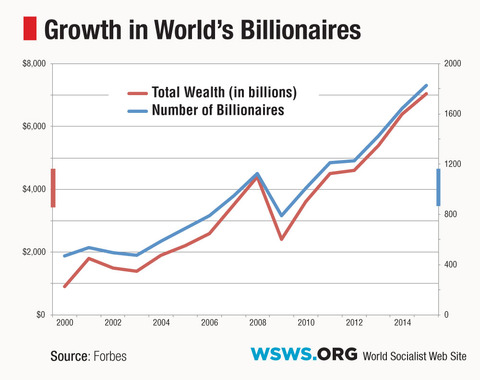
This is why wages have remain stagnant for the past 30 years despite the fact that productivity has increase exponentially, resulting in the Productivity-Pay Gap. It's why social benefits have been relentlessly cut due to austerity policies. It's why the gap between the rich and the poor has grown so insurmountably massive in recent decades. It's why, although the amount of billionaires has sky-rocketed, the working class still bear the brunt of taxes. That's neoliberalism, baby.

Left: Employer has $$$$$$ from which to pay the Worker.
Middle: Worker is paid $$ by Employer.
Right: Privatised Housing & Healthcare is charges the Worker $$.
Now, I'm no mathematician but I think this leaves the Worker with, uh, let's see... bugger all.

The above image comes from a neat video by Carlos Maza, which very simply and succinctly breaks down how neoliberal capitalism, specifically in the US, is uniquely unequipped to deal with crises such as the Covid-19 pandemic. I don't want to rehash his points here but suffice to say, it's hard to argue otherwise. I mean, have you looked at the world lately?

But what does all this have to do with Alien? Quite a lot actually or I wouldn't have brought it all up. The message from neoliberal governments in the face of this pandemic after only a few weeks of shutdown is "get back to work", to get things back to normal as soon as possible.

Even in Aotearoa New Zealand where I live, a country which has been praised for its response to the pandemic and has been under shutdown for nearly three weeks, there have been grumblings from some sectors that the shutdown has worked well enough and everyone should get back to work shortly in order to save the economy.

Bear in mind, we are supposed to be in shutdown and self-isolation for at least four weeks and they can barely handle a fortnight before wanting to risk people's safety and lives for the market.

Which brings us back to Science Officer Ash.

I told you I would get round to him. 

In Alien, Ash is revealed to be an android [spoilers for a movie from 1979, I guess] operating on secret orders from the Weyland-Yutani Corporation that his number one priority is to bring back the alien life-form and to consider the crew "expendable" in achieving this goal.

Put a pin in that for a moment.

Remember when I discussed how we tend to forget about capitalism since it's all around us? Well, that extends to class consciousness. We don't see each other as all belonging to a shared class but rather as isolated individuals operating within society. Which is ridiculous of course, class is a huge factor in the quality of our lives and our material conditions. But why am I talking about class?

Since we are conditioned not to think about class, most people don't really acknowledge that the crew of the Nostromo are working class folk doing a working class job. In space!

As the late great Roger Ebert said in his retrospective review of the film, "These are not adventurers but workers, hired by a company to return 20 million tons of ore to Earth." And he's right.

Ripley putting in the appropriate level of effort for a wage slavery job.

By the way, this is also why the Nostromo looks less high-tech than the ships in the prequel films Prometheus and Alien: Convenant - it's a bloody freighter, not a luxury cruiser. This tangent has no relevance to my argument but I thought I'd point it out. It just bugs me when people complain about the Nostromo being low tech in comparison as though this is a flaw in continuity, when they are comparing top of the line scientific vessels to what is basically an intergalactic truck.

Getting back on track, the fact we ignore the crew's class is kind of fascinating since the movie repeatedly hits you over the head with its awareness of class, specifically through the engineers Parker and Brett. Parker is forever trying to haggle better wages on behalf of Brett and himself, who, as the blue collar workers of the crew, have been stiffed on their contracts compared to their crew members.

However, although Parker "is vocal about his desires to be equal to the rest of the crew", as this article by Film School Rejects points out, "he is constantly shot down or ignored" due to his status as both a blue collar work and a black man.

The article goes on to state, "Within Scott’s examination of capitalistic power structures lies a critique on race as well and how those who are not white are even further exploited for their labor; Parker should work for less money and be happy about it."

"So, you're saying I should just accept racial oppression and capitalist exploitation?
Sounds like a crap deal to me. Can I talk to my union rep?"

Now, since we don't acknowledge the crew as working class people being exploited by the capitalist corporate elite, we tend to view them merely as individuals trying to survive a murderous alien. The problem with ignoring class is that it becomes easier to miss how they are all similarly exploited by the corporation which cares more about profit (procuring the Xenomorph) than people (the crew).

Let's take that out that pin now. As we know, the crew are viewed as expendable by the Weyland-Yutani Corporation. And who is the representative of this corporation? A soulless synthetic android. It couldn't be more on the nose if they tried.

Ash has been ordered by the corporation to bring back the Xenomorph at the expense of the crew, essentially to sacrifice the crew on the alter of capitalism. Remember, these are orders he cannot disobey since he is an android. He is merely a cog in the machine, the ideal worker under capitalism, and as such, he treats the human workers as beneath him.

The rest of the crew have value only when they are useful to achieving the mission. Once they are no longer useful, they are disposable. For instance, Kane's body is used up and broken in order to transport the alien fetus on board the ship. He is reduced to a vessel and once he has achieved his job, he is discarded.


Of course, I linked the chestburster scene. It's an article on Alien, I think it's contractually mandated that every discussion of Alien should include the chestbuster scene. Coincidentally, it's the capitalist bootlicker who prevents the working class hero from killing the alien. Funny that.

Now, let's contrast Ash's dispassionate and inhuman treatment of the crew with Ripley's reaction when she finds out what Ash's secret orders are. She is not only shocked and upset but angry and disbelieving. Her reaction is emotional, visceral and, well, human. I hope I making the point clear.

I would also say it is not insignificant that it is only when the surviving crew members, Parker, Lambert and Ripley, work together that they are able to decapitate Ash and learn the truth about how they have been exploited by the corporation. It's almost like they need to build solidarity or something...

So, how does all this relate to Covid-19? Well, just like the Weyland-Yutani Corporation and Ash, the conglomerates and politicians who serve them are saying that people should not only sacrifice themselves to save the economy but be happy to do so, as outlined in this Washington Post article.

"Let's get back to work, let's get back to living... and those of us who are 70 plus will take care of ourselves but don't sacrifice the country." - An actual Lieutenant Governor, and not a cartoon villain, apparently.  

The Trump administration has repeated downplayed the severity of the Covid-19 pandemic even as the US has the most cases of any country, with just over 500,000 confirmed cases at time of writing.

Not to mention, we have Republican senators like Richard Burr, who, after having being briefed about the impending pandemic in January, decide to sell off millions of dollars in stocks before the market dropped due to fears about the pandemic. He of course did this while simultaneously keeping his constituents in the dark about the scale of the threat.

Naturally, he is not the only one, as at least three other senators were caught in the act, including a Democrat Dianne Feinstein because liberals are also capitalist stooges and not immune to crass opportunism in the midst of a pandemic. A pandemic which will inevitably disproportionately impact the working class and poor they are supposed to represent. Of course, neither Barr or the other senators will face any genuine consequences, legal or otherwise, from the current system.

Just like Ash and the Weyland-Yutani Corporation, under neoliberal capitalism, politicians and multi-billion conglomerates will sacrifice us at a moments notice to maintain their capital. They will happily let us all be brutally murdered one by one by a perfect organism whose structural perfection is matched only by its hostility than sacrifice a penny of their profits.

This is the lesson that Alien teaches us in this time of quarantine under capitalism.

I hope it is one we heed and learn well.


P.S. After I finished writing this, I watched Thought Slime's "Top 5 Anti-Capitalist Horror Movies" video and they described the capitalist horror of the Weyland-Yutani Corporation in Alien far better and more succinctly that I do here. Typical. Give the video a watch by the way, it's great.


References:

Alien (1979) - Wikipedia

Alien (film) - Xenopedia

Covid-19 and the new era

The Productivity–Pay Gap

Growth in World's Billionaires

Coronavirus and the American death cult

Capitalist Realism: Is there no alternative?

Great Movies: Alien (1979)

In ‘Alien,’ Horror Comes In The Form of Labor Exploitation

A viral plea to let grandparents sacrifice themselves captures a truth about Trump

Republican senator urged to quit after report he sold stocks before Covid-19 market plunge

US senators accused of insider trading

Friday, 20 May 2016

Attack on Titan: In Defence of the Wall

About a month ago, I finished watching Attack on Titan, the massively popular anime series feature terrifying monsters called 'Titans' which have nearly wiped out humanity, the remainder of which hides behind humongous walls built to keep Titans out. It is brilliant.

Once an episode finished, my girlfriend and I were left in such a state of anxiety and desperate excitement to know what would happen next that we had to watch the next episode. This led to some serious binge watching.

I mean, just look at that.

Everything in the show is set to eleven. The stakes are absurdly high for one - humanity is on the brink of extinction and the battle the protagonists fight is against an unrelenting unstoppable enemy, one which they aren't equipped to face. They are hopelessly outmatched and know it.

The drama is so intense, it could be accused of being melodramatic if the high stakes hadn't already been so well-established. The characters' emotions are exaggerated, the reality of their situation warrants their dramatic outbursts.

This is apparent just from the show's original opening theme song. An insanely awesome tune which is equal parts over-the-top camp and pure adrenaline pumping. Everything is designed to ramp things up, thrashing guitars, heavy metal drums, bombastic orchestra, piercing choir, unrelenting vocal. It is nothing short of epic.


That is Attack on Titan in nutshell. A ridonculously epic show. There is barely a moment to breathe, particularly in the first several episodes as you're thrust into this world and events unfold so quickly and so shockingly that you can scarce believe what you're watching. The pace is relentless. The spectacle gripping. The story compelling.

And I realise I haven't done a good job so far summarizing the story or describing the show at all. Since I want to address some analysis and weird theories about the show, summarizing the plot might be in order. Alright, before we get into this, for everyone who hasn't watched Attack on Titan yet...

This Post is Full of SPOILERS, Seriously Dude Don't Touch It


Spoiler 1: The Titans breach the outer wall protecting humanity in the first episode.

As previously noted, Attack on Titan is set in a world where humanity lives inside cities surrounded by enormous walls due to the Titans, gigantic humanoid beings who devour humans.

As per Wikipedia,
The story follows the adventures of Eren Jaeger, his adopted sister Mikasa Ackerman, and their friend Armin Arlert, whose lives are changed forever after a Colossal Titan breaches the wall of their home town. Vowing revenge and to reclaim the world from the Titans, Eren and his friends join the Scout Regiment, an elite group of soldiers who fight Titans.
In the first episode, Eren's mother is eating by a Titan before his own eyes as he is being taken away to safety. There is really a feeling through the series that anyone can die, that no one is safe. This is an enemy that can't be reasoned with since they only live to eat humans and not for nourishment, they can survive without food. They eat humans just because.

This is Thomas Wagner. He was a cadet with Eren and a character we get to see grow over the course of several episodes.
He is the first cadet in Eren's squad to get eaten by a Titan but not the last.

I bring this up because in a post on Fandom Following about Plot Armour, Attack on Titan was brought up as an example of how not to use plot armour. For the uninitiated, "Plot Armor is a narrative device which allows any character to survive anything (as long as the writers consider them important enough)." Essentially how the bad guy's bullets seem to always miss the good guy.

According to the Fandom Following writer, while Attack on Titan tries to do the 'Anyone Can Die' thing, it ultimately fails since it establishes who the main protagonists are and doesn't kill them off, using the example of Eren. And that's where this argument falls flat for me. The Fandom Following post criticizes the fact that Eren seems to die but is brought back "shortly afterward none the worse for wear, with special powers to boot".

This kinda misses the point. I have this idea that just because people are aware of the tropes which exist in storytelling they apply them to situations which might fit the trope in isolation but with no concern for the wider context of the story being told.

This is where Eren is eaten by a Titan and for all we knew had died.

When Eren 'died', it was a complete system shutdown moment. My girlfriend and I stared at each other in disbelief, they could have killed off the main protagonist could they? And he isn't brought back shortly the next episode like some cheap emotional trick.

He comes back three episodes later, emerging from the body of another Titan, a Titan body he was unknowingly controlling. See Eren's return from death wasn't an example of plot armour in action. Rather it was an important narrative development and thematically significant. It signaled how little we, and the characters, know about the Titans and who Eren is, as well as seeding things for later in the season.

The revelation that Eren can turn into a Titan isn't a glib "oh, now the protagonist has special powers" empty twist. It raises questions and is treated with suspicion by the rest of the characters but also offers them the first glimpse of hope they've had in long time. It has narrative purpose and isn't just a lazy way to write a character back to life or avoid death.

He uses his new Titan body to pick up a big rock and use it to plug up a hole. It's more awesome than it sounds.

And really, the Fandom Following post missed an excellent opportunity to use a perfect example of plot armour in action from the show, Armin. While Armin is quite bright and able to think up clever strategic plans for attacks on the Titans, he is a so inept as a fighter due to his crippling fear of the Titans that he often just freezes when confronted by one of them. If any character has plot amour, it is Armin.

Armin was literally about to be eaten by a Titan only for Eren to miraculously pull him out of the Titan's mouth at the last moment and sacrifice himself instead. That's how Eren died. He was Armin's knight in shining plot armour.

Don't get me wrong, Armin is important to the plot but the way he has survived numerous situations where he surely would have died if he wasn't a main character are pretty obvious. This is the difference between just applying a trope without context and examining how the context of the show fits the trope applied.

[Full Disclosure: I love Fandom Following and think it's a great site but this writer kinda dropped the ball here.]

This is Dot Pixis. Note his appearance, this will be important later.

Moving on, one thing I had heard about Attack on Titan was that it was Japanese propaganda. This was something I was aware of going in but didn't really catch at all while watching. At first I thought it might be because of cultural dissonance, I wasn't able to pick up the element of propaganda so I decided to research after I finished the first season.

And from what I can tell, essentially the propaganda theory is based on two things. First is the fact that Dot Pixis, a high ranking general in Attack on Titan, had his appearance based on General Akiyama Yoshifuru, a war hero in Japan who committed several atrocities against Korea and China. Second is that Eren and the rest of the characters are in the army and sacrifice their lives for the rest humanity.

That's about it. From that, it is argued that Attack on Titan is Japanese imperialistic military propaganda. Because one character's physical design was based on military hero/criminal and the fact that the characters are part of an army. Since of course, by basing a character's design on someone infamous from history, you fully endorse that person, regardless of whether the character's personality is completely different.

Also, the fact that the only way for them to fight the Titans is as part of the army isn't discussed, nor is it raised how the characters mistrust the high command and are mostly working outside of command to get things done. 

No really, it's kinda a major theme of the second half of the season. The Scout Regiment, which Eren and co are part of, face off another human-Titan and suspect the higher ups in the military of a cover up so they essentially go rogue to root out the conspiracy. But nope, still military propaganda.

Couldn't possibly be a metaphor for the inevitably of death considering how the Titans are near unstoppable and kill everyone, could it?
Also, could possibly be about seeing giant monsters fight, I dunno.

The thing is, I'm not going to argue there isn't a lens through which you could argue the show has a xenophobic angle (they built a wall to keep out an invading race which is mindless and wants only to kill the normal people inside the wall) but the propaganda theory just doesn't hold water for me.

That was pretty much all I had to say about Attack on Titan, for now at least. Well that's not quite true since I did want to talk about other things but they can wait for a later post.

And I think a good place to end is by saying that I really enjoyed Attack on Titan and can't wait for season 2 to come out... what?! it's been pushed out to 2017?! Not cool.


References:


Friday, 13 November 2015

Pacific Rim: The Shadow of the Kaiju

Okay, so I know I did a del Toro movie in my last post, and it's pretty obvious that I love his films which some of you may be tired of hearing about, at least in such quick succession. However I think it's better to get these sorts of things out in the open rather than keeping them hidden. That path leads to fanboyism and illicit anime use.

Let's get this out of the way, I loved Pacific Rim. It was like the culmination of every mecha anime and kaiju film in one gloriously loving tribute/homage/ripoff. Essentially, it was a movie that the 12 year old boy who wears my skin as a suit never knew he wanted until he saw it.

I couldn't imagine why.

Just in case it wasn't clear, that is a giant robot slicing a giant monster in half with a giant sword... in space. The awesomeness of that sentence cannot be underestimated, if it could be estimated at all. All I know is that I couldn't barely comprehend how excitably giddy that moment of nerdgasmic splendour was when I first witnessed it.

That's what this film is. Guillermo del Toro's A Series of Awesome Events. Including scenes like, The Badass Beginning and The Exquisite Exposition, not to mention The Fantastic Fight, The Carefully-Crafted Characters, and The Superb Sword.

"This is the story of the four Jaegers: Gipsy Danger, Striker Eureka, Coyote Tango, and Cherno Alpha.
My name is Guillermo del Toro and it is my duty to tell you their tale."

The thing is, hearing me gush about Pacific Rim, and I have barely began to gush yet, you may be under the impression that I think the film is a masterpiece or a perfect film. It's not. Well, it is a masterpiece but a certain type of masterpiece, the type that requires a qualification.

Because Pacific Rim is a dumb film. It really is. There are so many stupid action movie moments or things relating to plot or logic that leave you with a "wait, why?" in your throat and itchy feeling on your head.

Wait, why does a Jaeger need to be piloted by two pilots who have to be neurologically linked? And if each pilot controls one half of the Jaeger howcome both pilots move in tandem to walk or throw a punch which makes no sense if the pilot on the left controls the left arm and the pilot on the right controls the right arm. Also, if they control a half each how does walking work? Does a pilot have to take two steps for the Jaeger to move the leg they control? And on that subject...

The point is, I'm not under disillusion or are wearing any holographic blinders. Pacific Rim is a stupid action movie. This is thing that is true. But holy nuclear fallout is it an amazingly awesome stupid action movie.

Every moment of palm mark on your head stupid is counterbalance by a moment of sheer exuberant awesome (I mentioned the giant robot sword, right? Because holy macaroni cheese and crackers, giant robot sword!).

I think the thing that differentiates Pacific Rim from standard dumb action movie fare is the amount of care and thought that's been put into the film, even if the plot has holes or the science is more flaky than Cadbury Flake.

This care can be seen with the Kaiju, the Kaiju being the giant monsters that are clearly the bastard offspring of Godzilla and Cthulhu. As soon as you think you've got the monster sussed and know what they can do, del Toro adds a twist or a little something that makes them unique. And the most impressive of these is Otachi.


"Oh, hi guys."

When Otachi first appears on the scene with another Kaiju, Leatherback, she initially appears to be a regular category 4 Kaiju like the ones they've seen before but then she uses her tail like a third arm. So you're like, "okay, I get this one's gimmick, she has a tail that can be used as a weapon".

Naturally she proceeds to spit acid from her mouth. Acid which dissolves anything it lands on within seconds.

Okay, that's fine. You reevaluate and note she's the Kaiju with the weapon tail, that also spits metal dissolving acid. Cool. Got it. Gipsy Danger eventually breaks off her tail by using cooling agent to freeze and shatter it while simultaneously ripping out the acid sack in her mouth. Stripped of her downloadable content, you think that's that.

Then she spreads her wings.

"Surprise bitches!"

What could have been uninspired monster designs are instead filled with inventive touches that add character and it is those types of little touches that elevate the film from standard blockbuster fare.

Talking about character, each of the characters have their own arc of some sort and while those arcs might trade in cliche, there was enough thought put to give each character some sense of development which is rarer than you would think.

For example, even though by all rights he shouldn't have any character development aside from being an unnecessary bully character who serves to be dick to the protagonist Raliegh for reasons lost to mankind, the Jaegar pilot Chuck actually ends up having something close to a character arc.

"I cannot believe that an one-note character like you has a legit redemption arc with an actually touching reconciliation scene with your father" - Raleigh 

But it is the three leads that are the most impressive since there is no reason they should be anything more than stereotypical character tropes in a dumb action movies. Superficially, they are stereotypes. Raleigh is the angst ridden protagonist who's the best at what he does but has a tragic backstory, Mako Mori is the female romantic interest, and Idris Elba's Stacker Pentecost is the no nonsense square jawed marine authority figure for the young protagonist to butt heads with.

However, that's not how things play out in the film. Let's focus on Raleigh for a moment. As Very Sharp Teeth puts it,
Raleigh was a character that any director but del Toro would have sent down the stereotypical path of “has angst from unspeakable loss, has authority issues, gets into a pissing match with anyone he crosses, has the only female in the movie fall in love with him through sheer manliness”. Thankfully, not so was Raleigh. 
Rather than taking out his dick measuring tape at every confrontation, Raleigh is almost passive throughout the film. Perhaps passive is the wrong word, understated is better. Instead of asserting his masculinity at all points since he's a hot shot but he gets results, goddammit, Raleigh restrains himself. Because he has respect for others.

"While I completely disagree with your decision, I respect you as a person and your experience as my superior officer, so will begrudgingly follow your orders."

To be honest, in a standard blockbuster, Raleigh would have been like Chuck without the unnecessary asshole factor, a braggart and maverick who resists authority. However, the thing that really distinguishes Raleigh from typical action hero character is that he kinda is a supporting character to his love interest.

Now, before I go any further, while others might suggest otherwise, Raleigh is the main character in the film. While Pacific Rim does give a lot of time to Mako Mori's storyline, which isn't given any treatment that would indicate it was a secondary character's story, rather the opposite, Raleigh is still the primary protagonist.

The film is framed by him and he serves the focus for the film since the story, including Mako's, is told by his relation to the narrative. He provides the opening narration and is the character needed to be pulled back into the story for the plot to progress. That said, Pacific Rim is kinda Mako's movie.

"Go on."

There is a lot that's been said about Mako Mori since she is a fantastic character, so I'll try not to reiterate any of that here. Essentially Mako is so badass that they invented a test named after her which can be used as a barometer of how independent a female character's narrative in a film is.

As The Daily Dot states,
In the film, Mako struggles to asserts her independence despite the protectiveness of her stern father figure, Stacker Pentecost (Idris Elba). She is strong, smart, and perhaps most remarkably, her goal of fulfilling her dream of being a Jaeger pilot is a major part of Pacific Rim's storyline.
Recognising her innate awesomeness, Tumblr user chaila proposed the Mako Mori test which is passed if a movie has: a) at least one female character; b) who gets her own narrative arc; c) that is not about supporting a man’s story.

"That doesn't sound like it would be too hard to pass."

In fact, Raleigh ends up supporting Mako's story, he is the conduit through which she can face her tragic backstory while they are in drift, is unabashedly in awe of her, and continually insists she be his co-pilot.

He also treats her as an equal throughout the film. Probably the real reason that Raleigh serves as support for Mako's story is that his grief/angst following his brother's death is resolved pretty early on. When they drift for the first time, it was his memory that initially got them to fall out of drift but he gets back in pretty quickly since he's already resolved his shit and can deal.

However this triggers Mako's own painful memory and leads into her backstory, which to be honest is more rich than Raleigh's relatively standard "loved one lost in tragic accident". The image of a young Mako walking, red shoe in hand and crying, through a deserted street is a powerful one which gives such weight to her character.

Hey, it's okay. It'll be alright. You're gonna grow up to be a badass.

It also establishes her father-daughter with Idris Elba's Stacker Pentecost. Firstly, can we just establish what a ridiculous, yet completely appropriate, name Stacker Pentecost is? It somehow conveys exactly who his character is while sounding like something a preteen boy would come up. Which actually describes the names of the Jaegers too but let's not get distracted.

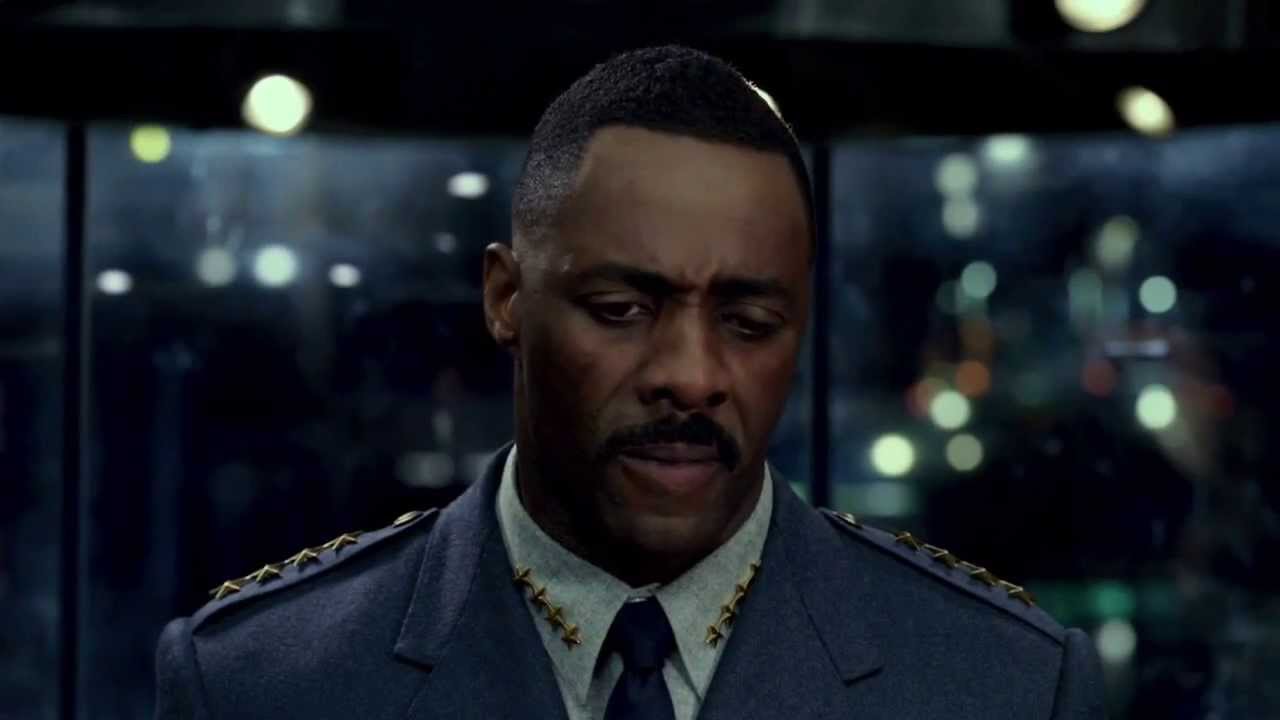
Oh, Idris Elba is amazing of course. The man is a wonder. He actually is the reason I wanted to rewatch this film (I mean aside from all the giant robot versus giant monster stuff). He brings such an authority to the role that also comes with a sense of responsibility.

Just look at all that authoritative responsibleness going on. 

Guillermo del Toro apparently hired Elba based on his performance in the BBC detective drama Luther, which is a legitimately good show and will get its own review at some point.

In del Toro's own words,
Idris is one of those actors that is capable of embodying humanity, in almost like a Rodin sculpture-type, larger than life, almost like a Russian realism statue, you know, big hands, all the turmoil of humanity in his eyes. I wanted somebody that you could have doubts internally, and very few guys can do that.
And boy, does Elba have those doubts internally. You can just feel the internal struggle behind every decision he makes in the film, what he thinks is right to save to the world and the fear of being wrong, dooming us all.

"I'm just so internally filled with doubt despite my assertive leadership qualities."

So that's about it. I'm sure there's more I could say about the look of the film (which is stunning with a sharp colour palette), the wonderful diversity of the cast, or exploring the film's direct appeal to the 12 year boy inside all of us in a more analytical fashion but I'm good.

I understand that Pacific Rim is not a film for everyone. Some people hate dumb action movies, regardless of quality. I can't say I fully understand that since when a movie is this much fun, I don't mind if it is dumb. Sometimes I suppose it can be hard to let go of one's prejudices in order to accept something different.

I mentioned there was a freaking giant robot sword, right?


References:

Pacific Rim (film) Wikipedia page

Kaiju Wikipedia page

Otachi (Kaiju) - Pacific Rim wiki

Friday, 30 October 2015

The Frightening Fable of Pan's Labyrinth

It's Halloween and Guillermo del Torro's latest horror film, Crimson Peak, is about to be released, so what better time to sit down around the campfire for his perfect fairy tale fable, Pan's Labyrinth?

Last Halloween I declared the del Toro's Hellboy movies the perfect Halloween movies and mentioned that, filmed in between those films, Pan's Labyrinth indicated an unprecedented growth for del Toro as a filmmaker and storyteller. I stand by that declaration.

In that article, I also mentioned that Pan's Labyrinth deserved its own review rather than just a passing mention. This is that review.

"Wait, you mean this one?"

Pan's Labyrinth is set in 1944 Francoist Spain, with the backdrop of World War II and five years after the Spanish Civil War. It's a stunning work that uses two narratives, one set in fantasy and one in war drama, to flesh out and parallel the other.

The narrative that gets all the attention is naturally the fantasy narrative which follows a young girl named Ofelia who discovers that she is the reincarnation of a long lost fairy princess after following a fairy into a labyrinth and talking to a faun.

I'll get to the fantasy narrative in a bit but for this article I'm gonna focus on the war drama. Mainly because I think the war drama stuff deserves some words devoted to it since it is really great and often doesn't get the attention the fantasy stuff does, probably because it is less visually iconic than the wondrous monsters which Ofelia faces and grace the film's posters.

The most popular poster features a magic uterus tree so it's obvious this is a film about resistance post-civil war Spain.

To the surprise of everyone, about half of Pan's Labyrinth actually revolves around the Spanish Marquis resistance to the Francoist fascist regime and the brutal methods of control by the military during that regime.

Ofelia's step-father Vidal is a captain in the Falangist army hunting the Marquis in the forest and he is fantastic. Not in the sense I think the hunting of resistance fighters is fantastic but in the the sense that the character is such a great villain.

Now Vidal may seem cartoonish on first impression since he is so obviously evil with evil pouring out of his every evil action ever so evilly. He's just so violent and so merciless. A true psychopath he feels no remorse nor empathy but at the same time he dislikes killing without purpose. Not that he won't, just that he dislikes it because it wastes his time.

"You wanna know how I got this scar?"

I think the thing with Vidal is that he is just so outright evil and a true sadist that he leaves a lasting impression. Like Amy Nicholson notes in The Canon episode on Pan's Labyrinth, there's just something about a bad guy who has his torture speech ready.

But there are other little touches too. There's his strict adherence to time and schedule (remembered I mentioned time earlier, it was literally just a couple of sentences ago). His obsession with his cracked pocket watch which he inherited from his father.

Which ties into his subscription to a very restrictive ideal of masculinity and obvious misogyny. Not to mention his vicious sadism. All of which on repeat viewings make it clear what a layered antagonist and perfect embodiment of fascist evil he is.

Look how he sparkles with fascism in the sunlight.

If I was really gonna get into it, we could see how his watch which he father cracked at the moment of his death both indicates how time, which he manages to a second, is actually beyond his control and how his version of dominant masculinity inherited from his father is itself broken.

But instead, let's move on to Mercedes and the good doctor Ferreiro. Both work under Captain Vidal but secretly help the Maquis. And both are interesting since they present a type of heroism not always seen or celebrated in cinema, that of the quiet objector.

The hero who cannot actively or violently stand up against the big bad but rather displays courage by putting themselves at risk within the enemy camp and who shows their heroism through their compassion and moral fortitude. And the film comments on how we don't often appreciate this type of bravery.

"I'm such a coward for spending each day in the same house as a man who would kill me without hesitation even before he knew I betrayed him, running his household while all the while spying on him and smuggling out valuable resources.
Oh, what a coward am I."

Maribel Verdú is amazing as Mercedes. There is a real sadness to her performance yet an undeniable strength to her character. Mercedes is a woman who is terrified of what she has to do and the danger she is in but does it anyway, The very definition of a hero.

And her version of femininity offers a clear contrast to the more passive submission of Ofelia's mother Carmen who has succumb to the fascist regime and Vidal's advances to bear his child and be the dutiful wife. Now the film positions this more as a difference between submission and rebellion but it's hard not to see Carmen's death in childbirth as a critique of that passive femininity.

However, it could be a comment on the destructive nature of fascism is such that the child of fascism's entry into this world brings with it the death of his mother. Or maybe that's reading too much into it. It's a bit hard to tell where to draw the line since the film invites such interpretations.

"Oh really? Is that so?"

What's interesting about the Maquis, which the film wants us to root for and are positioned as the good guys, is that they lost. There was a fascist regime in Spain until the 1970s. I'm assuming the film assumes the audience would be aware of the historical context in which case the film becomes a story about doing the right thing even if you might not win in the end. 

Within that context, it is a film about not following orders in a time where not following orders was punishable by torture and death. Where any form of disobedience was deemed treason and treated as such.

Let's talk about disobedience since that is apparently the primary theme of the film. The Nerdwriter labelled the film a "disobedient fairy tale" and his is far from the only such reading of the film. Rightly so since the primary narrative climax of the film is when Ofelia right out disobeys both the Faun and Vidal.

And then she becomes a princess because parents in the 1940s Spain punished their children a bit differently.

However, while the theme of the film is disobedience is definitely apparent throughout the film, this seems to have resulted in the notion that Ofelia is subsequently a rebellious child. This is even though that reading of her character isn't really supported by the text of the film.

Now some may list the times where she disobeys or fails to follow instructions as acts of rebellion. Aaah, no. While she may be disobedient or negligent, this does not equate to being a rebel. Until the climax of the film, Ofelia never makes a stand in her disobedience which could make it rebellious.

For rebellion is not mere disobedience but rather is disobedience with a point, whether that point is to disrupt, to defy, or to create anarchy. To be rebellious there is a underlying reason behind that disobedience, a desire to resist authority, But we never get the sense from Ofelia that she wants to defy authority until the very end.

"Wait, you're not cool with me killing your baby brother with this knife so you can become a princess in a magic kingdom?"

It just seems hard to swallow that Ofelia is some rebellious child throughout the movie when most of her acts of disobedience are done through carelessness or an act of selfishness rather than any real desire to resist authority,

That comes through far more strongly in the characters and actions of Mercedes and the doctor whose acts of disobedience are precisely acts of rebellion, flying in the face and in defiance of the authority of the Francoist regime.

To call Ofelia a rebel any point before the final act of the film seems to be projecting a rebellious spirit onto her character rather than that spirit being apparent in her character. I understand that this is a fable about disobedience but disobedience on its own does not a rebel make.

"Well, snapcrackles."

But this is still a fable and del Toro structures the film as such while at the same time playing with the conventions of a fable. In a traditional fable, the scene with the Pale Man (aka Eye-Ball Hands) would play out quite differently than it did in the film.

Ofelia is told not to eat anything on the table by the faun but then does. awakening the Pale Man. In a traditional fable, this would be a story about obedience and Ofelia would be eaten by the Pale Man as punishment for not following the rules. However in Pan's Labyrinth she gets away alive, even if she is berated by the faun for not following instructions.

It kinda turns the structure of a fable on its head (set up of lesson - thing done wrong - punishment to reinforce the lesson). You see this in the classic fable of The Tortoise and the Hare: cocky hare thinks he will win the race because he is the faster - due to his brashness he becomes complacent and takes a nap - tortoise wins the race through hard work and dedication. Easy set up and lesson: don't be cocky since slow and steady wins the race.

"Hahaha, you win the race? As if you could, you metaphor for steadfast dedication and hard work you."

By setting up the convention of the fable but then playing with them, obviously partly due to narrative structure for a feature film, del Toro allows the story of Pan's Labyrinth to invoke the feel of fables but not constricted by their limitations.

And by having the fantasy scenes mirror the war drama scenes, del Toro is able to reiterate and reinforce the lesson of disobedience he wants to impart. This culminates in the climax of the film where Ofelia says no to both the Faun and Vidal in the same scene.

It works out really well for her.

Pan's Labyrinth is a gorgeous and wonderful film which makes for perfect viewing this Halloween season. It might not be as terrifying as some straight horror film but features some legit scary monsters. It might not be as bloody as a gorefest but its violence is brutal and uncompromising. It might not be a Halloween movie but it is great to watch during Halloween.

Or any other time of the year for that matter.


References:

Pan's Labyrinth Wikipedia page

Falange Española Tradicionalista y de las Juntas de Ofensiva Nacional Sindicalista Wikipedia page
Pan's Labyrinth: Disobedient Fairy Tale - The Nerdwriter

The Esoteric Interpretation of “Pan’s Labyrinth” - The Vigilant Citizen

Friday, 16 October 2015

James and the Giant Peach Nightmare

In keeping up what seems to be becoming a Halloween tradition, for this article I'm looking another seeming innocence children's movie and realising that it's actually a terrifying horror movie in disguise.

However, compared to the existential dread of life inside a Pokeball, the absolute terror of the chokey in Maltida, or the horror that is The Brave Little Toaster, I'm kinda cheating with this one. For although James and the Giant Peach is undoubtably creepy and scary in parts, that's just it. It's creepy. Not horrifying, just weird and creepy.

"I say, have a look at that weird and creepy thing, James!" - Grasshopper, probably.

Now, I did have a lot of nostalgia for this film since I've watched it since I was a young child but revisiting it as an adult you notice that a lot of things are just weird. And it's not limited to the wonderful but off-kilter character designs or intentionally odd moments, although we'll get to those in a moment.

Rather there's just something off about the film, almost conceptually, that is woven into the very fabric of the script and narrative, spilling like succulent peach juice all over the place into the aesthetic and execution of the movie.

Unsurprisingly, the film is based off the children's book by Roald Dahl and we're all too aware of Dahl's particular predilection for outright torturing children through nightmare inducing means in his charming stories for children to read charmingly.

"Soon there will be only one left."

I think the thing about the script that makes feel off is that it is so disjointed. Things just happen at the drop of record scratch out of nowhere for no reason aside from 'I guess this is happening now'. This results in abrupt and jarring shifts in tone which gives the film an odd dissonance that adds to the film's creep factor.

For example, we start the film with idyllic family bliss as James is cloud-gazing with his parents on an English beach and everything is hunky dory. And then the narrator states that "an angry rhinoceros appeared out of nowhere and gobbled up his mother and father" ...

Well, you know what else was out of nowhere? That abrupt skip track from happy family beach time to 'and then they were gobbled up... by a rhino... that was angry'. I understand that the removal of the parents in the novel is similarly abrupt but the key change in the film is kinda ridiculous in just how sudden it is.

James: Dad, I have the strangest feeling like a herbivorous animal will just appear to eat you and mum
because it has anger issues serious enough to develop a taste for man-flesh.
Father: Well James, like your mother said, try looking at it another way. We have to be removed from the plot somehow.

And this dissonance permeates throughout the whole film. Every scene seems to stumble into the next with no flow. Things happen and nothing is explained nor is the world fleshed out enough for things to just be accepted as part of the established universe of the film.

Rather things are there because they are there. How they exist or what makes them work is just asking questions the film gave no thought to because it's a children's film of course there is a giant mechanic shark thing in the ocean, why wouldn't there be?

Actually, the mechanic shark thing is interesting since it is legitimately terrifying and a great monster with its rotating teeth of terror. Bellowing smoke even though it's a submarine which submerges underwater, it seems like the perfect combination of fears of industrial machinery and, well, sharks.

It also shoots a harpoon out its mouth so it's not completely handicapped.

Back to the point about how things kinda just happen in James and the Giant Peach, the characters don't develop over the film. Rather they come as though just taken out of the freezer, no backstory or motivation, freshly microwaved and ready to be served. They have an identifiable characteristic and that's about it.

Centipede has a Brooklyn accent and is a compulsive liar because reasons. Spider is a loner even though she spends all her time with everyone else because apparently that's something the scene needed when she's tucking James into her web.

Where this really works though is with Joanna Lumley and Miriam Margoyles as James' terribly mean aunts Spiker and Sponge respectively. While they have only one note, which is be incredibly mean and angry to James at every opportunity, both actresses put their all into the part, willing to be utterly atrocious and unappealing at every turn. It's rather admirable how dedicated they are to the bit.

They're absolutely fabulous.

The writing is just all over the place, which kinda adds to the film's off-kilter appeal. On the other side, the film is wondrously creative and imaginative, not only in its character designs but also the unreal, dream-like aesthetic.

The live action sets are decidedly unreal with German Expressionism-esque architecture on what is obviously a studio set with matte drawing backgrounds. Because of their heightened nature, the live action scenes almost feel more dream-like than the stop-motion scenes. And remember those are the scenes with a mechanical shark.

And this surreal disjointed nature means the film is almost ideal for interpretation since there seems to be no reason for why anything is happening or what it is supposed to mean. That said, it's pretty obvious what the rhino is meant to symbolise, right?

"Oh no, a metaphor of the inevitable encroach of death!"

Oh, and of course the climax with the rhino just ends with no clear resolution because what else would you expect from the film by that stage? James stands up to it, shouting that it is just a lot of smoke and noise and that he isn't afraid because he is looking at it a different way, just like his mother said.

Which is quite an inspiring message really if we accept the rhino as the embodiment of death, which we totally should because what the hell is it otherwise? It came out of nowhere and took away his parents just as death can happen at anytime and take away the ones we love.

By standing up to the rhino, James is really declaring that he's not afraid of death but willing to face it head on. Which is probably why the rhino just zaps the peach then bounces. He has no further power to intimidate James.

"Arr, I might be dead and can remove my head for Shakespearean citations but my mind is blown." - Captain Jack Skellington 

Or maybe the writer just wanted to end the film and that seemed like the easiest way to bring in the rhino and then get rid of him before the happy ending. Considering how fractured and weird this film is, it wouldn't be surprising if that was the case.

James and the Giant Peach isn't a horror film masquerading as a children's movie but it definitely is odd and a little more than creepy. There's also a mean streak which runs through the film and adds to the slightly unsettling tone a number of scenes touch on.

That said, there's also a lot of inventiveness and a couple of touching moments like when James walks on Grasshopper playing the violin which is a lovely scene until it descends into a weird music video with toy globes in a song about love. And maybe that is the scene which best captures the disjointed nature of the film, shifting gears for no reason and little warning.

I guess it's just a lot of smoke and noise.


References:

James and the Giant Peach (film) Wikipedia page

Nostalgia Critic: James and the Giant Peach

Reality, Dream and Animation: James and the Giant Peach - Tor.com

Friday, 29 May 2015

Enter the Fray: The Last Vampire Slayer

"In every generation, there is a chosen one. She alone shall stand against the vampires, demons, and forces of darkness. She is the Slayer."

I'm of course talking about Melaka (Mel) Fray the Vampire Slayer. While most will be able to recall the awesomeness that was Buffy the Vampire Slayer television series, not many are aware of the comic book series sequel, Fray.

Written by Joss Whedon, geek overlord, Fray was a continuation of the Slayer mythos set in the Buffyverse, just several centuries after the events of the television show. It follows the story of Mel as she learns that she is the Slayer and has to accept her destiny. Of slaying undead things.

Not to mention getting to grips with her innate Slayer ability to strike cool posses while making impassioned speeches.

Fray has all of the usual Whedonisms: relatable characters, snappy dialogue with an interesting vocabulary and inventive vernacular, a strong central female character who resists the destiny she is told she must fulfill, the death of an enduring secondary character as motivation for the main character to spring into action in the final act [SPOILERS, I guess], great writing with a couple of questionable or awkward moments, and a rollicking good time.

Whedon has recently come under fire in the Twittersphere from incensed fans for the direction Black Widow's character arc took in Avengers 2: Age of Ultimately How Many of These are There Going to Be Exactly?.

"Uh... what? Come again?"

Now, minor spoilers here, but a number of people didn't really get into the, admittedly rushed/forced, romance between Black Widow and Bruce "I'm always angry" Banner, with one scene in particular causing a certain sectors of fandom to cry (no hyperbole) misogyny.

Before I get into the details, let's just put this in perspective. This is Joss Whedon we are talking about. A prominent and outspoken feminist. A man who has repeatedly been praised for his efforts in addressing the issues facing feminism and gender equlaity, whether through his own actions or the support of other vocal feminists.

A man, who when asked why he constantly writes strong female characters, responded, "Because you keep asking that question".

That's who we are talking about here.

"And people said what, now?"

However, as this wonderful article by Todd Van Der Werff for Vox points out, while Whedon is personally and politically a feminist, his creative work doesn't always fit that label, at least not wholly. This is not to attack his work but rather an acknowledgement that it sometimes not always occasionally isn't as feminist as it could/should be.

This has to do with Whedon's creative priorities, or as Van Der Werff puts it:
Whedon's work trends toward feminism, but his true great cause is storytelling, and he always prioritizes the latter if it makes for a better story. Whedon likes to tell stories that test the strength of communities, stories where horrific actions are often forgiven and written off because the larger community requires it. And though this is why his stories are so frequently good, it also has a tendency to clash with his fictional feminism.
Essentially, if it fits the type of story he wants/feels compelled to tell, he will occasionally write his (still strong and relatable) female characters into narrative tropes that aren't particularly feminist and verge on old gender stereotypes for the sake of the greater story.

"I don't like where this is going,"

Where this relates to Avengers 2: This One Has Robots In It is that Black Widow's character arc has been sacrificed to an extent for the greater story being told. Not sacrificed really. More like poorly handled with a not so well-written scene which seems to suggest a far more stereotypical (and almost insulting) trope than I think was intended.

The scene in question involves Natasha (Black Widow), played again to perfection by Scarlett Johansson, and Bruce Banner discussing their (somewhat forced) feelings toward each other when all of a sudden the topic of having children comes up. I'm sure it's completely normal for that topic of discussion to come up before you even go on a date, right guys? That's what normal people do. It's not jumping the gun at all.

"Was that too soon? It was too soon, wasn't it?"

So in this completely normal discussion about having kids and a 'normal life', Banner describes how he can never have or offer that since he's a monster or something because he gets a little green sometimes. Then Natasha retorts with her back-story and how the procedure that made her so badass and top secret spy-y was terrible and that Bruce isn't the only monster on the team.

That would have been fine but, unfortunately for the scene and Whedon, it's rather clumsily written and this is where the whole thing kinda Hulk-busts apart. The graduation for the hardcore spy training was an infertilization procedure. Therefore, it makes it sound like Natasha is saying that it is her inability to have children makes her a monster.

To be honest, that's how I initially interpret that scene and I did take some issue with it, purely on the basis that the inability not to reproduce isn't at all monstrous and it was sorta odd hearing a character who never before displayed any interest in having children saying it.

"Hulk confused..."

However, having thought about it, I think the scene was supposed to convey how being subjected to the procedure and having her agency to choose taken away is what made her a monster. But something obviously got lost in the translation, which is something Scarlett Johansson knows all about. If that had got across, it obviously would have avoided the "women are limited to or defined by their reproductive abilities" trope. But it didn't. So it kinda doesn't.

Also, for the record, I also can totally see why out of all the Avengers, Black Widow would be romantically involved with the Hulk because in him she sees the same dilemma she sees in herself, of controlling the monster and not giving into her darker impulses.

Of course, the fact that they never had never had anything more than friendly flirty and little to no full blown romantic chemistry kinda derails that, but I can kinda see why they went there.

Oh yeah, I was supposed to be talking about Fray.

How could I not be talking about Fray?!

As stated way up above, Fray is about a vampire slayer... in the future! There are blasters and flying cars! In this timeline, vampires and the other demons have been expelled from Earth for centuries because of something Buffy did in the past (I think she might have locked the door preventing them from coming in).

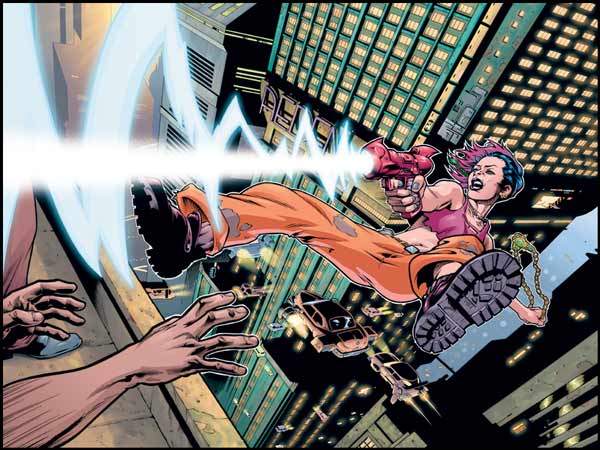
Our protagonist is a thief who doesn't realise that it isn't common for normal people to survive falling from a building while crashing into a bunch of flying cars (they have flying cars!). Anywho, she meets a demon who wants to train her so she can become the Slayer and prevent the lurks (what vampires are now called) from reopening the portal to the demon dimension.

What's most striking reading this again after seeing Whedon's Avengers movies is that this comic is essentially the blueprint for the script of the first Avengers movie, just minus the multiple superheroes in brightly coloured tights and with vampires instead of aliens. All the same narrative beats can be found within the pages of Fray.

The Avengers never had the hero shoot a horned demon with a blaster however.

Like The Avengers, it takes a good chunk of the beginning to just establish the world and characters before the plot even gets going or the characters interact (it took 40 minutes or so before the Avengers are actually assembled). Then the protagonist(s) mistrusts their new comrades and/or Nick Fury-father figure because they're a rebel or don't work with well with others.

They will then get into a fight with the bad guys and kinda get their asses handed to them. However, the death of an endearing secondary character motivates the protagonist(s) to go into serious mode and they approach the climactic battle with more determination and unrivaled badassery ensues.


However, there was something that both The Avengers and Fray had in their climactic battles. Something that proves my point Whedon used Fray as a bluepoint for The Avengers script. Something that is far too amazing not to share.

This something was not simply a narrative beat or similar story arc repeated again (since most stories do tend to follow common narrative beats which form the building blocks of storytelling). No, this was something far more tangible and concrete. A repeated element that suggests that Fray pretty much inspired the climatic battle in The Avengers.

Yes, that's right. There is a giant worm dragon thing that flies over the city in the final battle.

Almost identical to the giant alien dragon things that fly over the city in The Avengers, Fray has to kill the Gateway demon in the climatic battle. True, she gets swallowed by it and kills it by going for its brain opposed to just hulking out and punching it in the face, but you get the idea.

Also, there are twins in Fray and there are twins in Avengers 2: Ages 12 and up, so those movies are practically identical.


References:

Fray Wikipedia page

Buffyverse Wikipedia page

Buffy the Vampire Slayer Wikipedia page

A guide to the growing controversy over Joss Whedon’s Avengers and Marvel’s gender problem

How Avengers: Age of Ultron dropped the ball with Black Widow