Friday, 30 January 2015

Iron Man 3 is a Superhero Buddy Cop Movie

People forget, but when the first Iron Man movie came out it was a risk for Marvel. True, it wasn't a risk the same way a movie about a Norse god from Viking warrior scifi heaven, who travels to Earth by a rainbow bridge and has a hammer with a name unpronounceable by most mere mortals is a risk. But it was a risk nonetheless.

Tony Stark in the comics was not always a particularly easy character to love. Often the smartest man in the room, he was also the most dickish too. It was often hard to relate to a ridiculously rich man who had all the world's coolest toys that weren't bat-themed and yet was such an asshole about it.

Bruce Wayne pretended to be a flamboyant pampered rich playboy as a cover so people wouldn't suspect he was Batman. Tony Stark was a flamboyant pampered rich playboy. It wasn't an act. That's just who he was. And it's kinda hard for the average person to relate to that.

But we can all relate to making terrible decisions while drunk.

Remember how I mention that Tony Stark could be a bit of an asshole? Well, just as an example, one time Tony got super upset when he discovered that a number of his villains' armour was based on his designs and was actually his tech. Now, you would think that Tony would approach this in a calm and rational manner, informing the Avengers and SHIELD about the stolen tech, getting them to issue warrants to seize that stolen tech following due process, right? No, that's just silly.

Instead, Tony went on a personal vendetta tracking down each criminal he suspected of stealing his tech and taking them down, disabling their armour, even if they weren't doing anything illegal at the time, because of course that's what one of the smartest people on the planet would think was a perfect solution to the problem.

And when he gets called out on it by his fellow Avengers, friends and allies for years, his only response is to asked them to trust him with no qualification or explanation for his actions.

"I really want to Tony, but I just can't with that haircut. Seriously, dude, a perm? A perm?!" - Hawkeye

Some of the people he took down had even reformed and were now working on the right side of the law by the time he caught up with them, but stolen tech is stolen tech. No one steals from Tony Stark and gets away with it... unless they had gotten away with it for years until this genius, billionaire, playboy philanthropist figured out they had stolen from him.

As this article by Scans_Daily details, one of the people Iron Man suspects of using his stolen tech goes by the name of Stingray. Now, not only is Stingray not a criminal but is in fact a hero and a scientist who uses his suit to explore the ocean and track underwater life, he also works for the US government. Yet, Tony still goes after him for reasons I can only determine as: because he's an asshole.

So, he rushes off to confront Stingray but because Stingray has hear all about how Iron Man has been taking out other amoured individuals, he flees when Tony tells him to give up his amour. Iron Man then chases the government official and knocks him unconscious, only to discover, whoops, that he wasn't using stolen tech after all. Boy, was Iron Man's helmet red that day.

Don't worry about it Tony. Loads of people chase down government officials and disable their armour based on little to no evidence that the armour was in fact stolen. Could have happened to anyone.

But that's an old comic storyline from back in the 1980s. Surely, since then Tony Stark has been written more as the intelligent futurist he is and less like a stubborn and arrogant dick who only sees things his way allowing himself to get lost in his own personal vendettas?

Well about that... around the time the first Iron Man movie was about to come out, Tony had been front and centre of a crossover events comic that had pitted superhero vs superhero and had divided long time allies along ideological and political lines. This was the Civil War story arc, where following a tragedy involving superpowered vigilantes which resulted in a school getting blown up, the government implements the Superhero Registration Act, a piece of legislation that forced superheroes to act under official regulation and declare their secret identities to the government.

Guess which side Tony "I wrongly chased a government official and knocked him unconscious" Stark was on? The side of the government? Get out. Surely not, Tony "To turn over the Iron Man suit would be to turn over myself, which is tantamount to indentured servitude or prostitution, depending on what state you're in" Stark? No of course not. Because he hadn't said that yet. That quote's from Iron Man 2, keep up.

But, yeah, not only was Iron Man on the side of 'the Man', he was kinda painted as the bad guy all the way throughout the event until the last issue where it was suggested his viewpoint was right after all, because apparently the writers changed their minds at the last minute, I guess.


Pitting him against the ultimate symbol of everything wholesomely good about America probably didn't help the whole "Iron Man is the bad guy in this, right?" thing.

Actually, to be fair to Tony, he was right. Practically speaking, of course superheroes would be required to be registered. It's so baffling obvious, it's kinda odd it took until 2007 before Marvel addressed it. This isn't a question of privacy or control either, but sheer necessity. 

In the real world, we require citizens to get a driver's licence to be qualified to drive and no one gets upset because of course you need a standardised method to make sure everyone can drive. Police need to be qualified and registered in order to work and be licenced to carry a gun because holy shit, guns be dangerous. They need to be held accountable for their actions, and you can only do that if they are registered. The only way to hold a vigilante accountable is to arrest them.

Superheroes often have amazing and destructive powers that can level buildings. Of course they would have to be registered. Just like if you want a gun you need a licence so the government can track and monitor who is allowed to carry firearms. And that makes sense since guns are weapons. Most superheroes are living weapons. 

Additionally, surely at the beginning of their careers, young superheroes would benefit by government training from experienced superheroes. Would Spider-Man had made so many mistakes (and he's made all the mistakes and then some) if he had received some sort of formal training when he got started?


Mistakes like trading his marriage and a lifetime of happiness with his wife to save the life of his dying geriatric aunt who probably would die soon anyway... by making a deal with the devil. Good call.

But anyway, the point of all that was to illustrate that the public perception of Iron Man wasn't all that great when Iron Man hit the theaters. However, something happened that no one could really have predicted. Robert Downey Jr. made Tony Stark the most likable asshole in the history of cinematic history. 

His Tony Stark was just as arrogant and egotistical as his comic book counterpart, but with an undeniable charm and wit. His Tony displayed much of the assholish behaviour he did in the comics but with such exuberance and energy that he was instantly watchable and somehow relatable, at least on the level where you can identify with the character even though you think they're a dick. Also, he was funny.

Most of the Iron Man movies consist of Rober Downey Jr. talking to A.I. butlers or robot arms, trading quips and making one-liners. More than any other superhero movie that was played straight before it, Iron Man is pretty close to being a comedy in parts, helped by its lighter tone and Downey's energetic performance.


And of course, the comic timing of Dummy, the robot arm.

So it makes perfect sense they would get Shane Black, writer of the first two Lethal Weapon movies, classic buddy cop movies with instantly recognisable one liners, to direct the third Iron Man movie. Now, I'm not gonna spend to much on this because it has been said elsewhere, but Marvel figured out how to do superhero sequels.

Where most superhero movie sequels are essentially the first movie only bigger and with different bad guys, Marvel have discovered they don't need to make their sequels superhero movies. I mean, they're still superhero movies since they feature superheroes but they aren't straight superhero movies. 

Rather they're scifi fantasy movies with a superhero (Thor 2), an action political thriller with a superhero (Captain America: The Winter Soldier) or a buddy cop movie with a superhero (Iron Man 3). Essentially, Marvel Studios makes whatever type of movie it wants to make, they just happen to feature superheroes.


They made a scifi action comedy with a talking raccoon who likes big guns just because they could.

And Iron Man 3 is possibly the best buddy cop movie I've seen in the past five years barring the Jump Street movies. The back and forth dialogue and trading of quips between Robert Downey Jr. and that kid he hangs out with in the middle of the movie when he's being all Sherlock Holmesy? (wrong movie Robert) That is brilliant. Their repartee is so pitch perfect and fast-paced, it's kinda a shame when Tony leaves him behind.

And of course, Downey and Don Cheadle as Rhodey are so perfect onscreen together, they really feel like a great buddy cop duo in the vein of Riggs and Murtaugh, Cates and Hammond or Tango and Cash. Every moment they share onscreen is a joy to witness since their bromance is so genuine.


Yes, I know this is from Iron Man 2 but just let me enjoy this, okay?

I do have to make a qualification here though, the comedic tone of the film does unfortunately undercut a large portion of the film's more impressive dramatic or intense moments quite severely. It was like Shane Black decided to use any dramatic scene as a set up for a joke rather than to let the scene sit and connect with the audience. 

Possibly one of the worst (best?) examples of this was following the really impressive skydiving scene where Iron Man has to catch thirteen people who were sucked out of Air Force One and are plummeting to their death. In a quite clever and tense scene, Iron Man saves all the people despite all the odds, only to fly directly into a truck and be smashed to bits. 

But wait, Tony Stark wasn't even in the suit but was remote controlling it from a distance. Therefore any dramatic tension caused by worrying about his well-being while he is saving the people falling is completely dissipated, ruining any investment we might have had in the scene.


Yeah, all this awesome? Ruined now. Thanks for that.

That said, I really enjoyed Iron Man 3 and looking back, it was the first 'real' Marvel sequel. Rather than being a sequel to a superhero movie which just did what the first one did only bigger, it was a sequel to a superhero movie which did something different in that same fictional world. And there's something pretty cool about that.

Plus, the movie is funny. Like seriously, rewatch it as a comedy. It makes it so much more enjoyable.


References:

Civil War (comics) Wikipedia page

How I learned to not like Iron Man anymore...

Friday, 23 January 2015

The Most Realistic Batman Ever Is a Cartoon

I have spoken a lot about Batman on this blog. From how he's the best simply because he's Batman, to how Batman needs to have a sidekick in bright primary colours around, to how his rule against killing has been a little lax from time to time, to why Batman is more of a hero than we deserve. And the thing is, I'll probably write about Batman forever because he's Batman. I'm sure that is enough of a reason for everybody.

In the first article about the Dark Knight mentioned above, I discussed how Batman is the best simply because he is Batman. That because he has accumulated so much sheer awesome and badassery over time that the mere fact he is Batman is the rationale and the reason for why he is so amazing and can do impossible things.

Similarly, in the last article mentioned above, I discussed the ridiculous or campy aspects of the Dark Knight which are often dismissed or ignored but are just as central to the character as his more gritty or dark elements and are a big part of what make him great.

Like Bat-Cow!

However, that's not really what I'm gonna talk about here. Rather, I'm gonna focus on the 'realistic' portrayals of Batman. Those depictions of the character which really try to ground him in reality, downplaying the character's more fantastical or cartoony aspects in order to show what it would really be like if a man decided to dress up as a bat and punch crime in the face until it went away.

Admittedly, this is a hard thing to do since realistically no one would ever decide to dress up as a bat to dispense vigilante justice on the streets of a corrupt city and the premise is itself rather ridiculous. Therefore, even in the more grounded approaches to Batman which attempt to portray him as realistically as possible there will be elements of the character which can only happen in the realm of superheroes or might stretch the bounds of that realistic approach. Like how Christian Bale's Batman can completely heal his shattered knee and broken back in The Dark Knight Rises because... he's Batman?

And that's the thing, it is near impossible to have superheroes exist in our world or something that resembles the reality we live in since the core concept of superheroes is one which couldn't work realistically. Furthermore, acclaimed comic book author, Grant Morrison, has said that he doesn't understand realistic depictions of these fantastical characters since why would we want superheroes to live in our world, when we could instead live in theirs?

Which is probably why he wrote himself into Animal Man.
And that's a valid point. Superhero comics are escapist fiction, and I don't mean that in a dismissive way. Just like some of the best scifi or fantasy out there, superhero comics offer a different world than our own to explore. A world with a different reality and logic to ours, well people dress in tights and have superpowers. Where it makes perfect sense to don a mask and fight crime if your genetic code was altered by radiation.

Going to that different reality through reading comics offers an escape from the humdrum and troubles of our own reality, and while some might see this as avoiding our reality or not coping with it, that doesn't boil a possum clean to me. For escapist fiction allows us to explore the best ideals of humanity without being tethered to our reality.

Superheroes offer us a glimpse into a world of fantasy where paragons of humanity have superpowers and use those powers to selfishly save lives and fight crime. Where the best people in the world not only want to help humanity but have fantastical powers and abilities which allow them to do so, standing out as symbols for us all to strive towards. They embody our most noble values and ideals within tight spandex and capes. That's why Superman will always try to save everyone all the time no matter what. Because he's Superman.


Everybody. All the time.

Now, in the image from Animal Man a few paragraphs above (what do you mean you can't find it? it's literally the picture above the Superman one, you just saw it) comic book Grant Morrison tells Animal Man that writers thought that by making comic books more violent they would be making them more realistic somehow.

This was the prevailing idea in the 90s in comics and still pops up occasionally in comics and other media, especially in movies today. Essentially the thought process is that making something 'gritty' instantly makes it mature and realistic, not considering that it can instead make it highly stylised and occasionally juvenile.

Where this relates to Batman is that Batman is the comic book character probably best suited, not only for a realistic approach since he doesn't have powers, but also a gritty approach due to the dark nature of the character and the corrupt crime-ridden city he protects. However, in the 1990s this quest for grittiness lead to some questionable decisions...

But look how EXTREME he is!

However, there was a depiction of Batman in the 1990s that was realistic without being gritty. That showed what it would be like if someone tried to dress up like a bat to fight crime in a way that seemed believable and relatable. And that is the Batman from Batman: The Animated Series.

Now, there needs to be some qualification here, because although technically the Batman in Batman: The Animated Series is supposed to be the same version of Batman in the animated Justice League series, there is a significant difference between Batman in Justice League and The Animated Series Batman. Justice League Batman is "I'm Batman" Batman, the best at everything simply because he is Batman. He can go head to head with any other superpowered leaguer and probably win despite the fact he has none of the powers. In fact, check out this article on 8 of his most "I'm Batman" Batman moments in this article, it's okay, I'll wait...

The first moment is when he outsmarted the Riddler so hard that the Riddler went insane. He went insane because Batman was so ridiculously smarter than him that he couldn't deal with it. That's an "I'm Batman" Batman. And everyone on the League is almost afraid of him because of his badassery. This is the Batman that is three steps ahead of everyone else, who's beaten the bad guys before they even know it, and who can disappear in the split second it takes Superman to turn his head leaving him talking to the air.

Let's go over that again. He can slip away undetected from Superman while Superman is talking to him. From Superman. You know, what with his superhearing and supervision and supereverything. Yet somehow this version of Batman can ninja away without Superman noticing. "How?" you asked? Because he's Batman.

Just look at this video of how he and Superman meet in The New Batman/Superman Adventures which spinned off into the Justice League.


Check the 0:20 mark... Batman throws Superman like it's no big thing. The look of surprise on Superman's face afterwards is absolutely priceless. He just can't processed what just happened, let alone how it happened. This is a version of Batman that dares to take on gods and wins. The Animated Series Batman, however, is not that Batman.

He is a more human Batman. He isn't some sort of demi-god who can solve any problem with ease, outsmarting bad guys at every turn. This Batman struggles and fails. Where Justice League Batman knocks down bad guys left and right, for The Animated Series Batman a couple of henchmen are a legitmate challenge. Not that they ever had a hope, but they aren't dismissed as canon fodder to be dispatched of promptly. They often take a while to defeat and are least somewhat of a struggle.

The only more realistic Batman I can think of is in the Batman: Year One comic by Frank Miller. For instance, Batman tries to stop a couple of guys from stealing a television and just messes it up royally. One of the guys nearly falls to his death and Batman has to save him, grasping him by his ankle while the other guy starts whaling on him. However, this lack of "I'm Batman" badassery could be attributed to the fact this Batman was just starting out and hadn't become Batman properly yet. That's not the case for The Animated Series Batman who's been established for quite some time

The Animated Series Batman is also not superhumanly athletic either. He's Batman so of course he is athletic and does his own stunts but this never amounts to Batman being anything other than a highly athletic human. He never transcends that to reaching the Herculean levels of athleticism he does in his "I'm Batman" versions.

"What are you saying exactly?"

I guess what I'm trying to say is that the best, most realistic, and honest version of Batman can be found in an children's Saturday morning cartoon. I love the "I'm Batman" Batman from the Justice League as that is probably my favourite version of Batman aside from Grant Morrison's run on the character, just encapsulating all the ridiculous badassery of the character while still coming across as real.

But if you ever want to watch the most 'realistic' version of Batman, watch Batman: The Animated Series cartoon.


References:

8 Batshit Crazy Facts About The Best Batman Ever


Friday, 9 January 2015

The Librarian Is Just the Doctor With an Indiana Jones Fixation, Right?

So I was watching the first two episodes of The Librarians with a friend of mine when I had a very profound and earth-shattering realisation: The Librarian is just the Doctor but American.

That is literally all this post is about since I want to start 2015 on a strong note. No clever insight or extended rants, just the simple observation that the Librarian is essentially an American version of the Doctor. Don't worry, it'll be short, mostly because I just want to say, "The Librarian is just the Doctor but American, see look!" over and over again.

From the way he talks as though he thinks talking really fast throwing a lot of words around will confuse everyone else in the room to the way he saunters in energetic like a child discovering a new toy but with a charismatic gravity that pulls in everyone around him since they have no idea what he's on about, it's pretty obvious the Librarian is an American take on the Doctor.

Although to be fair, the Librarian did start off as more of an Indiana Jones clone:

Indiana Jones had a hat and a whip! Completely different!

And that seems to be the way it was for the course of his three made-for-TV movies, which (full disclosure) I did not in the name of research bother watching. However, with his 2014 TV series, they definitely chose a different professory male protagonist who goes on extravagant adventures to model the Librarian on.

I'm not quite sure but something about his attire doesn't really scream world's most reckless archaeologist in the first two episodes of The Librarians I watched.  Rather, it seems the show has quite liberally taken the more quirky professory aspects of David Tennant's Tenth Doctor and Matt Smith's Eleventh Doctor's clothing and put them together.

Tie - Check
Waistcoat - Check
Pocket watch - Check
Puffed hair - Check
Sonic screwdriver - Pending lawsuit

But this liberal copying of Doctor Who is not limited to the Librarian talking, walking, acting, and dressing like the Doctor. No, that couldn't be enough for the character to be a literally doppelganger. No. He even has a TARDIS in the form of his library, which, in an amazing twist, is bigger on the inside! Who would have guessed?

Now, the thing is I'm not pointing out these similarities to crap all over The Librarians or to say it's a poor man's Doctor Who. I'm never been one of those people who automatically dismiss something because they can identify what influenced it and therefore deem it creatively bankrupt or unoriginal. That's not how culture and art works.

Everything builds on what came before it. Star Wars is a smorgasbord of influences from samurai bushido to the Flash Gordon serials, while at the heart of it, Luke's story in Episode IV is the Arthurian tale retold in space. Shakespeare was renowned for taking plots from the classics or other famous plays at the time, but he added his own wondrous words on top of those plots. And that's the thing. You see what is around you or came before, take it in and add your twist on it, hopefully creating something new. That's how culture continues and art is made.

I will argue to the death if someone tells me that Star Wars isn't art.

Now, most creators often try to hide their influences, successfully or not. To try to make it seem as though the ideas or stories they're presenting are new or different. Not The Librarians. It's like it can't even be bother to pretend that it's not ripping off Doctor Who. I mean, yes, it throws in a magic relic of the week angle in there to slightly mix it up, but that seems reminiscent of Warehouse 13 or Torchwood. Guess which one of those things is a Doctor Who spin-off.

Again, this is not to make it appear as though I'm hating on The Librarians but rather to express my incredulity at how audacious the show is in how it rips off Doctor Who. It's actually impressive and was ridiculously fun to point out the similarities to the BBC's iconic scifi series.

It could be the greatest drinking game ever for fans of either show. A drink anytime the Librarian has a wardrobe change that looks like the Tenth Doctor. A drink anytime the Librarian's hair is puffed similarly to David Tennant's gorgeous locks. A drink whenever the Librarian whips out some timey-wimey magic relic exposition or talks really fast.

A shot anytime the Librarian wears a bow tie!

As for the show itself, it's campy, cheesy, corny fun. They do force a romantic relationship between the Librarian and his 'guardian' that is so utterly forced that it just feels odd watching it, like seeing a brother and sister having to kiss on a dare or something.

There is absolutely no romantic chemistry between the two actors, who actually share a sparring buddy relationship trading quips back and forth that indicates no love interest there but I guess the show wants the characters to jump each other's bones? I dunno.

The Librarian's guardian is played by Rebecca Romijin, who is most famous for playing Mystique in the original X-Men movies. However, she is neither naked nor blue in this show, so this fact is essentially pointless and disappointing.

And that's all I've got to say about that. I'm sure some people who like the show will say I'm being unfair to it, and I probably have been. But I did invent a drinking game for the show, so I think it evens out.


References:

The Librarians Wikipedia page


Friday, 2 January 2015

Young Justice? More Like Adult Drama

Young Justice is amazing. Usually I build up to the part where I gush about the thing I'm reviewing, but I just need to get it out in the open. Young Justice is a fantastic show. The animation is smooth, the character designs are brilliant, and the action sequences are thrilling.

It really understand its characters too. Like the show treats them with respect for the source material and stays true to the spirit of the characters from the comics. Robin acts like Robin and not an annoying brat while Kid Flash is brash and cracks the one-liners just like Wally West should.

Now the version of Aqualad in the show is an original character but despite the fact his mentor Aquaman often gets shit by people for talking to fish and being apparently useless, Aqualad is possibly most dignified and noble character in the show.

Did I mention they made him completely badass?
Aqualad. A badass. That's what this show accomplished.

But the thing that is really special about this show, aside from its respect for the characters, is just how mature and sophisticated it is. It not only treats its characters with respect, it respects its audience too and doesn't pander or play it safe. It could have been very easy to just put out a silly cartoon about Robin and the junior Justice League and aim it at kids, in fact they did. It's called Teen Titans Go and while it's sorta fun, it's not at all serious and is definitely meant to be a stupid yet enjoyable children's cartoon.

Young Justice is not that type of show. Rather, it takes these colourful young sidekicks dressed in bright colours and serious and mature setting while still acknowledging that they are teenagers. The trials and tribulations of growing up aren't ignored but are incorporated into the fabric of the show, touching on some important themes that have a wider significance.

The passage from childhood to adulthood is tackled with more subtlety than could ever be expected from a show about superhero teenagers. Themes like trying to figure what your place in the world is and finding out what type of person you want to become are tempered by the weight of expectations the sidekicks feel their mentors have of them and the legacy of those heroes who came before them.

It would help if they didn't loom over them looking down all the time.

For example, Superboy is Superman's clone and feels like an imperfect version of his genetic Krypyonian donor since he is half human as well so he can't fly. His confusion about his inability to reconcile the nature of his creation, feelings of inadequacy in comparison to Superman, and how for most of the first season, Superman barely acknowledges him due to his own conflicted feelings, result in Superboy expressing all that confusion through anger.

He can't properly process with feelings he's experiencing, so that results in anger. So, he's angry all the time. At his teammates, at the Justice League, at Superman, and at himself. A lot of his initial character arc is learning to control his anger and accept himself for who he is, that he is more than just the circumstances of his birth, that he doesn't need to be Superman.

In fact, in season 2 he becomes a relatively calm and compassionate person who keeps his head in a fight rather than just punching things in the face in a blind rage. He still punches things in the face but he now can see what he's doing.

He also has a giant pet wolf and a supercycle, because yeah, he does!

Similarly, Robin realises that he doesn't want to become Batman. Where before he idolised Batman and wanted to become Batman once Bruce Wayne retired, he then discovers that he doesn't want to since he doesn't have it in him, that dark drive within Batman which makes him what he he is. Instead, he comes to the conclusion that he has to find his own way of doing things which is why he becomes Nightwing in season 2, forging his own identity as a superhero.

And those are important things to be address. Adolescents in that inbetween phase where you're no longer really a kid but not quite an adult yet often have to grapple with these issues of self-discovery. Some people spend a large part of their lives figuring that out. But also, it's important since it's saying that you don't have to follow the footsteps of those that come before but forge your own path, while at the same time acknowledging the immense value there is in having those mentors and idols to look up to and learn from.

Here's looking at you.

But the show also dealt with other issues prevalent among teenagers (while people of all ages really) such as insecurities about body image and the fear of rejection by your peers, expressed most effectively through Megan, Miss Martian.

[Note: This section may contain light spoilers. Sorry about that, I'm sure you'll survive]

Like the Martian Manhunter, Miss Martian is a shape shifter. Unlike Martian Manhunter, she is a white martian whose natural form is less humanoid and 'hideous' than Martian Manhunter's. For fear of being ostracised for her appearance, Miss Martian takes on the more human looking attributes of a green martian and basically just looks like a human girl with green skin in what I'm calling her Megan form. And for most of the first season she is terrified of being found out and her teammates rejecting her for what she feels is her monstrous appearance.

I don't know why she was so worried. She looks good.

That insecurity and fears of rejection are pivotal human concerns. We're always told that appearances don't matter and it's what is on the inside that matters, and while that is true that personality is more important than how you look, appearances do matter. How we look and how we present ourselves are important. But also, to deny that appearances matter when we live in a world where society is very focused on physical attractiveness, is not only wrong but kind of irresponsible.

And through Miss Martian, the show addresses this as she learns to trust her friends and show them her true form. Of course she is accepted and they all are still friends who tell her it doesn't matter what she looks like. But she doesn't stay in that form but rather continues her Megan form. Now, realistically on the side of the show's producers, this is probably for marketing purposes since her green girl form is more attractive than her white martian form.

However, I like to think that it is also an acceptance of the importance of appearances and the way we present ourselves. Miss Martian states numerous times that she sees herself as Megan. It's not merely a form to be socially accepted but also how she envisions herself, her ideal image. And that's an important distinction. Because it highlights how appearance and how we sees ourselves is profound tied up in our sense of identity.

This isn't a topic that is often discussed or even mentioned in adult television, let alone children's animation. It's why we dress a certain way or get a certain haircut, we're trying to give off a sense of our identity and present it to the world. Miss Martian can just do that a whole lot better than the rest of us.

Hello, Megan!

I guess what I'm trying to get at is that this show is far more mature than the title Young Justice would suggest. And it's quite a rich show too with so much material to mine. I haven't even touched on half of the elements this show has going on.

When I started thinking about writing about it for this blog, I thought I would focus on the dense plot and strong story-telling, juggling multiple characters and story-lines with double agents, secret shadow organisations, betrayal, and troubled back-stories with suspect family ties. And yet, I ended up talking about the show's themes growing up, choosing your own path and accepting yourself. And that's what is great about the show, that it has that depth considering that its a kids cartoon.

But the show deals with its remarkably layered plot, with as nearly as twists and turns as your standard episode of Game of Thrones, with deft story-telling, although I will admit its pacing is not as good as it could be and it does mean that character development is sacrificed in the name of story.

"Hi, I'm Batgirl. I'm sure I'll get to know each and every one of you and not just have you stand in the background until you join in the fight scenes." 

However, this is not a major problem since the writers do a great job of establishing a character efficiently in a few moments and exchanges. Since they know these characters so well and they enthuse them with personality so even if they don't get as much screen time or development as they deserve (Batgirl being a prime example), you know who these characters are. Yet at the same time, they aren't reduced to stereotypes but feel like real people. Real people we never really get to know and just sort of are there, but real people nonetheless.

And that's quite an accomplishment. While it was probably not the best idea to have so many characters in the second season since that was the season which got even more plot heavy, the show works so well because of the love of the characters, the brilliant animation, and the ambition it had to attempt a more epic narrative.

So, even if it didn't fully succeed in what it was trying to, it was pretty impressive all the way through and touched on some heavy themes with wit, compassion, and intelligence. Which is not a sentence often used to describe a Saturday morning cartoon about superhero sidekicks.


References:

Young Justice Wikipedia page

Friday, 26 December 2014

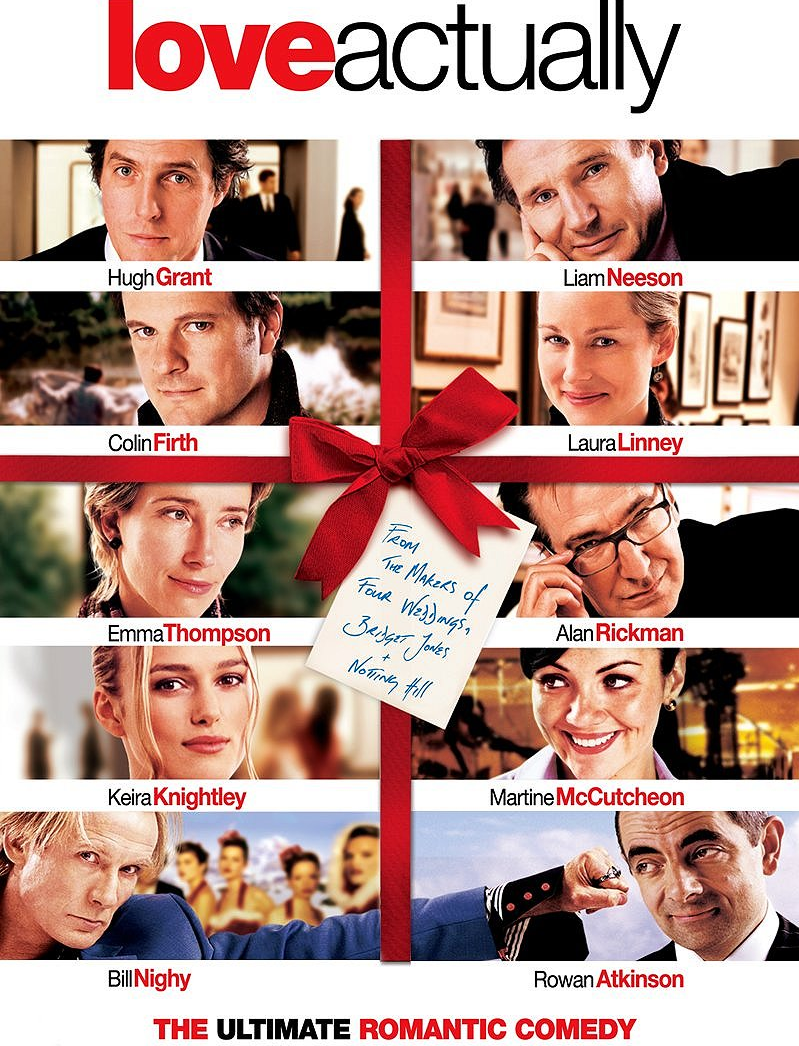
I Actually Hate Love Actually (But Watch It Anyway)

Christmas time is drawing to close. Now, the lead up to the annual booze fest where we really think that we can hold ourselves to drunken resolutions of extreme personal change and growth for the new year to come is beginning.

In this interim period between the day where we give each other presents and eat all the food, and the night where we drink all the alcohol and frantically look for someone to kiss at midnight or be destined for a year alone and unloved. it might be best to look back and reflect on some of the horrible Christmas movies that are unleashed upon untold innocents in this festive period.

Actually, instead of trying to discuss all the Christmas movies which may or may not be godawful, I'm just gonna focus on one. Because this is the one Christmas movie that since it came out I've ended up watching when it's on TV even though I think it is terrible and really don't like it. A movie that I know is objectively and subjectively bad, yet I am unable to not watch it to the end if I catch it on TV.

That movie is of course, Love Actually.


Well, duh.

From that guy who wrote Four Weddings and a Funeral, unleashing Hugh Grant and his affable bumbling onto an unsuspecting world. The movie that started the trend of telling multiple story lines about different couples set on a holiday. The movie where Liam Neeson doesn't have something taken from him that he will kill all the bad guys to get back. The movie that since its release in 2003 has become a permanent fixture of the Christmas period. The movie I can't help not watching when it's on television.

There are 10 separate story lines going on in this movie. 10 separate story lines. Focusing on 9 couples and one Rowan Atkinson. And none of the stories mesh or flow into each other in any meaningful or effective way. They sort of float in and out, lightly touching each other and are sort of loosely connected, which I understand is the point but it means that film seems directionless.

Aside from Octopus Boy. I always knew what his story was about.

The only thing that links the stories is that they're about relationships formed in and around Christmas time or something. I mean, some of the characters are inter-related or know each other. Emma Thompson's jilted wife character is the sister of Hugh Grant's prime minister character, and Laura Linney's awkward lonely woman character works for Alan Rickman's sort of cheating husband character and other characters are similarly sort of aware of one or two of the other characters. And... that's really about it.

Like the characters just exist in the periphery of other characters, which is a neat idea actually. Since this could show how the people we come into contact with in a day to day basis have their own lives with their own stories going on that we don't know about.

We all tend to think of ourselves as the stars of the story of our own lives, and the narrative structure used in the film could have been used to explore what a fallacy that is by showing how we all do it and therefore we aren't unique in thinking our story is important since everyone's story is important to them.

By focusing on so many seemingly unconnected story lines of seemingly random people, the film really could have highlighted that everyone sees themselves as the protagonist of their own story. But also showing how our individual narratives are barely noticed by anyone else since they themselves are wrapped up in their own narrative. Each story given the same importance since no one person's story necessarily matters more than any other.

"Tell me again how your story matters as much as mine."

However, that's not really the goal of Love Actually since it isn't really smart enough, or more fairly, self aware enough to attempt such a bold philosophic stance. It's like its narrative structure promises more than the movie attempts.

But also because really, the issue is not really that the stories aren't thematically linked, because they are. More so than I gave credit for earlier. That thematic tie of all being about relationships around Christmas is actually a stronger one than previously implied. By me. Than previously implied by me. Past me was wrong to mislead you so and is very sorry about that.

Since Love Actually, despite all the corny syrup it piles on everything, has a tinge of creepiness and sadness to it that you can totally miss if you focus on Hugh Grant fumblingly accidentally flirting with his (not) fat secretary or Rowan Atkinson being the most Rowan Atkinson-y jewelry salesman ever. About half the stories are actually about break ups or the lack of romantic love.

Yeah... they don't get together.

In terms of creepiness, you have the two love triangles. The one everyone remembers is where Rick from Walking Dead is love with his best friend's girl but unlike the Cars' song I linked to, she didn't even used to be his. He's in love with her just because he saw her, thinks she's perfect because she's pretty, and that's it.

Kiera Knightly's character even says to him that they haven't even really spoken to each other and she thought that he didn't like her. So, he's not even in love with her since he doesn't really know her, but just likes the way she Kiera Knightly's I guess? Then there's the infamous "sign scene" where he declares his love to her with cue cards while he pretends to be a group of carol singers so his best friend (her husband) who is in the house doesn't come to see.

He declares his love to her, while his best friend (again, her husband) is within earshot... that's just assdickery of another level. Like seriously, that is horrible. What a terrible, terrible friend. Yes, I hear the hordes of people who think this scene is cute or romantic say, "But the whole point is that he is not gonna act on those feelings, he's just expressing them to let her know and that's what great about it".

Yep, don't see anything inappropriate here.
People declare their undying love to their best friend's wives all the time.

And yes, he does say "enough" when she pity-kisses him but the fact is, he shouldn't have done the cards or let her know in the first place since he harboured those feelings the whole time his best friend was dating her without saying anything. As soon as he realised, "Oh, hold on, I'm infatuated with my best friend's girl", he should have killed those feelings immediately, not silently hold on to them and secretly lusting over her.

But okay, if he had to get those feelings out in order to put a stop to them, fair enough, but it's disrespectful as hell to his friend to do it WHILE THE GUY IS IN THE OTHER ROOM. That's just cold.

It's frozen.
(I am so sorry)

And I never liked that story line because of the creep factor, especially when it depicts the creepy thing as somehow romantic.

However, the other love triangle story is interesting because it's about a middle aged man in a relatively stale marriage nearly but not quite having an affair with his secretary. What's interesting is the way it depicts the affair, or more correctly how it depicts how the affair could have happened if Alan Rickman had gone through with it or if Emma Thompson hadn't caught him out... buying expensive jewelry for his secretary.

For it shows how the seemingly mundane grind of his life results in him being really bemused and yet intrigued by the attention his sultry younger secretary gives him. And that's what drives the near-affair, that attention. That feeling of excitement at a point in his life where he felt somehow dissatisfied.

"An attractive younger woman is flirting with me and I don't know how to process that."

But possibly the most interesting story is that of Laura Linney's character since it's a story we don't often get to see where a lonely woman chooses between romantic love and looking after her mentally challenged brother. And she chooses her brother. Despite the heartache it puts her through to always have to be on call.

To always have to put her wants and desires on the backburner or cast them asunder so she can be there for her brother. A brother who because of his mental issues cannot ever truly appreciate what she sacrifices for him. She gives up making passionate love to that walking Adonis pictured above because she forgot to, or won't, turn her phone off and her brother calls. That is an Adonis who she has had a crush on for years and yet when she has him in her arms, she gives him up near instantly for her brother.

She is on the phone to her brother while that hunk of man-beef is semi-naked on her bed.

While that might strike some people as sad, I see it as incredibly admirable. She has made a conscious choice to always be there for her brother even if that means not being able to live her life independent of him. Now, that is probably not the best way for her to live her life, but her dedication to her brother and the hurt it causes, it a story not often told or shown in a big budget romantic comedy, limited usually to overly serious indie dramas.

Maybe that is why I always watch Love Actually despite not liking it. Yes, there are too many stories and because of that, the narrative seems disjointed and you can't really get into some of the stories or identify with some characters. However, that means if you dislike one story, just wait a bit and another more interesting one will come along.

And I guess I can't really fault it for that, even if I still dislike I'm gonna watch it next time it's on just like I always do.


References:

Love Actually Wikipedia page

Friday, 19 December 2014

The Fresh Prince of Egypt


Now, this is an epic all about how
My life got flipped-turned upside down
I'd like to read the papyrus
If you'd just sit
I'll tell you how I became a prince of the land called Egypt

West of the great river Nile born and raised
By the pyramids was where I spent most of my days
Swappin' out gods' heads, Anubis for Nu
And all riding some chariots outside of the school
But when I was born, a pharaoh who was up to no good
Started killing the babies in my neighborhood
Got put in one little basket because my mom was scared
She said 'You're movin' with the river Nile to get out of here'

I was washed towards the palace and when it came near
The basket bumped the pharaoh's wife in the rear
If anything I could say that my luck was rare
Since she thought 'Nah, forget it' - 'Yo, Pharaoh another heir'

I grew up to manhood and learnt very late
I was a Hebrew, you know my people were slaves
I looked at the kingdom
I was finally equipped
To abandon my throne as a prince of Egypt


With the recent release of Exodus: Gods and Kings, many across the vast desert plains of the internet have asked a vital question in these difficult times of famine and ceaseless plague of cat videos: why are they making another Moses story when the best Moses story ever has already been made?


Those are valid points I suppose but I don't like getting into the "why are they rebooting this [movie/franchise/whatever], the original was so much better" argument, especially when the first movie in this instance is itself a retelling of a story thousands of years old. But also because the whole argument does seem to rest on a denial of any new reboot as unnecessary out-of-hand, which I don't really agree with.

Culture is based on the repurposing and retelling of older narratives again and again, making those tales reflect the times in some way or another. So even if the retelling doesn't capture the intent of the original narrative (or is terrible), it can often say something about the time in which that retelling took place. Like how now is the era of the gritty reboot which reflects a societal need for dark realism which filmmakers achieve by shooting everything in blue scale and making all their characters moody, since that's how you achieve realism apparently.

Also, I really don't want to talk about Exodus since I haven't seen it  and don't plan to, but rather am using that as a means to talk about Prince of Egypt because it actually is a superb retelling of the story of Moses. As an animated musical!

"I can show you the plagues,
Water becoming blood and frog filled.
Tell me, Rameses, when will
You let my people go?"

Which itself reflects the 1990s revival of animated musicals spearheaded by Disney and copied by other studios, like Dreamworks and Don Bluth. But we're not here to talk about Dob Bluth's attempts to copy the winning Disney formula in films such as Thumbelina. No, we gonna talk about Dreamworks' attempt to copy the winning Disney formula with Prince of Egypt.

But actually aside from the prevalence of Disney elements in the form of musical scenes and a couple of goofy moments, Prince of Egypt is a surprising mature film. Like really mature actually, for what is ostentatiously supposed to be a children's animated feature.

The film opens with slaves being whipped and worked to exhaustion before cutting to mass infanticide. We of course then see the protagonist's mother weeping as she has to give up her baby with only the thinnest of hopes he'll survive, singing one of the saddest lullabies in cinematic history as a single tear falls down her cheek and her hair is blown across her face.

Drama!

Did I mention this goes on while babies are being slaughtered in the hundreds? Because that is literally happening in the background of this scene. It is the driving motivation for the reason she is putting her youngest child in a basket and putting him at the mercy of the current of one of the biggest rivers in the world because that is a safer bet than the horror behind them. Again, this is supposed to be a children's animated film.

Now, some people might read that and think I'm against violence or scenes of brutality in children's movies. I'm not, I'm just impressed at how far this movie goes for it. Like it really tries to go for the mature angle but doesn't just hint at some heavy stuff, it hits you right in the face and confronts you with it. Some of the scenes in this movie are legitimately terrifying, like the plagues.

Which is appropriate in an attempt to adapt one of the heaviest and most epic stories in history, one that forms that cornerstone of several belief systems. You know they took care in adapting it since they say so at the beginning of the film, although they admit some changes have been made to the source material.

And I have to say in all honesty, most of the changes they do make to the story are welcome additions to the Moses tale.

I for one quite enjoyed the introduction of a snowman as Moses' goofy sidekick.

Possibly the biggest change was making Moses and Rameses brothers. That is brilliant. In the original biblical text, Moses is just raised in the palace and is actually found by the pharaoh's daughter, not his wife like in the movie. Also, his biological mother manages to end up being his nanny for the first few years of his life.

That is fine and all, but making it the pharaoh's wife who finds Moses' basket and having the pharaoh adopt him as a second son adds a Shakespearean level of drama to the already heavy tale. Because this means that later when Moses is trying to get the pharaoh to let his people go, the pharaoh isn't just the stubborn ruler of Egypt, he is Moses' brother.

Like with Loki and Thor, this estranged brotherly dynamic creates more tension and drama than if the pharaoh had been some ruler that had no real connections to Moses. Especially since the film spends a lot of time building up the relationship between the two and you can see the affection each has for the other.

So, when the two brothers are pitted against each other in the second half of the film, there are levels of betrayal and anguish which wouldn't have been possible if Moses was just some dude that lived in the palace.

Pictured: Brotherly betrayal and anger.

Another thing that I noticed when I watched Prince of Egypt again for this post, is that there is no moment to breathe in the narrative. Each scene rushes into the next with no real moments of quiet to chill for a second and absorb the intensity of the scene before. There isn't a lull in the whole film.

It starts with slaves building gigantic statues, then pans to mass infanticide, before showing us the heartbreak of a mother giving up her child, then that child being swept across a raging river narrowly escaping being crushed or eaten by boats, crocodiles or hippopotamuses, then cut to slight drop in pace as Moses is discover by the pharaoh's wife... cut directly to a high speed chariot race between Moses and Rameses all grown up. And that's just within the first five minutes or so.

The film's pacing is relentless. One heavy scene leads directly into the next, the plot progressing at a breakneck speed with no reprise. Which really moves the film along and adds to the intensity and drama of the story.

But one of the real reasons I wanted to talk about Prince of Egypt is because it is gorgeous.

Gorgeous

Seriously, this is a beautiful film. The visuals and designs are just stunning, while the mix of traditional hand drawn animation with touches of CGI are at times breathtaking.

I was tempted to just put up a bunch of screenshots from the movie with captions saying, "Look at that, no really, look at that!" and "I'm telling you, look at that!" for this post and be done with it, the pictures saying more than I ever could.

Look at that!!!

The framing in that image is perfect. And using the statue behind the pharaoh to symbolise his authority and the weight of tradition and power he holds? Fantastic. And the side profiles make for a more sharp and compelling contrast to the wide expanse of the background. It's a gorgeous shot in a film fill of gorgeous shots.

And the visuals often strikingly enhance the drama unfolding onscreen in clever and majestic ways. Couple this with some effective and suitably epic music, you end up with a scene like The Plagues, which is just amazing from beginning to end.


Like I said, amazing from beginning to end. It just encapsulates the entire movie within one scene. The plagues themselves are depicted with awe-inspiring devastation and some of the imagery is unbelievably evocative and striking. And the animation snaps with such pace and sense of movement. The cuts between the two brothers and

All of this to mirror the song, which is extremely powerful. I love the way it builds with the choir near whispering as it begins before belting up to the heavens. Also, while the choir are singing about the plagues and the devastation God has wrought on the Egyptians, Moses and Rameses instead sing about their relationship. And this is where making them brothers really shines.

Moses sings about his extreme guilt and anguish at having being chosen by God to be his prophet, knowing the hurt it is causing Rameses but resolute in freeing his people. And Rameses sings about the bitter sense of betrayal and anger at the little brother whom he loved and can't understand why the joking happy-go-lucky kid he grew up with would be doing this to his kingdom and him.

Placing their brotherly rivalry over the backdrop of the terror of the plagues just pushes the drama into another playing field entirely, which perfectly matches the intensity of the music and the really powerful imagery in the scene.

Oh, and Ralph "I am Lord Voldemort" Fiennes voices Rameses and sings his part in the song. I have nothing more to say, I am content.


Friday, 12 December 2014

Post Not Found - Try Again Next Week (Listen to My Music in the Meantime)

I tried but I seriously can't write a blog post this week. The two topics I wanted to write about (both of which are fantastic by the way) I need to do more research on and I am just too tired from life stuff to even.

I don't like that since I have made it something of a personal goal or target for myself to write a blog post ever week and I've been quite good at keeping to that. I've only missed the occasional one here or there and I'm kinda proud of that consistency.

However, I am totally giving this week a miss because I'm just exhausted and not prepared and I got dumped last week so I think I get a pass.

Hey, he said in a completely natural segue way, do you guys know that I write music? Because I do. I even record it and put it online for people to listen. You can download it too... for free! Yes, for free! Just go here for free music: https://soundcloud.com/caleb-sherriff

Instead of writing a proper blog post, this is just a shameless plug for my music and if you think that I should feel shame for plugging my music with no qualms when you came here for a blog post, dammit - I'm sorry, I guess?

But yeah, I totally feel no shame about this. I like writing songs and I like people listening to them and realising that they have never known true emotion until I encapsulated it in song form.

Have a listen, share with your friends, download a song, remix it until it's completely unrecognisable, I don't care as long as you check it out here: https://soundcloud.com/caleb-sherriff.

Thanks, I be back next week with a proper blog post but here's a picture of kittens in mugs just cos.

Yes, they're little kittens in mugs and it's frickin' adorable. We get it, jeez.

Did I mention you can check out my music at this link: https://soundcloud.com/caleb-sherriff?

Friday, 5 December 2014

Forgetting Sarah Marshall Again and Again and Again

This is about to get personal. More personal than I have ever been on this blog. So if you have an issue with personal space since intimacy with another human being gives you a bad rash, maybe you should sit this one out. It might get uncomfortably intimate up in here. No lie, tears may be shed. I know I have shed more than a few.

My girlfriend broke up with me this past week. Don't worry, this isn't a pity post. I'm not looking for sympathy or for people to go "ah, poor baby". However, hugs, if offered, will be appreciated and reciprocated. Rather this is just a rambling post about break ups.

This is my third break up in two years. So you could say my heart has gotten so used to break up pains, it feels more weird when it's not breaking than when it is. Well, that's not entirely true but heartache has become a familiar friend to me over the past couple years, possibly because I've been too clumsy with my heart, dropping it all over the place.

I know clumsy hamster buddy, I know.

Now, here's the thing. I have no walls. Like metaphoric walls. Around my heart, To protect it against getting hurt by people because I let them in. Normal people have walls, I know this. And people who have intimacy issues or have been hurt in the past have many walls, often tall ones. I know this too because I've often had to scale them, which I did like wall-crawling Spider-Man going all arachnid over the place. But me? I'm an open person. Perhaps too open.

Although I have been hurt in the past, I haven't set guards around my heart protecting it against those who gain my trust only to cast it aside like an used paper coffee cup. My trust is a novelty mug from Disneyland Paris and should be treated as such. By which I mean treat that shit with care, it's from freaking France!

(Note: Neither myself nor my metaphoric novelty trust mug are in fact from France or are associated with Disneyland Paris. This was merely a metaphor for comedic hyperbolic purposes.)

Pictured: The place of magic and wonder that the metaphoric mug which symbolises my trust is not legally affiliated with.

And in all fairness, only in one of my past relationships did the person I let in betray my trust in any malicious or callous way. However, that person had a multitude of issues, like a whole host. Insecurity, trust, confidence, intimacy... No seriously, if her issues were elves, they could have stormed Mordor in an afternoon, those giant troll-pulling gates be damned.

And I tried to help her with some of those issues, I did. But I should have learnt from my previous relationship that you can't fix someone, especially if they don't really want to be fixed. You can only be there for them and hope they right themselves and that when they do, they still want or need you around, but I'm already getting my story mixed up.

Let's start at the end. Well, the end of my first relationship in the past couple of years. Relationship 1. This was with a girl I loved more than I thought it ever possible to love someone. My every waking thought was about her: what she might be doing, when I would be seeing her next, how much I liked the way she did certain things, or the things she said or how beautiful she was. I wasn't just in love, I was obsessed. To say I put her on a pedestal is an understatement of such gigantic proportions as to be laughable. I couldn't understand how someone so amazing had chosen to be with me.

I tried to find an image to convey an overwhelming sense of amazement but couldn't find anything appropriate.
Instead, enjoy this image from The Amazing Spider-Man 2: Pulling Rhino's Pants Down in Public.

The problem was that she didn't love me back. She cared for me but she didn't love me. However, even if she had loved me back, it wouldn't have really been a healthy relationship. I was far too infatuated and had wrapped my identity around her, losing myself in the process, sacrificing my needs for her time and time again. Don't get me wrong, she never used me. I did this all on my own accord. I just wanted her to be happy.

Did I mention that she suffered from depression since she was still in love with her ex and also had suicidal thoughts? No? So yeah, that was a thing. I often had to talk to her about why life, although it can be cruel and ugly, can be wonderful, beautiful, and is worth living. Also, I spoke to her about her ex, thinking that if we talked it out, she would get over him and possibly heal and start loving me. That obviously didn't quite work out the way I hoped.

Again, this is not to judge her or paint her in a negative light. She is a wonderful person that had some things she needed to sort out on her own and shouldn't have been in a relationship... which is why (long story short) she eventually broke up with me.

Which destroyed me. Absolutely ended me. I wept for weeks (months?) on end. I felt emotional pain so piercing I literally couldn't breathe at points, my chest feeling like it would burst, my mind unable to comprehend how a break up could hurt so much. That her rejection of me and my love would ruin me so, give me so much pain that I would break down in tears, gasping for breath. I had break ups in the past but nothing like that. Nothing could be like that. I was utterly broken.

I don't have an image that could possibly capture the pain I felt so here's a picture of two ducklings in a wine glass.
You're welcome.

It basically took me about a year to get over it. Problem was that I started another relationship with someone I shouldn't have. Not only because that person is the one with the host of issue elves but because I wasn't ready for a relationship and shouldn't have been anywhere near one. Especially not with someone who had issues of their own resulting from stuff that had gone down in their life which had scarred them and that they needed to deal with. This is Relationship 2.

I won't really go into much detail Relationship 2 since it just is something I realised wasn't a good thing. Essentially, I was trying to convince myself I loved her to prove I was over Relationship 1 - Fun fact: I wasn't. This meant I told her a lot of things in the first couple of months about how I still cared for my ex that I shouldn't have told her and helped fuel her insecurities for the remainder of our relationship.

When I was with her, I had to deal with the drama (and there was so much drama - like all of the drama) her issues created. And once I did get over my ex, I realised that the relationship I was in wasn't healthy and most of the stress in my life came from dealing with all the drama. It just wasn't good. But eventually Relationship 2 ended, which was good.

And I felt good. For the first time over a year or so, I felt whole again. I felt myself and not reliant on another person. Enter my latest relationship, the one which just ended. Relationship 3. It was great, my first healthy relationship in years.

We fitted together so well, it was ridiculous how natural it felt being together. It wasn't like I had another person come into my life, it was more like there was a hole in my life I didn't know about and she just fitted into it like she always should have been there but I hadn't found her yet.

I'm not sure if she is the glass slipper or I am in this scenario.
You wouldn't believe how many pictures of bra fittings you get when you put "perfect fit" as your search term in Google though.

And I wasn't obsessed or lost myself in her like I did in Relationship 1. I didn't put her on a pedestal but saw her as a person. Now, that doesn't mean I don't think she is amazing. I do. She is. So amazing. Like real pretty and smart. And such a nerd. Like a legit nerd, dorky and everything. Cute and adorable. Timid at times, and at other times stubbornly firm in her resolution and opinions. And she liked me. We were good together. We were happy together.

But it was starting to get real. As in a real relationship. Remember how I mention earlier how I don't have any walls? Well, that tends to mean that I fall in love quite easily since I don't really have any barriers. I've found this can be a problem since the people I fall in love with often don't fall in love with me at the same rate because they tend to have a lot of walls up. And that's what happened here, I was falling quite fast for her and she just couldn't keep up since she still had her walls up. I was scaling them like nobody's business because it's personal, don't pry.

Anyway, another long story short, she didn't feel ready for a long term relationship and therefore ended it before it went any further. I don't blame her. If someone isn't ready, they're not ready, and nothing you can say or do can really change that. I'm just sad it ended. It hurts but I don't think I've fully processed it yet since I haven't had a cathartic release of tears yet, although I have cried. But I'm sure that's on the way.

Oh, that's right. I'm supposed to be talking about Forgetting Sarah Marshall.

Yeah, this pretty much sums up how I feel right now.

I have watched Forgetting Sarah Marshall with each of my past three girlfriends at their request. So it does seem to have some resonance, possibly because it is the greatest break up movie ever. Well, let me rephrase that, it is the greatest break up romantic comedy.

For although it is a romantic comedy and follows the formulaic narrative structure of a romcom with the cliches associated with the genre, it plays with that structure and those cliches in some clever ways. Where most romcoms are all about the couple meeting and forming a relationship, this is all about how the end of one relationship leads to another, so the forming of the relationship is still there but it is framed differently.

But where Forgetting Sarah Marshall really shines is in how honestly it depicts the hurt and grieving process one goes through after a break up. And most of that comes from the fearless performance from Jason Segel.

His character Peter starts the movie naked, literally baring himself to the audience at his most intimate and vulnerable. And it is at this point after we are introduced to his character that he is dumped by Sarah Marshall. She rejects him when he is barring all to her, she rejects him when he being his most open to her.

You can also totally find a frame grab of his penis online if you were so inclined.

Segel isn't afraid to portray Peter through all the stages of grief and insecurity that he goes through after his break up. Although played for comedy, his performance is honest and raw in the way it just shows Peter either scared, hurt, weeping, bitter, numb, depressed, and vulnerable with no real filter. The fact he wrote the film as well just elevates my respect for the man.

And it's this honesty that I think makes this movie resonate with a lot of people. Oh. it has a lot of funny moments and memorable lines, but it's the fact the film's depiction of the heartache following a break up and the difficulty of letting go to start a new relationship (with Mila Kunis' Rachel) seems real that really strikes a chord.

There's a moment when Peter is just hit by a series of memories of when he and Sarah were together and happy that just hit him one after the other via flashback and that is so true. Memories of a relationship can just strike out of nowhere and hit you in quick succession. A part of one memory makes you remember the next memory and something in that memory makes you think about another memory and it just goes from there.

Like the time when you played strip backgammon which made you think of how pretty her hair is, which made you think of that one time she tied her hair up and although it was different she still looked beautiful because her eyes are so striking, which made you think of that time you just spent ages gazing into each others eyes because you were being sappy and so on and so on.

Look. The cuteness before the impending agonising heartache.

The movie doesn't shy aware from the ugliness that happens after a break up when you just feel worthless and are so filled with hurt and anger and insecurity and loss of self. Again, this is within the context of a romantic comedy.

Also, a nice touch is that when Rachel finally accepts Peter at the end of the film, she accepts him when he is naked. Again, when he is at his most intimate and exposed, where Sarah Marshall rejected him, she accepts him. Which is a kinda touching and humorous moment.

Obviously, there have been dramas which have dealt with heartache in a more intense manner, but I doubt if it could be more true. It might go depict it with more seriousness or raw emotion, but the depiction in Forgetting Sarah Marshall is as true as can be. And I think it should be applauded for that just as much for anything Paul Rudd's character Kano says or the great gift to mankind that is Peter's Muppet Dracula musical.

Anyway, thanks for reading me ramble on about my failed romantic relationships before I declared Forgetting Sarah Marshall to be the greatest break up movie ever as matter of fact. I just wanted to share what's been going because, hey, I can. It's my blog.

Thanks for reading though.


References:

Forgetting Sarah Marshall Wikipedia page