Friday, 18 March 2016

Adaptation: A Meta-Textual Comedy About Trying to Adapt

The review starts oddly with reviewer Caleb Sherriff, 26 and wondering what he's doing, narrating in the third person as he watches the film. He's not sure if this is a good idea since it's likely most people won't even get what he's trying to do. It's so forced - writing the review in the style of the film's narration by Nicolas Cage's neurotic Charlie Kaufman? That's surely a hamfisted, inept attempt at parody. Hamfisted and inept mean similar things. Off to a great start.

Caleb is undecided if he should review the film as a live blog reaction like his last review which was fun or save that for the next review in the series. He is also still questioning whether he should keep narrating in the third person since it must be annoying to the reader and he doesn't want to alienate the little readership he has.

What if this is just a pointless exorcise and I'm just wasting my time writing words no one wants to read?

He decides to give some background here so those reading this will know what the film he is supposed to be reviewing is about. Adaptation was Charlie Kaufman's first script following the success of his breakout debut film Being John Malkovich and ostentatiously is supposed to be an adaptation of the non-fiction novel The Orchid Thief by Susan Orlean. Caleb writes 'ostentatiously' since Kaufman was struggling to adapt the novel into a screenplay and was facing severe writer's block due to his failure and the pressure he felt to live up to the success following Being John Malkovich.

Therefore, Kaufman decided to write the screenplay about his difficulties adapting The Orchid Thief into a screenplay and wrote himself into the script. Of course being Charlie Kaufman, this isn't as simple as that would make it sound. He also created a twin brother for himself, Donald Kaufman, who shares screenwriting credit on Adaptation, invented a made up romance between Orlean and the novel's subject, John Laroche, and fabricated completely fictional events involving Orlean, Laroche, and the Kaufman twins set three years after the novel's release.

This makes sense for Charlie Kaufman's writing process.

The film opens with Nicolas Cage's Kaufman narration as the credit appear on a black screen setting the tone of the movie right away, self-deprecating, neurotic, incredibly meta-textual and self-aware. Caleb had to turn the volume up at the beginning since he missed the first sentence or so. He's still milling over whether he should keep doing this review in the third person but sometimes he feels he just has to commit even when it probably isn't a good idea. He's stubborn like that sometimes.

It then does this thing where they go to a scene three years earlier showing Meryl Streep's Orlean writing the book and then goes to 2 years earlier than that to show Chris Cooper's Laroche stealing an orchid from a reserve. Caleb isn't sure if that is is a flashback within a flashback or a dramatisation of the events of the novel within the dramatisation of the writing of the novel or if Laroche's scene is just a dramatisation of the event which sets up Orlean to research the article which eventually turn into the novel.

Caleb brings this up, not because it's the first scene in the film chronologically, he skipped two previous scenes, but because it shows the dense layering that is going on in this film. While there were aspects of this in Confessions of a Dangerous Mind, it did seem a bit toned down whereas this film is full on layering.

"Hey, remember how I don't exist but still share screenwriting credit? Layers, right?" - Donald Kaufman, probably

Caleb notes that additional of Charlie Kaufman's twin brother Donald is a nice touch since his bouncy optimism and carefree nature is a perfect counterpoint to Charlie's (the character, not the person) eternal pessimism, self-deprecation, and depression. Also, it allows Nicolas Cage to embody two completely different roles within the same film and have those roles balance the other out.

While he finds it slightly disappointing that there is no real Nic Cage freakout in the film, Caleb thinks Cage's performance it fantastic. As Caleb already commented in his post on why Nicolas Cage would have been the best Superman ever,
[Cage] wants to you experience a visceral reaction to what he's doing, where the lines of reality are blurred such that even his most measured performances have a surreal quality to them. You can't tell what elements are part of the performance and what are real.
Which makes him an actor who is perfectly suited for a Charlie Kaufman film. Kaufman's movies always have surreal touches and meta-textual layering which obscure what could be considered real. This is a film where Cage plays Charlie Kaufman himself and his fictional twin brother Donald after all.

Oh, Meryl Streep's feet star in this too.

Ironically for a film about writer's block and the difficulty of adapting someone else's work, Caleb is struggling to write this review consistently but has to do it in short bursts and still doesn't know what his final comments on the film will be.

He also noticed that Cage's Kaufman narration is in the first person but he's being doing this review in the third person. Kaufman only starts referring to himself in the third person when he writes himself into his script way later in the film. As parody goes, this review is pretty much dead on arrival, Caleb observes with quiet resignation.

He has been repeatedly stopping the film to write which has completely disrupted his viewing experience so he has decide to let the film play and then write about it after.

I can do this.

Okay, one more pause so Caleb can make an observation before he forgets and it bugs him he didn't write it down. Kaufman's protagonists are often unlikable, anxiety-riddled white men who are hesitant or unable to make a connection with anyone else since they are so obsessed with their own problems and overthink all their actions leading to inaction. And Kaufman writes the fictionalised version of himself Charlie as possibly the most unlikable of his protagonists.

It is definitely an unflattering depiction. I mean, Charlie sees everyone woman as a potential lover and we constantly see him masturbating to sexual fantasies. Whether this is meant as an exaggeration of how he views himself or his own anxieties, it is an interesting choice. Luckily Cage pulls it off while still being charismatic due to his innate Cage-ness.

But the film is also brutal in its depiction of other characters as well. Each character is given moments to display some admirable qualities while also displaying some real disgusting, yet all too human, traits.

"Yes, I'm a morally ambiguous rogue who steals endangered flowers to make a drug but I can be real poetic in my passion."

"Wow them in the end," Brian Cox's script guru Robbie McKee tell Charlie.
Find an ending, but don't cheat, and don't you dare bring in a deus ex machina. Your characters must change, and the change must come from them.
So it isn't that surprising the last act of the film is rather different in tone and execution that rest of the movie. For one thing, the movie is no longer alternating dramatisations of the events of The Orchid Thief set three years earlier or scenes of Charlie trying to adapt the screenplay, it's about things happening in the now as the Kaufman brothers interact with Orlean and Laroche.

For another thing, Charlie stops continually narrating. Also, he starts to include Donald and takes action to meet, then investigate Orlean. The whole movie to this point had been about Charlie's depressed loneliness and inaction, his inability to grow, to change, and here he is including his brother and taking action.

"In hindsight, maybe inaction would have been safer," - Charlie, probably.

The last act is almost a detective adventure as Charlie and Donald follow Orlean to Miami where she meets Laroche to partake in illegal orchid drugs and extramarital sex. But Charlie being Charlie is caught and they take him to the swamp to kill him. However Donald helps him escape but is shot by Laroche before dying in a car crash.

In a nice twist, Charlie is saved by a deus ex machina as an alligator kills Laroche before he is able to shoot Charlie. In some ways, it's like the last act both takes on McKee's advice and ignores it in equal measure.

The film ends with Charlie in his car narrating how he knows how to end the film, with narration as he sits in his car. Because the film couldn't be more meta or self-aware if it tried. And it tried.


Musing Rating - 5 Musings

Enough meta-textual layers to have you question where fiction ends and reality begins. But then you remember that Charlie Kaufman doesn't have a twin brother and that reality is a myth.


References:

Adaptation Wikipedia page

Friday, 11 March 2016

Confessions of a Dangerous Mind: We'll Do it Live

I have never seen Confessions of a Dangerous Mind. In fact, I didn't even know it was a Charlie Kaufman screenplay until I started research for this series of articles. The only thing I knew about the film was that I recognised the poster and that George Clooney was in it. Well, not only was Clooney in it, he also directed it. Furthermore it was his directorial debut.

Because of my complete and utter lack of knowledge of this film, I decided to do something a bit different for this review. For the first half, I'm gonna look at the backstory of the film's production. Although this is part of my series of Kaufman Musings, the focus will be on George Clooney as a director since there was some dispute between Kaufman and Clooney over the film's script and the final product.

For the second half, I'm going to do a live blog reaction-review of the film. By this I mean, instead of watching the film, thinking about it, then writing my review as I usually do, I'm going to write my review as I watch the film. So my reactions will be in the moment and without any time for reflection or analysis.

"This is going to end well!"
I actually have no idea what the context is for this image. Haven't watched the film yet.

First Half: Confessions of a Dangerous Development

Well, one of the first things that comes up when researching this film is its troubled birth. The script languished in development hell as various directors and actors, ranging from Curtis Hanson, Sean Penn, David Fincher, Mike Myers, Ben Stiller, Johnny Depp, to Bryan Singer, were attached to the film at various stages but left the project.

Eventually George Clooney, who wanted to star as a CIA agent in the film for years, took over directing duties stating,
"I directed it because it had fallen apart so many times that it wasn't getting made. We were in pre-production, we were about eight weeks from shooting, and they pulled the plug from us financially. We had about $4.5 million against it, which meant it wasn't going to get made, because now it was going to be a $40 million film. So I thought if I came on board as a director, for scale, and was able to bring everybody else on inexpensively, if I could get the film back down to 30, including eating that $4.5 million, then I was going to be able to get the film made. That was a big part of my pitch to Miramax."
Essentially he directed it since he thought it wasn't going to get made otherwise so he might as well do it and do it on the cheap. Plus, while he apparently really liked Kaufman's script, that didn't mean he was above changing it, much to the chagrin of Kaufman.

Was this in Kaufman's original script?
Who knows, I still haven't watched the film yet.

According to Kaufman, while he was completely involved in the process with directors Michel Gondry and Spike Jonze, Clooney wasn't interested in hearing his input once filming started. He obviously wasn't happy that if rewrites were needed, that he wasn't consulted (and there is more than one account that Clooney did the rewrites himself). So Kaufman issued this sick burn,
Clooney went on forever about how my Confessions screenplay was one of the greatest scripts he’d read. But if someone truthfully felt that way they’d want the person who wrote it to be on board offering their thoughts and criticisms. But Clooney didn’t. And I think it’s a silly way to be a director.
Clearly Kaufman cuts deep. And although Clooney has gone on record stating that Confessions was a great screenplay, it is somewhat telling that he never once mentions Kaufman during the DVD commentary of the film.

"We never speak his name." - Clooney, probably

So it's not altogether that surprising that when Paramount decided to run a Charlie Kaufman retrospective with participating theatres in the U.S following the release of Anomalisa, that Confessions of a Dangerous Mind wasn't included (neither was Human Nature but we'll get there when we get there). There is some speculation that this is because of the non-credited influence Clooney had over the script and final product.

Confessions is like the bastard child Kaufman acknowledges is his but will never legitimised as a heir to Winterfell. He has all but disowned the film and it is rarely discussed or mentioned as a 'Charlie Kaufman film' which makes it an interesting anomaly in his body of work. An anomalisa, if you will.

Now, with all the backstory of the movie's development and awkward parentage out of the way, let's get into the first ever Musings From Another Star live blog review.

Wait... Both Brad Pitt and Matt Damon are in this?

Second Half: Confessions of a Live Blog Review

The film opens with Sam Rockwell's naked butt and philosophical narration. Which is a good place to start. This follows a disclaimer that the film is based on Chuck Barris' journals and stuff. We then get a separated-by-a-door dialogue exchange between Rockwell's Barris and Drew Barrymore's Penny Pacino.

What is immediately noticeable is the impressive lighting with the use of shadow and interesting cinematography in the shot from inside Barris' apartment, with Rockwell's face only partially light. The colour palette is interesting too since Clooney uses different effects to show the different stages of Barris' life.

Also, Michael Cera is young Chuck Barris.

They also drop a nice little nod to Clooney's father's talk show as a tour guide rattles off a list of TV shows in the NBC foyer. The film flicks between the narrative and what appears to be documentary talking head clips for some reason that is a little disorientating at first before you figure out what's going on.

There is a lot of Rockwell's butt in this movie. When his character meets Barrymore's his stark naked standing in a fridge because he has a hell of a butt, you guys. There's then a montage of Chuck and Penny making love in the shower and other places that ends with them completely pashing each other's faces in a cinema full of people dutifully watching a movie. This is a reversal of the earlier shot where Chuck was striking out with a girl in a cinema full of people making out.

What? You thought I wasn't going to put a picture of Rockwell's fine derriere? No way.

After that, there's a neat bit where the camera zooms in for an extreme close up on Rockwell's face as Penny is talking to Chuck as he gets the idea for a TV game show, then zooms out as he is pitching his idea for The Dating Game to a board of television executives.

Here comes the successful TV pilot show montage. Oh wait, no. ABC passed on it for a show called Hootenanny. Better luck next time Chuck. Oooh, there's Clooney! I saw him in the background in a previous shot but now here's his face right and centre.

So of course, Chuck noticed Clooney watching him and accuses his character of pedophilia. They then have lunch together as Clooney's CIA agent tells Chuck he wants him to be an independent contractor working unofficially for the CIA to help stifle the rise of communism.

Naturally, the CIA wants an unsuccessful 32 year old television producer to be an assassin for them. Since Jesus was 33 when he died and came back to life so he better start cracking, as CIA agent Clooney explains. Here follows a rather amusing assassin training montage which is darkly offbeat.

Darkly offbeat and with science!

Alright, talking head who knows a lot about Chuck Barris but won't tell us, don't tell, I don't care. I know it's just set up for the the next scene when Chuck has his first mission in Mexico to kill a bad guy. We know he's bad since CIA agent Clooney tells him so. Cut to the future? with bearded Chuck and Rockwell's naked butt watching TV playing the American national anthem.

Cut back to the late 1960s? and Penny is now a hippie. We know this because she tells us. She is also dressed as a hippie. She had been crashing at Chuck's apartment and informed him the Larry Goldberg from ABC left a call. Oooh, nice split screen effect during the phone call when Chuck calls him back.

His first tapes of the show are too lewd and sexual for ABC's liking so they have to make it less so which leads to a drill inspector scene of some kind. And it's a hit and we've jumped several years. CIA Clooney's back with a new mission for Barris.

He also gives Chuck a new idea to improve the show by upping the stakes for the game show by giving the couple a date in Europe where he would be the chaperon, which would work as cover for his mission.

Oh, there's Pitt and Damon! And they've lost to chubby bachelor number 3. Well, I guess they were technically in the film. For all of 2 seconds.

Hi and bye guys.

And now, we have spy stuff. Haha, Chuck went into the wrong booth occupied by a sexy lady. Now he's in the right booth occupied by a femme fatale Julia Roberts. The musical score in this scene is great, jazzy and noir-ish. Huh? He's just killed someone and I have no idea why.

This is followed by a scene with Robert's sexy spy Patricia which is gorgeously lit by candles and the fireplace fire. Then they have sex, I think.

Now, we have The Newlywed Game, which has something to do with a fridge? Apparently contestants sold out their new marriage for a household appliance. And another fireplace fire lit scene but with Penny this time. She brings up marriage which freaks Barris out.

But just look how well shot both scenes are.

Holy shit, Julia Robert's femme spy just told Barris "kill for me, baby" while he is on a mission in West Berlin. I can't tell what tone this film is going for but it is enjoyable trying to figure it out though. I'm going for satirical with a bit of its tongue in cheek.

Wait, what? Chubby contestant number 3 is a KGB spy? Well, okay then.

Now we have The Gong Show which seems like a precursor to American Idol if it was limited to just the opening auditions with all the terrible singers. Chuck isn't happy that he was lowering the bar of American television by giving people the lowest common denominator.

"I hate that which I have created and there is no redemption for what I have transgressed," - Barris, probably.

And we're back to spy stuff. Meeting with another spy to discuss why they do the spy stuff they do. Again, the lighting is exquisite. Oh, and now the tone has gone really dark as the older spy describes his first kill and we see a flashback of Chuck's first kill.

Shit, the older spy just committed suicide. Where did this dark turn come from? Like, seriously. I was enjoying this relatively light film that just went suicidal on me.

I like the clever double romance montage with Penny and Patricia set to a terrible performance of "I Can't Help Falling In Love With You" by an Elvis impersonator. It's quite funny seeing Chuck and Patricia flirt while assassinating people and a little moving to see Penny and Chuck's relationship.

And now it's heavy again as Penny catches Chuck having sex with another woman. In their house. Where they live together. Not cool. But again, shot cleverly as Chuck and the other woman are shot in silhouette. This is followed by a touching reconciliation scene with Penny and Chuck where he tells her she loves her in his own way. Which is a dick thing to say but Rockwell sells it.

Still really like having them shot in dark silhouette to symbolise their guilt or whatever.

CIA Clooney and Chuck have a confrontational scene where he tells him to go after the mole who killed the suicide guy from earlier (oh, yeah, it wasn't a suicide). But now Clooney, CIA agent has killed himself in an absolute gorgeous shot by the pool as blood flows delicately into the water...

Minor key piano single chord doodling dominates now as Chuck spirals into paranoia and the film puts out a number of impressive visual tricks as we get a montage of flashbacks and glimpses of Chuck's mind. This is the closet the film has gotten to feeling like a pure Charlie Kaufman film.

Why did he go to Patricia when its obvious he should be with Penny and he feels bad about how their relationship turned out? Also, their relationship is cuter. Although Patricia does know him more since they've spied together.

She just poisoned him. Apparently she's the mole and killed everyone. Oooh, wait. It's a bluff. He knew the was poisoned and made it look like he switched the cups so she would switch them and poison herself. Well-played.

Oh yeah, Chuck and Penny get married!

Hmm, that was a weird wedding. Oh, it transitioned to Chuck and Penny's wedding where the pastor just listed off all the shows Chuck has made over the course of his career... and he's just told Penny he killed people for the CIA and she doesn't believe him.

The last game show idea Chuck gives in the film is called the Old Game, where a group of old men come onstage with loaded guns and describe their lives and how close they came to realise their dreams. The winner is the one who doesn't blow his brains out. The film ends with a shot of the real, aged, Chuck Barris in 2002.

Cue the fun "There's No Business Like Show Business" credit music song!

End of Film Thoughts: 


This whole film is a testament to Clooney's visual sense and how closely he works with his cinematographers while directing. It's a bit crazy this is first film considering how clear his sense of how to use the camera is.

That said, aside from a couple of scenes, the movie never really feels like a Charlie Kaufman film since Clooney's directing sensibility is quite at odds with Kaufman's writing. That doesn't mean it isn't enjoyable, because it is, even if the tone is a little inconsistent. But it is quite clear why most people often don't include this film when they think of Charlie Kaufman movies.


Musing Rating - 3 Musings

There's enough going on the film that it's quite an enjoyable watch and Clooney definitely impresses for a first time debut by an actor turned director. But there isn't much left to say once the film ends aside from, "that was interesting" and "damn, Sam Rockwell has a nice butt".


References:

Confessions of a Dangerous Mind Wikipedia page

Confessions of a Dangerous Mind - IMDb

George Clooney Confessions of a Dangerous Mind interview - BBC

George Clooney talks about Confessions of a Dangerous Mind - About.com

Sam Rockwell talks about Confessions of a Dangerous Mind - About.com

Drew Barrymore talks about Confessions of a Dangerous Mind - About.com

Inside screenwriter Kaufman's Mind - BBC Online

Charlie Kaufman Wasn’t Pleased With ‘Confessions of a Dangerous Mind’ - Slash Film

Do Not Miss Charlie Kaufman Retrospective - Slash Film

Man With a Mission: Get the Film Made - New York Times

26 Things We Learned From the 'Confessions of a Dangerous Mind' Commentary -
Film School Rejects


Friday, 4 March 2016

Eternal Sunshine of the Spotless Mind: Remembering How to Forget

They say love hurts. But what hurts far more is remembering a love that is no more. That remembrance is what really hurts. Remembering what was lost, what you had, what could have been. Remembering the times shared, the minuscule intimate moments, the private conversations and public displays, the complete happiness and utter despair. Remembering what went so right you couldn't believe it was true. Remembering what went wrong but not sure if you could have done anything to stop it.

Eternal Sunshine of the Spotless Mind is a love story about memory. Or a memory story about love. Whichever you prefer. It examines ideas about memory, love, heartbreak, loss, and the dissolution of romantic relationships. In other words, it looks at why breakups suck and whether it would be better to just forget.

"But is it though?" - Clementine, maybe

Since the film came out in 2004 and has made a bit of an impact on the cultural consciousness, I'm not going to give any spoiler warnings or describe the plot in great detail since I'm assuming it's common pop culture knowledge. If you haven't seen the film, you probably should since it's pretty fantastic, but I'll try not to get ahead of myself.

The basic premise of the film is that Joel Barish, played by Jim Carrey, has his memories of his relationship with Clementine Kruczynski, Kate Winslet, erased after he learns that she has had her memories of him erased from her memory following a fight/breakup. He does this through an unexplained medical procedure which exists in the world of the film that is done while he sleeps. Most of the film flicks between the real world and Joel's dream/memory world as his brain fights the procedure and tries to hang on to his memories of Clementine.

Science!

Before I get into the memory part of the review or start talking about love and loss, I just want to take a moment to comment on the science in the film, or lack thereof. I mean, there is science in the film but it's not actual science. They never give any explanation or offhand remark about how it actually works. They tell Joel what the procedure does but not how it does what it does. It just does.

It's movie magic science. It works because it works, don't ask how since it's not important. In many films this is often the result of poor writing where they haven't taken the time to think out the logistics or mechanics of the fictional world and just need a handy narrative device.

But the thing is, in Eternal Sunshine it isn't important how the machine works. We don't need the explanation since that's not what the focus is on. The details of how something works aren't important since it is the emotional impact of memory which Kaufman wants to explore, not the science of memory. Kaufman isn't a writer who write scripts for the head, although his films would have you believe this due to their surreal nature. Rather he is a writer who writes stories for the heart.

"Awww, that's sweet." - Clementine, maybe.

If the film was about the science of memory, there could have been some sense of how memory is incredibly flawed and constructed. Our memories are never actually perfect records of the events that we experienced. Memories are more like stories made up of details we can recall, correctly or not, shaped into narratives imposed on them so they make sense. Narratives which are informed by how we feel when we remember them.

Then the film could have focussed on Joel's flawed recollections of his relationship with Clementine or something along those lines. And while there is the slightest hint of that in the way Joel's memories are limited or certain details are forgotten, the film treats memory as infallible when it is in fact very fallible.

"Okay. This might not be exactly how I remember it." - Joel, most likely.

But then again, that's not the point Kaufman is trying to make. He's not concerned with memory in and of itself. Rather he is more interested in how he can use the idea of a person erasing their memories of a relationship as a narrative device to explore how a breakup and memories affect us. It is the emotional core at the heart of the idea which is the focus, not the hows or whys of the idea. 

What's a clever twist is that rather than showing us the beginnings of their relationship and how they got to the point where they break up and are hurt enough to want to erase their memories, Kaufman flips it. We start with the end and work our way backwards. From the hurt and tatters of an emotionally drained relationship back to the bright and exciting blossoming of new love.

Blossoming and Kentucky fried.

By showing us the relationship in reverse, it has even more of an emotional impact at the end of the film once Joel has had his memories erased. That's the other thing, Kaufman doesn't cop out. Joel's memories are erased.

There's no hammy ending where he has managed to hold on to his memories of Clementine by the power of love. Although it is ultimately hopeful as they both agree to try again despite knowing they have had their memories of their previous relationship erased.

And that's the real point. Love is hard, people are difficult to live with, relationships are tough, and memories can hurt. But it is worth trying. Love and happiness is worth the attempt even if it might fall through. Or your memories are erased.


Musings Rating: 5 Musings

The type of movie that academics write complex theses on while everyone else quotes the quotable quotes endlessly and talks about how cool the memory sequences looked. A lot of musing to be had.


References:

Sunday, 21 February 2016

Synecdoche, New York: All the Whole World's a Stage Within a Stage

Pretension is a strange thing. That sense someone is trying to impress by ascribing a sense of importance to a thing which it doesn't deserve or say something with the appearance of self-importance. Or in other words, having your head up your ass.

Look, I get it. We all want to feel like the work we doing is special or that we're saying something unique or insightful about the world. And sometimes we want to express ourselves or what we want to say in clever or impressive ways, that seem to really say something about the world, you know?

"Yeah man, I know. I know."

And it's hard to avoid accusations of pretension when you have big ideas and express them in what could be unnecessarily convoluted or opaque ways, like layers of meta-textual self-reference. Think of any Christopher Nolan movie that doesn't feature a man in a batsuit who punches bad guys in the face.

As I discussed in my review of whether Inception holds up five years after it was released, Nolan is an amazing writer/director who tackles big ideas with visually stunning and epic films. However he does have a tendency towards pseudo-intellectualism and grandiose pomp which gives his films an air of self-important pretension.

Kaufman comes under fire for a similar critique of pretension in his work. His characters don't suffer from expositionitis and his films don't have a grand sense of the themes they are exploring like Nolan's often do but Kaufman does tend to become very insular and self-referential with his writing.

"Whatever do you mean?

Kaufman's film nearly always have a sense of their own artifice but ultimately fall into a labyrinth of metatextual layers, which if you haven't been sold on the premise or characters, can be accused of being highly pretentious or overly arty.

The reason I've spent so much time discussing pretension so far in this review is because of all the films he has written, Synecdoche, New York is probably the most divisive and the one most often accused of being too pretentious for its own good. It was also the first film Kaufman directed himself. But perhaps before I get into all that, let's describe the plot of the film.

Note: This film came out in 2008 so this review is obviously going to contain all the spoilers. If you are the type of person who hasn't seen a 6 years old movie but is still upset by spoilers to the degree that you weep with rage, you have no one to blame but yourself.

Spoiler: The pink box was a gift he sent his daughter.
She threw it out because she was told he left their family to have anal sex with his homosexual lover, which wasn't true. 
Cradle the pink box of spoilers as you rage-weep.

The film follows the lifer of theater director Caden Cotard. He is a man who suffers from numerous physical ailments which seem psychosomatic and grows increasingly distant from his wife, Adele, in the first act as he puts on a production of Death of a Salesman. Adele eventually leaves him for a new life as an artist in Berlin, taking their four-year-old daughter, Olive, with her.

Caden receives a MacArthur Fellowship following the success of his Death of a Salesman production. This fellowship apparently gives him unlimited financial resources to pursue his artistic interests. He becomes obsessed to create something brutally real and honest, something into which he can pour his whole self. 

So naturally he finds a gigantic theatre warehouse and instructs his cast of actors to live out the constructed lives of their fictional selves. The set and play growing increasingly more complicated as fiction mimics real life. As the film goes on, actors play characters playing actors playing characters as Caden incorporates more of his own life into the play as he struggles to get a hold of his personal life story. It gets a little complicated.

These are just the notes for the first scene.

Throughout the film, Caden has an off-again/on-again relationship with Hazel and has a second marriage with Claire, an actress in his play who is playing herself in the play about his life.

The years pass as the continually expanding warehouse becomes isolated from the deterioration of the city outside. The line between reality and the world of the play is increasingly blurred as Caden fills the cast and crew with doppelgängers. Sammy Barnathan, a man who has been stalking Caden for 20 years, is cast in the role of Caden, while a Sammy lookalike is cast as Sammy to follow Caden as played by Sammy. Confused yet?

Eventually Caden's personal life spirals out of his control as his sneaks into his ex-wife's apartment at night to clean it as "Ellen", learns his daughter has grown up into as a tattooed dancer in a peep show and has a lesbian relation ship with the manipulative Maria, and his second marriage inevitably falls apart. Drained, he lets the actress who played Ellen in his play take over his role as director and he takes on her role as Ellen. 

He lives out the dying years of his life in the model of Adele's apartment receiving directions from the new director through an ear piece while something destructive and unexplained occurs in the warehouse leaving ruins and bodies in its wake. He emerges from the apartment and rests his head on the shoulder of an actress who seems to be the only person who survived. As he slowly dies, Caden says he now has an idea how to do the play when he gets his final cue: "Die."

"Doesn't sound that complicated," said the actor playing Sammy who follows Sammy when he's playing Caden. 

I know I've just spent a large chunk of this review simply describing the plot of the film in more detail than you ever should have to read in a review but it was for a reason. Detailing the complexities of the plot highlights the full spectacular scope of Kaufman's ambition while also underscoring the fact the movie is utterly labyrinthine in its narrative and themes, resulting in a convoluted mess to some.

The film does seem to be reaching for something which it never quite grasps although one could argue that was the whole point of the film, that in creating art we can only grasp at the reality of our existence, never fully encapsulating it. Or perhaps that is too pretentious a reading.

And the film is quite aware of its own pretension, at least in the beginning. Caden often makes remarks that mock his own need to over-complicate things and the film constantly brings attention to the artifice involved in attempting 'realism' in art. It's not quite as critical of self-pretension as another of Kaufman's films, but we'll get there when we get there.

"Do you think he'll ever get round to giving his opinion on the film? Wait, is that the point? Like a meta-commentary on the pretense of the film by mimicking it in his review? Are the words I'm saying in this caption just a metatexual joke?" - Caden, probably.

I enjoyed the film quite a lot despite its issues. It definitely is a type of movie that you need to be in the right frame of mind to absorb to appreciate what it is trying to do. And there are issues with pacing, especially in the last third which drags a bit. But then again, this could be seen to enforce the themes of slow decay in the inevitable crawl towards death. I'm starting to think might be a Kaufman trope where slow pacing has a thematic point but nevertheless is a valid criticism.

The film is full of memorable visuals and quotable quotes. I haven't even discussed the constantly burning house that Hazel lives in, although I mentioned it in my review of Anomalisa. And I think the burning house is an apt metaphor for how we must live with the consequences of the choices we make, Hazel knows that she will die from the fire if she buys the house yet does so anyway. And dies by smoke inhalation towards the end of the film since Kaufman is a writer with a dark wit.

"Flameo, it's smoking in here" - Actual dialogue (possibly).

I think where the film could have lost some people is in its protagonist. Caden is a pretty miserable and self-centred person, unable to really connect with his family or those around him due to his focus on himself. However, that is completely the point. His self-indulgence is the focal point for the self-indulgence of the film itself. It is an exploration of that self-indulgence, that pursuit for art which reflects reality until reality reflects art.

And Philip Seymoure Hoffman is naturally brilliant as Caden. Few actors who aren't Philip Seymour Hoffman can bring the delicate balance of making a completely unlikable and self-conceited character like Caden still relatable and human. He anchors the film as the emotional core at its heart with his performance, and let's be honest, this is a film which needed more than one anchor.

"It's okay, you did great."

All in all, I think Synecdoche, New York is a fabulous film that despite its pretentious layers of pretension, admirably explores themes of death, art, and the lines between fiction and reality. Its rough edges and inability to fully grasp the themes that it is tackling make it a flawed masterpiece but one which makes it all that much more rewarding to rewatch.


Musing Rating: 4 Musings

A film which you will want to talk about long after it has finished but with more focus on what actually was going on towards the end there or whether it was too pretentious than on the themes it explores.


References:

Synecdoche, New York Wikipedia page

Synecdoche, New York IMDb

Friday, 19 February 2016

Anomalisa: Making a Connection in the Puppet Age

It's tough to find a genuine connection in the world. One which makes you feel alive, which reinvigorates your soul. A connection which allows you to be open and share something with another honest-to-Betsy person, removing the puppetry of everyday life. It's especially difficult if everyone you see looks and sounds exactly the same. Also, it can't help if you happen to be a puppet.

Charlie Kaufman's latest film Anomalisa explores themes of loneliness and isolation though its protagonist Michael Stone, voiced by Remus Lupin, a man who sees everyone else in the world as the same person, with the same face and same voice, regardless of gender, age, or presumably race. Also, the story is told with puppets in lieu of physical actors which adds a hint of surrealism to the film's quite human story.

She's apprehensive about all the 'wooden' jokes which are about to ensure about her performance.
Get it? Because they're puppets. Ah, you get it.

Unable to feel a real connection with anyone in his life since they are all share the same face, from his wife to his son, which is why I assume he can't look his wife in the eyes while they make love any more, Michael heads to a conference in Cincinnati where he is giving a speech on providing expert customer service. It's also a cover for his more covert ulterior motive, to secretly meet up with an ex-lover because marriage is difficult when your partner has the same face as everyone else.

The meeting with the ex-lover doesn't really go as Michael had planned but he bumps into Emily and Lisa, who are staying in the same hotel to attend his speech at the conference the next day. Michael is immediately drawn to Lisa since she sounds different to everyone else. She also has her own unique, and scarred, face which distinguishes her from the homogeneous crowd of mannequins that Michael sees around him. Emily is shy and self-conscious but somewhat in awe of Michael. And they share the night together, two lonely people trying to make a connection with each other.

This the scene after Michael asked if he could play with her strings.

I'm not going to say any more about the plot of the film from here on out. Mostly for fear of invoking the wrath of the spoiler trolls which rampage the internet bringing woe and poorly substantiated outrage on those foolhardy enough to describe the plot of a movie which they probably weren't going to see anyway.

Which is a shame since people should see this movie. Like all of Kaufman's films, there is more going in Anomalisa than a simple plot synopsis can explain. While it seems like a movie aimed for your head, with ideas of conformity versus individuality, isolation versus connection, reality versus puppetry, it is actually a film which goes for the heart.

Kaufman is a writer who uses the surreal to explore the every day, adding unfamiliar curls to the familiar in order to highlight the struggles of the human experience. That is, he makes things weird to heighten the human emotions he is trying to explore.

"The existential terror I'm experiencing is truly heightened by how weird things are!"

The hyper-realistic puppets used in the film offer a sense of reality yet they are obviously not real. That said, Kaufman and co-director Duke Johnson manage to do something with puppets that is rarely accomplished. They make them feel real. Now a lot of this comes from the writing since the characters feel human and talk like actual people not characters, but what I'd like to focus on is the eyes.

The biggest issue CGI animators have with human, or humanoid, characters is animating the eyes right so they seem alive. If done incorrectly, which happens more often than not, the eyes seem lifeless causing the uncanny valley effect, when something looks living but isn't - the inanimate mimicking the animate. So they just seem cold as though they have no soul, for lack of a better phrase which doesn't bring in the philosophic question of whether we possess souls or not.

A good example of this uncanny valley effect is The Polar Express, that Christmas movie no-one ever saw because didn't I already mention the uncanny valley thing? In that film, Robert Zemeckis directed a motion-captured Tom Hanks to spread delightful Christmas fear.

One of these is a man dressed in a gimp suit with dozens of tiny balls attached to his face, bearing an animated expression.
The other is a soulless terror. Don't stare into the eyes. For the love of all that is sacred, don't stare into the eyes.

But the eyes in Anomalisa feel alive. They emote genuine emotion and warmth, even when they are on the same face of the drones Michael sees around him, for drones need love just like everyone else does.

Kaufman and co-director Johnson have created a touchingly human film. For example, there is a sex scene which is one of the most realistic depictions of sex on screen I have ever seen. That is a sex scene with puppets which is more real and true than most of what Hollywood has ever offered with physical humans.

If there is a flaw with the movie, and we can find flaws in the film, the pacing is painfully slow, particularly in the first half. I understand that is deliberate in order to set up the drudgery and monotony of Michael's life as a self-conceited lone individual amidst a sea of identical drones but it did make the film slightly hard to get into at first.

Come on, get on with it.

On first viewing, I was slightly disappointed that Anomalisa didn't go further with the weird. Being accustomed to Kaufman's work, I am used to the strange little details or peculiarities such as Floor 7 and a half's low-ceiling offices in Being John Malkovich or the house which is constantly on fire in Synecdoche, New York which are considered normal parts of those films' fictional worlds.

Therefore, when there was a moment in the film where it seemed it was taking a turn into a more weird and paranoid direction, setting up a more insidious and surreal world, I was all on board. Until it was swiftly revealed that was nothing more than a red herring served on a plate of misdirection and the world of the film was always rooted in the mundane everyday.

"I sure hope this leads somewhere."

At first, the fact the film didn't go full out weird like hinted seemed like a let down but then upon reflection, I realised I was wrong, the film works better set in the mundane. I've been talking a lot about isolation and connection. Reviews like The Atlantic's David Sims, alleges that Kaufman explores these themes through the lens of a man who has forgotten to connect with people, and who is by most accounts a rather unlikable person.

I'm not going to dispute the fact that Michael is an unlikable protagonist, a man who travels to a conference with the secret motive to meet an ex-lover, who has walked out on his past lovers without knowing the reason why himself, and who seems destined to make himself miserable. However, I think Michael is more than just someone who has forgotten to connect with people. I think he actually has a mental disorder called the Capgras delusion.

This "is a disorder in which a person holds a delusion that a friend, spouse, parent, or other close family member (or pet) has been replaced by an identical-looking impostor".

How can you connect with someone when everyone looks the same?

By using an actual mental disorder with the added surrealism of puppets but in a world rooted in the mundane everyday, Kafuman pushes home just how hard it can be to make a connection in what can sometimes seem like an increasingly homogeneous world.


Note: My rating system works a bit different than most. Rather than a simple, "Good/Bad" five star rating. I'm going to rate these films on how much you would be likely to muse after seeing them. That is, the likelihood of wanting to have a discussion about the film after you've finished watching it.

Musing Rating: 3 Musings

Enough that you'll immediately want to discuss certain elements and clarify a couple of things (like "what did you make me watch?") with the person who made you watch it with them but not enough that you'll continue to think about it too much the next day.


References:

Anomalisa IMDb page

Anomalisa: An Agonizing Love Story, With Puppets - The Atlantic

Wednesday, 17 February 2016

Announcement from Another Star: The Kaufman Musings

As some of you might have noticed, on Friday I published my first post since my hiatus at the end of last year. Well, after some time off gaining XP from not doing anything a lot, I've finally have leveled up enough to get back to my writing and have a couple of things I'm working on which is exciting.

First thing I'd like to announce is the next series of Musings. Following the release of his latest film Anomalisa, I've decided to do a review of each movie written by Charlie Kaufman. In reverse chronological order of course, because why not. This might be followed by another similar series focusing on a specific writer/director/actor/character/entity or it might not. All will be announce at a later date.


The other thing I want to announce is that I'm writing a short novel! A science fiction comedy called The Zeppulian. It's about these two friends Zo and Qin who steal the the fastest ship in the galaxy, a ship with a navigation drive so advanced it can find places you weren't even looking for. The ship also has the coordinates for the fable lost planet, a planet so lost no one knows its name or why it's even lost. Problem is, they have no idea how to pilot it aside from taking off and going straight.

I've often come up with random story ideas which I never see through past the "okay, the basic idea is this..." phase. But I've decided to actually commit to this one since I like the idea and thought I might as well. It's still in the early stages and I'm still writing it while working on how to distribute it but I'll keep everyone updated on its progress.


Friday, 12 February 2016

Stars Wars: The Safety Inspector Strikes Back

Facility: Starkiller Base
Organisation: First Order
Inspector: Zubenelgenubi Quarkrunner

Opening Comments: Well, okay. First impressions aren't that great to be honest. Not sure who thought converting a mobile ice planet into a gigantic space station with a sun-depleting super-weapon would be a good idea but I'm not here to critique architectural aesthetic, just assess the safety of the facility and its staff.  Alright, let's get on with this.

INSPECTION CHECKLIST -

Training:

Is training provided for each person newly assigned to a job? 

Yes, their training is actually quite thorough. Each soldier is taken from their family at birth before they can properly form familial bonds. They are then assigned an unit designation instead of a name to take aware any sense of agency or self and further subjected to years of propaganda to ensure their loyalty and obedience to the First Order.

Does initial training include a thorough review of hazards and accidents associated with the job? 

This aspect of their training does seem little lacking. There is little discussion of on the job hazards like getting force-chocked by your superior or the likelihood of a small group of plucky Resistance fighters infiltrating the base to rescue their captured friend and throwing you in the garbage compactor. Needs to be addressed.

Also, while Stormtroopers are correctly indoctrinated to hate the Resistance and traitors, their training does skip over the realities of blaster battle. This could conceivably lead the occasional stormtrooper to reject his life long indoctrination with the awakening of his sense of morality following the trauma of his first battle. 

"Note: This doesn't look like a soldier who is happy with the slaughter of innocents which the job calls for. 
Might be worth having a friendly chit-chat over coffee about his work expectations."

Environment:

Are resources available to deal with very hot or very cold conditions? 

Each soldier is equipped with armor made up of overlapping plastoid plates and synth-leather boots. They wear this armor in all manner of conditions, including dry hot deserts or the cold snow climate of the Starkiller Base's planet surface, This apparent is supposed to disperse energy, protecting the wearer from glancing blaster bolts but it's not clear how effective this is or how the armor could be suitable for both extreme heat and freezing cold. It also looks like it is hard to see a thing in those helmets, a possible safety concern.
 
Are work surfaces and grip surfaces safe when wet? 

Surprisingly yes. Apparently, no one has ever slipped in the history of this facility, which is kind of remarkable when you think of it due to the sheer vastness of the base. It is literally a planet yet no one has ever slipped on a wet surface since construction. Even more surprisingly, I don't think the surfaces have even ever been wet but I can't confirm that.

Work Process:

Are repetitive motion tasks properly paced and kept to a minimum? 

Understandably as a military operation, there are a number of marching drills which are an expected requirement for soldiers to undertake. However, it does seem that the repetitive nature of these drills are extended past what one would consider acceptable practice, even for a empirically inclined militaristic regime bent on subjugating the galaxy to its rule and eradicating Resistance scum.

"Due to exhaustion from repeating the same motions over and over again, these Stormtroopers hardly now where to look now.
The one in the middle seems to be having the worst of it and looks utterly confused."

Fire/Invasion Emergency Procedures:

Are drills held regularly? 

As noted before, since this is a military operation, a lot of emphasis is put on drills and they are held quite regularly and on an acceptable schedule. However, the invasion drill itself does seem a bit unusual in that is consists solely of running and/or flying about randomly with no formation in the hope of possibly capturing or shooting down enemy targets if they run into them. No fire drill to speak of.

Are there enough extinguishers present to do the job? 

Not a single extinguisher in the entire facility, which again I must state is the size of a planet.

Means of Exit:

Are there enough exits to allow prompt escape?

Since the facility encompasses an entire planet, the only real exit is by taking a ship and flying into space. A cursory investigation didn't find enough ships on world for the extremely large number of crew and Stormtroopers. In light of a crisis, it appears most Stormtroopers would be left behind on the planet with no means to escape catastrophe. Let's hope nothing happens in the near future which would necessitate such an evacuation.

"It's not like a X-Wing starfighter would be able to get past the planetary shields and blow up the thermal oscillator, right?"

Electrical:

Is the Intergalactic Electrical Code adhered to in operation, use, repair and maintenance?

A more conclusive inspection might be require to verify but in my findings, I can't see that the electric wiring follows any of the guidelines of the Intergalactic Electrical Code. From what I can see, any surge in power or disruption will result in either short circuits, an electric fire, or even explosion. The workstations are particularly poor and seem almost designed to shoot off sparks in the event of attack.

Lighting:

Does lighting produce glare on work surfaces, screens, and light panels?

So much glare.  The walking surfaces are incredibly shiny and the light just bounces off them as though mirrors. I imagine many Stormtroopers would complain about glare-induced headaches if they could see a thing out of those helmets.

Is the level of light adequate for safe and comfortable performance of work?

The facility is superbly lit with bright lighting, from the well-lit corridors, which have LED lights built into the walls, to the blinky light panels used in workstations. However everything is tinted blue for some reason, especially in the corridors. It's kinda dehumanising and can't help moral too much.

"Still not sure what's up with the blue tint. It's rather menacing to be honest. Maybe that's the vibe they're going for.
Again, not here to judge aesthetics."

Medical and First Aid:

Do all employees know how to get first aid assistance when needed?

I don't think I could locate a single first aid kit in the entirety of the entire planet which comprises the Starkiller Base. Considering the fact that this is a military space station with the threat of possible attack, this seems like a huge oversight but again, hopefully no enemy forces will get through the planetary shield before this can be rectified.

Are there employees trained as first-aid practitioners on each shift worked

There are medical bots spread sproradically across the facility but bizarrely none of the Stormtroopers are given any first-aid training but rather are just expected to let their colleagues die in an emergency. That is very poor safety right there.

Employee Facilities:

Are cafeteria facilities provided away from thermal oscillators?

Yes, the facilities are far removed from the thermal oscillators which contain the tremendous energy needed for the superweapon which lies at the heart of the planet.

Are facilities kept clean and sanitary?

Like the rest of the base, the employee facilities are extremely clean and quite sanitary. Quite up to standard. So much so that sometimes superior officers like Kylo Ren will dress in disguise to have lunch in the cafeteria with the regular soldiers.

Here, "Matt the Radar Technician" enjoys a healthy cafeteria lunch with other members of the First Order.

Platforms:

Are the elevated platforms properly secured and do they have handrails? 

The platforms are properly secured, that's for sure. But do they have handrails? Is this a serious question? No platform ever has handrails. Especially not those which transverse over the impossibly deep chasms which are favoured by mobile space station architects the galaxy over. Is there a reason for the utter lack of handrails for precariously perilous platforms? None that I can determine. Is this a safety hazard? Probably, I guess. Whatever.

Final Thoughts (Not for publication):

Who designs these things? I mean, really who would think this would be a good idea? None of this makes sense. All I get from looking at them is an overwhelming sense of "What? Why even? For serious? Okay then, I guess." That's every day on the job for me. Just a never-ending series of incomprehensible architectural designs sure to make any safety inspector cry out in confused frustration.

Do floating city architects and galactic engineers even consider reading through basic safety guidelines when designing their latest gigantic mobile space station for the Empire, or First Order as they call themselves now?

And it's like the First Order would fire their devastatingly destructive superweapon with no concern for the safety of their soldiers on the planet's surface for the mere spectacle.

"...."

You know what? Nevermind. I'll just pass it so Supreme Leader Snoke can have his Death Star Mark III vanity project.

I'm out.


References:


Friday, 4 December 2015

Hiatus From Another Star

You might have noticed that my usually reliable output every Friday has become less reliable and less Friday the past couple of months or so.

I've got some things going on personally with my person that have been taking time away from this blog and while I have worked hard to maintain the deadlines I've set for myself in the past, right now I just don't have the energy or the time. In any case, it is my blog and I do it for myself.

Well, also to be read by other people, of course. I do like the fact that several hundred readers a day read words I've put in some order about things I've decided to write about for completely random reasons.

Why'd I write about The Invisible Man that one time you ask? Because I saw the movie years before and thought, "he's pretty murderous for a guy who's invisible" and then eventually wrote about it just because.

However, with the aforementioned personalised things going on in my life and the holiday season coming up, I just can't muster the time and dedication this blog requires. Even though it is only a single post a week and I joke about how under-researched my articles are, I still do do research and think about what I want to touch on before I write, all of which takes time.

Time which I no longer feel I can prioritise at the moment because, again, personal stuff and accessories.

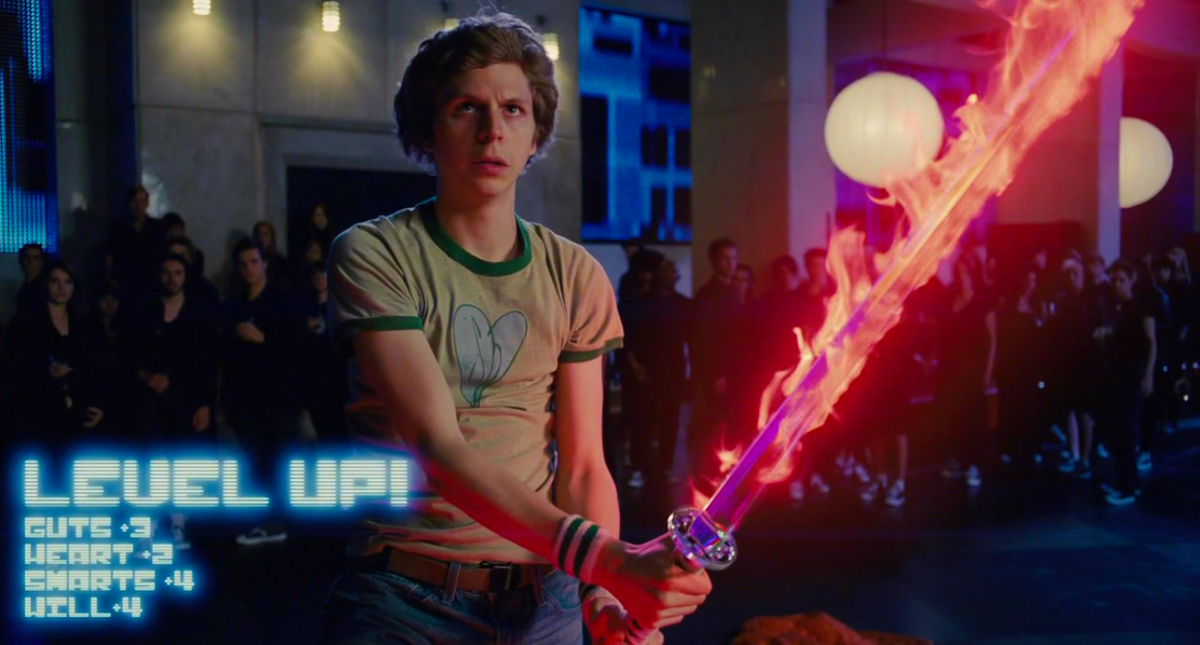
Don't worry though, if you were at all worried which you probably weren't, this isn't the end of Musings From Another Star. It's just a break for the holidays so I can recharge and level up to come back fresh and rejuvenated next year.

I plan to upgrade my weapon a flaming sword too.

Also, I'm not sure exactly how yet but I would like to shake things up and maybe do more things like my James Bond marathon of articles or more contemporary/immediate reviews rather than retrospectives. I might even start doing more music articles like the one I did on The Police. Or maybe I won't, who knows.

All I do know is that I love writing this blog and hope to keep on writing it for a long time. I just need to take some time off to make sure I can.

See you all next year (that was a lie, this is a blog, I can't see you at all).