Showing posts with label Disney. Show all posts

Friday, 23 June 2023

Thor: Love and Thunder - A Messy Fantasy Romcom about Learning to Be Vulnerable

So, here we are again. It's been several years since I last updated this blog, way back in December 2020. Hopefully, people will still want to read what I have to say. Fittingly enough considering the subject of this article, my last piece was about how a Thor comic helped me hold on to hope in a dying world. But let us turn our attention to the present and today's focus - Thor: Love and Thunder

Ah, Love and Thunder. Rarely has a MCU film been so divisive or misunderstood. 

As we approach the one year anniversary of its release back in July of 2022, I want to reflect on why this film has been worming around in my head, how I can't seem to let it go despite how its flaws or how messy it is. Why a lot of people genuinely do not seem to understand what Taika Waititi was doing with Thor, and why Thor: Love and Thunder is a classic Thor adventure about loss, love, trauma, and false bravado.

"A classic Thor adventure? You must be joking."


How did we get here?

If you've read my blog before, you will know that I wrote a very long and personal piece about my complicated relationship with Thor and his chaotic character growth throughout the MCU back in 2019. Please read if you haven't, aside from giving a more detailed summary of how we got here than I will provide here, it's probably my favourite of the articles I've written for this blog and was strangely cathartic to get out. 

As detailed in that piece, Thor's arc in the MCU has been one of progression and regression across his six film appearances up to that point, a struggle between being the king he was born to be and the good man he is trying to be, between false bravado and humility, between love and loss. Thor's character is an examination of fragile masculinity and ego in the pursuit to be worthy.

To quote my previous article as means to recap:
In his first solo film and in The Avengers, Thor gains humility after being stripped of his powers and learning the value of self-sacrifice, not to mention how to work in a team of equals. In The Dark World and Age of Ultron, he learns to build instead of destroy, creating Vision and fearing the destruction he might cause. So naturally it is in Ragnarok that he achieves self-understanding and realises his best self.
However, as we all know, this progression is not a straight line for Thor but an ongoing circular struggle to find a sense purpose on his journey towards worthiness. Which is why Thor goes from the fully realised and complete "version of himself who no longer relies on external symbols of power, such as his hammer or titles, but instead recognises his own inner strength and doesn't need to prove anything to anyone" in Thor: Ragnarok...

This moment here, in case you forgot.
To a god broken by all he has lost and desperate for revenge in Infinity War and then finally the depressed shattered shell we see in Endgame, a man wracked with guilt and PTSD who hides his feelings under a dad bod fueled by pizza and copious amounts of beer. Again to quote my previous article (last time, I swear): 
Thor is stripped of all the visual symbols of the wisdom he gained [in Ragnarok] and is reduced to a man driven by vengeance. A vengeance fueled by rage that masks his trauma and serves to obscure his grief and despair. How does Thor express this vengeance? By reverting fully into his old arrogant facade of desperate bravado, unable to admit his failings or emotions to himself, let alone to others.

This is made clear in his emotionally wrenching conversation with Rocket where he is so obviously a man in pain and dealing with deep grief but cannot let the facade of "Mighty Thor" down.

Sure, bud. Whatever you say.

It is in Endgame where Thor's facade finally breaks, where he finally allowed himself to be vulnerable and expressed his fears openly and honestly. I naturally am referring to the scene where he speaks with his mother. The scene which gives us the line which sums up Thor's struggle in the MCU up to that point: "Everyone fails at who they're supposed to be, Thor. The measure of a person, of a hero, is how well they succeed at being who they are." 

So, Thor ends Endgame adrift, no longer burdened by the weight of expectations from his birthright to the Asgardian crown or his desire to be worthy. As he says to Valkyrie when she asks what he will do, "I'm not sure. For the first time in a thousand years, I... I have no path. I do have a ride, though."

And this is where Thor: Love and Thunder picks things up.


Alone in the Crowd - The Asgardians of the Galaxy

While the film opens with Gorr, and we will get to Gorr, don't worry about that, I would like to start my examination of Love and Thunder by discussing that ride Thor got at the end of Endgame and the function of the Guardians of the Galaxy in the film.

Now, I know some people were upset by the limited time the Guardians spent in the film. I initially was a bit confused why they are in the film for about 30 minutes before they jet out of there, happy to leave the Chud of Thunder behind. But that's the point. This is Thor's story, the Guardians are just there to help begin his journey towards vulnerability and love. 

At the beginning of the film, Thor is completely adrift. As Korg says in his voice-over narration, which frames the film as a legend told to children around a campfire, 
But beneath this God bod, there was still a sad bod just trying to get out. Because all of the bods that Thor had worn over the years couldn't hide the pain that he was feeling on the inside. So he gave up his search for love, accepting he was only good for one thing... Waiting in quiet contemplation for someone to say, 'Thor, we need your help to win this battle.'

On a sidenote, it boggles my mind when I see people say they don't know what Love and Thunder was about. The film literally has Korg say out loud the themes of the story, either in narration or directly to other characters, multiple times. If anything, the film is too blunt about what it's about, but I digress.

Unable to find sense or purpose in his adventures with the Guardians and still wracked with grief and unable to process his loss, he is pompous and careless, not really aware of how his actions or behaviour impacts on others. All of which is perfectly established in the first fight scene on the planet Indigarr.


To be clear, I think this scene is great. The over-the-top ridiculous action, the late 80s heavy metal fantasy aesthetic with Jim Henson inspired puppetry, all set to Guns N' Roses is perfect. No notes. 

It also perfectly sets up Thor's arc for the film. We can see this in how Thor is late to the battle, too busy with quiet contemplation to join the fray but still chides Star Lord and Mantis for not hurrying up since "people are dying". When he arrives on the battlefield, King Yakan comments that he has finally join their fight and Thor responds, "You know what they say, better late than not at all." 

Thor seems incapable to take responsibilities as a god or a hero seriously because he sees no purpose in the constant fighting. This is Thor without purpose, a grandiose caricature of himself, leaning into a braggadocios version of his own legend. This is clear in how Thor focuses on heroic mythmaking rather than saving people, illustrated in how he instructs King Yakan to:
"Tell them what happened here today, tell them of the time that Thor, and his ragtag motley crew of misfit desperados, turn the tide in the battle and etched their names in history. For the odds may be against us, but I'll tell you this for free - this ends here and now!" 
Where in prior films Thor's false bravado was a way for him to hide his insecurities and sense of unworthiness under a layer of arrogant machismo, here it serves to distance himself from others and to avoid being hurt by putting on a front.

And it is a front that the Guardians are completely fed up with. While Star Lord might mouth along with Thor's declaration that "This ends here and now!", his comradery quickly erodes into frustrated annoyance at Thor's pompous grandiosity as the fight goes on. Notice Star Lord's massive eye-roll, Drax's unimpressed face, and Nebula's glare when Thor does the Van Damme splits between two Booskan Raiders before blowing them up - this is Thor showboating for no reason and they all know it. 

"Can you believe this guy?"

And Thor doesn't even accomplish the thing he is supposed to, which was to liberate their sacred shrine. He destroys it through his carelessness and desire to look suitably 'epic' while defeating the enemy. The front he has put on might create distance from others so he isn't hurt, but it doesn't stop Thor from unwittingly hurting others through his apathetic actions.

Furthermore, Thor's act isn't fooling anyone. Perhaps because he has also often put up a braggadocios persona to hide his feelings but Star Lord sees right through Thor and tries to connect with him. He notices the distress Thor is in when he sees his friend Sif is in danger and asks if he is okay. 

In an example of the film again blatantly telling us what it is about, Thor says he admires the Guardians' commitment to each but it's something he can never have. Then Star Lord tells him straight up, "After thousands of years of living, you don't seem to know who the hell you are" and to "Remember what I told you, you ever feel lost just look into the eyes of the people you love, they'll tell you exactly who you are". Wow, it's almost like he's setting up Thor's character arc and the themes of the film.

Despite all their adventures together (shown in extended montage and set to Enya), Thor never allowed himself to open up and truly join the Guardians. He never became part of their family because he refused to allow himself to be vulnerable or grow attached - so he grew adrift and lost purpose instead.

"Okay, bye guys. Have fun on your next adventure,
I'm sure it won't be emotionally damaging or heart-wrenchingly traumatic."

Then the Guardians get out of dodge, leaving Thor with Korg and the screaming goats to save Sif and join the plot proper. While it might have been an anticlimactic goodbye, the use of the Guardians effectively sets up the struggle Thor will grapple with throughout his story.


Rainbow in the Dark - A Bombastic Heavy Metal Fantasy

Okay, I have to talk about the film's aesthetic. I love this look. Like most things, aesthetic is a nebulous thing and subjective as all hell - either you vibe with it or you don't - but I think the late 1980s metal visuals are a perfect fit for Thor, particularly Waititi's Thor. 

In an interview with Rolling Stone, Waititi said he was heavily inspired by the ridiculous over-the-top nature of metal band logos and wanted the film to be an 80s style adventure, saying “You know, just the whole thing, like all the art and everything - it feels like an 80s album cover.”

Yeah, that tracks.

And the innate ridiculousness of this aesthetic serves not only the adventure feel of the film but also the comedy which serves to point out the inherent silliness of the superhero genre and the pomposity of our glorious himbo God of Thunder.

Again, this is reflected in the opening fight scene on Indigaar's loving homage to Jim Henson classics like Fraggle Rock or Dark Crystal in the design of the Booskan Raiders and their vehicles, as I mentioned earlier. 

Furthermore, the heavy metal aesthetic fittingly serves the story being told, one of irreverence but with a beating emotive heart under the surface, just like how metal bands would cover their sappy love ballads in distorted power chords and blistering guitar solos.

Talking about guitar solos, in addition to the inclusion of three Guns N' Roses songs and Dio's "Rainbow in the Dark", Michael Giacchino's score mirrors this feel perfectly. Giacchino utilises screeching guitar licks and thunderous drums with slick eletronic synths to supplement his traditional swirling superhero string arrangements to complement the metal vibe of the visuals.

Waititi also stated that “Thor with the singlet, that’s obviously a homage to Big Trouble in Little China, to (Russell’s character) Jack Burton.” Possibly the fact that Big Trouble is a favourite film of mine probably explains why I thought Thor's singlet and sleeveless jacket look is the coolest shit.

I'm sorry, but this is just a baller look.

Speaking of things subjective...


"They turned Thor into a joke!" - Understanding the humour behind Taika's Thor

Now, not everyone is going to like every joke and not every joke is designed to be for everyone, which is fair enough. Thor: Love and Thunder is a pure comedy for most of its runtime, when its not being an 80s adventure or a love story (we'll get to Jane soon). That means if you can't get its sense of humour, you're probably not going to have a good time.

Although, there are some people do not like an overly comedic tone in their superhero movies at all because they believe that superheroes must be treated MATURELY. These people seem to mistake a comedic tone for derision or lack of RESPECT for the source material. The fact comics are inherently silly (which is part of why they are great) and that Thor canonically turned into a frog in the comics doesn't seem to matter much to that sort of angry comic book nerd.

Hell yeah, Throg rules!

There is a fair argument to be made that there are far too many weightless jokes in Love and Thunder, particularly the ones like Valkyrie and Jane bobbing their heads to the speaker which looks like a hand grenade. A lot of these jokes seem like pointless improv which should have been left on the cutting room floor and often fall flat or raise a bemused chuckle at best.

However, a big source of humour in the film is the juxtaposition between the caricature Thor presents himself as and how oblivious he seems to how he is actually perceived by others. See how King Yakan refers to Thor as "God of Destruction" after he destroyed their sacred shrine but which Thor doesn't even seem to acknowledge. I would argue that those jokes which revolve around how Thor's braggadocios persona is shown to be empty and undercut by the reaction of the people around him serve a vital purpose for Thor's character arc, just as they did in Ragnarok.

As mentioned earlier, Thor's ridiculous bravado and oblivious himbo persona is an act designed to keep people at arm's length so they cannot get too close. It is defense mechanism for Thor and one that fits him like well-worn leather since he's just adapted the old uber-masculine façade he used to hide his insecurities and sense of unworthiness into a shield to prevent anyone getting too close.

We see this clearly in Thor's early interactions with Jane in the film.

It's very normal to pop out the wings on your helmet to assert your manhood.

Before he knows it's Jane wielding the restored Mjolnir, Thor confronts this 'stranger' by donning a grandiose golden costume with a ridiculously ornate (CGI) helmet. This wardrobe change signals how Thor feels a need to perform a caricature of himself and that we are meant to laugh at him, to see he is being ridiculous and that this is silly. 

As this article in Film Obsessive argues, "Like a jester figure, Waititi takes jabs at every trope he’s inherited: cackling at the costumes, the props, and the heroic gravitas of his beloved cast of comic book characters." However, this isn't a lack of respect for the source material or the characters. Waititi's irreverence serves a purpose. In addition to reinforcing the notion that, at the end of the day, superhero archetypes are inherently silly (which is a good thing and we should be willing to embrace that silliness), it "humanizes Thor as a relatable manly man—a Himbo who can oscillate at the snap of a finger from a dad-bod to a god-bod [to a sad-bod]".

Indeed, Thor's bumbling stunned response once he realises it is Jane wielding his ex-hammer is incredibly relatable. He rips off his ridiculous helmet and tugs at his collar from a hot flush. He stammers over his words and tries to reassert his previous braggadocios persona but is even less convincing than he was before. 

Jane is not fooled anymore than Star Lord was. She knows Thor and she can see that this is not the real him, which is reflected in Natalie Portman's performance. Jane constantly reacts to Thor's awkward bumbling and false bravado with a upturned mouth or slightly raised eyebrow, as if she is wondering why he is acting like such a fool but willing to indulge him.

We can also see this in how Thor struggles at first to reconcile the fact the previous symbol of his manhood, Mjolnir, is wielded by Jane and in ways he never could.

Korg yet again saying the themes of the film out loud for the audience.

We'll come back to Jane and Thor in a moment but first I'll like to talk about...


The Gorr of It All - Comic Book Adaptation vs Adapting a Comic Book Character

I think most people appreciated Christian Bale's portrayal of Gorr and wished there was more of him in the film. I personally would have like Gorr to challenge Thor's ideology or perspective of the gods, the same way he did in Jason Aaron and Esad Ribic's fantastic story arc in the comics or even how Kilmonger gets T'Challa to change in Black Panther

The whole scene on the Shadow Realm planet where Gorr taunts our heroes with the truth while they struggle is chilling and honestly one of the best in the film. There is no comedy here, just pure tension and suspense.


The fact that each of our heroes knows that Gorr is correct only adds to the sense he is ultimately under-used in the film. Their terrified and upset reactions highlight the truth of his words. The gods will use Jane but not help her or cure her cancer, The gods did not help save Valkyrie's fellow warriors and lover as they died in battle. In fact, the Valkyrie's were in battle for a god - on Odin's orders to stop Hela - and he did nothing to save them.

However, I'm not going to spend a heck of a time on this since everything I want to say about Gorr is probably summed up better by Pillar of Garbage's excellent "The Gorr Dilemma: Critiquing Adaptation" video.

To poorly summarise Pillar's argument, while movie Gorr is similar to comic book Gorr, he is not the same since the original Gorr storyline would not fit the focus of Thor: Love and Thunder which is Thor's personal journey to learn to be vulnerable and love again. 

This is reflected in how both Gorr's have a similar origin but there are slight, yet important, differences. Both versions of Gorr present a man driven to despair by the inactions of the gods he worships, who comes across two gods, one alive and one dead, and takes up the Necrosword to slay the alive god, before going on an intergalactic crusade to kill all gods. However, the key difference is in how and why each version of Gorr slays the first god.

In the comics, the god is wounded and asks Gorr for help. This causes Gorr's faith to be broken completely as he learns that the gods aren't omnipotent or benevolent, that his people weren't special or chosen, that godhood is a sham. In the film, unlike the space age design of the comic god, the god Gorr meets looks mostly human, if covered in gold. He does not appear alien but familiar. Movie Gorr does not kill him out of outraged morality but pure rage, fueled by the corrupting influence of the Necrosword, as an act of vengeance for the death of his daughter. It happens just after his god mocked him for believing in him and as his god is chocking him, almost an act of self-defense. It is not the existential grief of a man who has lost his faith like in the comic, it is far more personal.

Movie Gorr is driven by love and grief... the very same things which our lovable God of Thunder is struggling with. Therefore, although it is clear that Gorr is right in his assessment of the gods unworthiness of being worshipped, the film provides no clear counter-point. In the comic run, Thor knows that to prove Gorr wrong, he has to continually answer prayers and perform miraculous acts of labour and heroism to justify his existence as a god. Film Thor doesn't really have a retort to Gorr aside from the fact that Gorr might be as hypocritical as the gods, which sure, I guess.

However, the fact movie Gorr and Thor's motivations are both personal and essentially the same is the point. While I would have liked Thor to see how Gorr's crusade to kill all the gods for their petty selfishness and callous disregard for their worshipers is not dissimilar to Thor's own anti-colonialist recognition that "Asgard is a people, not a place" in Ragnarok, this is a personal story, not an overtly political one.

This Gorr is not an adaptation of the comic Gorr but has adapted Gorr to suit the needs of the film and serves Thor's arc. As Pillar points it, "the centre of this film is Thor's journey towards emotional maturity. This arc is the point around which every other aspect of Love and Thunder is oriented." In this way, movie Gorr is the same repressed individual driven by revenge that Thor was in Endgame and who Thor could be if he didn't work towards becoming authentic and emotionally honest version of himself.

Which is why the truth Gorr taunts Thor with is about love and pain.

Love is the central conflict Thor struggles with in the film, not Gorr. This is why Gorr tells Thor to "choose love" and call Stormbreaker to save Jane. Thor's main journey that leads him to change is not the goal of stopping Gorr but the realisation he wants to be love, and be loved by, Jane, to be confident enough to open himself up to someone else, even at the risk of getting hurt yet once again.

Which brings us to...


"You made me worthy" - The Legend of Thor and Dr. Jane Foster

Okay, some nerds who are way too precious about things are going to be upset but Thor: Love and Thunder is not really a superhero film. It is a 80s adventure fantasy based on comic book characters. That difference might seem like splitting hairs but it is important. 

In a lot of ways, when Thor isn't hanging out with the Avengers, he's not really a superhero. He's heroic, sure, but not really a superhero as we tend to think of them. He doesn't have a secret identity or a symbolic costume or even really fight crime. Instead, he has grand epic adventures across the galaxy, hunting monsters, battling gods, and confronting intergalactic beings beyond comprehension. His stories are more mythic and fantastical than a superhero on a crusade against crime.

I bring this up to lead to my next point about genre - in addition to being an 80s styled fantasy, Love and Thunder is a comedy (duh) but more than that, it is a ROMCOM. At the centre of this story is the relationship between Thor and Jane.

Aww, look at these two.

Before we get into their relationship, let's talk romcom for a bit. As this helpful article from Collider points out:

The romantic comedy genre is one that's full of distinct tropes. The meet-cute, the burgeoning relationship montage, the third-act breakup, love being rekindled, the crazy ex, the scene that pulls on your heartstrings.

Love and Thunder plays with these tropes in interesting ways. Firstly, Thor and Jane have already had an entire relationship that dissolved in the past, so their meet-cute in this film is not meeting someone for the first time but someone bumping into their ex. As discussed above, this shows Thor in a different light, awkward and bumbling, unable to maintain his overly-confident façade.

This playing with romocom tropes also explains the weirdly obsessive way Thor reacts to Mjolnir's return and Stormbreaker's jealousy of Mjolnir by reworking the crazed romantic partner trope through Thor's signature two weapons of choice. The jokes about Thor trying to call Mjolnir and Stormbreaker not working properly out of jealousy are rooted in this trope inversion. Once you understand what that Love and Thunder is playing with these tropes in this way, a lot of the 'awkward' comedy in the film makes more sense.

"No, baby, I wasn't thinking about her. I was actually just about to call you... beautiful."

Similarly, instead of the typical burgeoning relationship montage, since Jane and Thor have already had a relationship, we have a romance and subsequent break-up montage, fitting set to ABBA's classic "Our Last Summer". Also, Korg's voice-over narration gives another layer of pathos under the corny humour of a shmaltzy romcom montage.

Thor set his sights toward a future and all it might hold. But the more he pondered a life with Jane, the more he feared losing that life. And although Jane didn't want to admit it, she was scared of loss as well. And so, they built walls between them. Thor got busy saving humanity. And Jane got busy doing the same. Real busy. And eventually, the space between them grew and grew until it became too wide to bear. Something had to give.

Hey, isn't that the thing I've been harping about, how Thor's false bravado is a wall to keep people distant? Stop telling the audience the themes of the film, Korg! Seriously though, this is a sad account of Thor and Jane's relationship. Instead of being vulnerable and open about their fears, they retreated into themselves and drifted apart. 

As this article on Jane and Thor's romance says, "Often heartbreak can lead someone to harden their hearts to love. In Thor’s case, he numbed his heart into believing that his only purpose is to fight when called upon." This is exactly where we find Thor at the start of the film, adrift and alone.

However, it is through being reunited with Jane and the rekindling of their relationship that Thor realises that it was Jane who made him worthy and that he wants to open up and love again. It's on the way to the Shadow Realm that Thor reveals to Jane that she made him worthy. His path to reclaim his self-worth began when he crash landed in New Mexico and Jane hit him with her car. In his own words, "I wanna feel shitty about you. I wanna feel shitty about something and I think that's you."

In another example of romcom subversion - instead of a third act break-up, we get a third act make-up.

I have to talk about the hospital scene for a moment. Thor, now aware Jane has cancer and that Mjolnir is draining all of her mortal strength and killing her, wants to leave her behind and go face Gorr alone. Not because he doesn't believe she could help or because he doesn't want her by his side in battle, but because he loves her.

This declaration by Thor that he loves her is the first time across eight movie appearances, four of which he was in a relationship with Jane, that we hear Thor say it out loud. Possibly it is the first time Jane has heard it too, judging by the stunned look on her face. It honestly is heart-wrenchingly earnest in a film which had been so irreverent before, pretty much up to the point where Thor begins to open up and admit his feelings out loud.

However, Thor does not force Jane to stay in the hospital. He recognises it is her choice and tells her so, but his love for her means he wants to try at a second chance if they can. As he says,


While Jane does initially decide to stay in the hospital, when she senses that Thor is losing his fight with Gorr, she picks up Mjolnir and suits up as the Mighty Thor one last time. The look of anguish on Thor's face when he sees her arrive is tearjerking as he knows that this will kill her but he does not argue with her or force her to leave since he respect her decision. 

He is no longer the broken sad bod hiding under a god god and an offish braggadocios persona. He wears his heart proudly on his sleeve in a healthy non-toxic masculinity which doesn't seek to keep people at a distance but allows them in - more on that in the last section.

This is why during the last scene at the Altar of Eternity, Thor does not fight Gorr to stop him making his wish, he chooses to be with Jane and cradle her in his arms during his and her last moments, an image that parallels Gorr cradling his dying daughter. He tells Gorr to choose love (throwing the God Butcher's words back at him) when making his wish and promises to look after his daughter with Jane's approval. 

Love is the purpose Thor finds in his long journey towards meaning. Which brings us to...


"From god bod to dad god" - The Ballad of Love and Thunder

In yet another example of Korg spelling out the theme of the film to the audience so there's no confusion, he tells Valkyrie on the way to the Shadow Realm that he "thinks Thor would be a great dad". And so it came to be.

We see hints of this theme in more subtle ways throughout the story through the kidnapped Asgardian kids. Thor's interactions with them are fumbling at first, still trying to maintain his mythic "I am Thor" façade and instill false confidence. Over time, particularly after the confrontation with Zeus at Omnipotence City, he eventually speaks with them more openly and genuinely praises them for being braver than he was at their age. This leads Axl to declare, "I'm glad I met my hero." to Thor.

Then, in what I believe is one of the best MCU climatic battle scenes, Thor share his power with the kids, even the non-Asgardian ones, since they are all worthy and Space Vikings on this day.


There's a lot to like in this scene:
  • the pitch-perfect use of the outro solo from 'November Rain' to score the action 
  • how the lyrics of the song reinforce the themes ("Don't ya think that you need somebody?/Don't ya think that you need someone?/Everybody needs somebody/You're not the only one")
  • how the visual of Thor sharing his power with the kids recreates Yggdrasil the World Tree
  • the fun action of the kids fighting the shadow monsters, probably the best action sequence in the film after the amazing Shadow Realm fight. 

Also, as a keen-eyed YouTube commenter noted, there is something vital in the wording of the spell Thor casts to share his power. Thor says, "Whosoever holds these weapons, and believes in getting home, if they be true of heart is therefore worthy, and shall possess... for limited time only, the power... of Thor!" While it's similar to the enchantment Odin placed on Mjolnir, the key difference is Odin said "if he be worthy". Thor instead says, "is therefore worthy". The kids' worthiness is understood and acknowledged, by someone who's had a lot of doubts about his own.

We can only hope we have someone in our lives like Thor who recognises that we are worthy and we do not need to prove our worthiness to them, or to ourselves.

As this video by Implicitly Pretentious on Thor vs Genre Theory points out, the wider thematic genre of integration, which Love and Thunder falls into, is themed around resolving personal antagonisms, building community, and cooperation. 

This is why Thor bestows the children of Asgard with his power. This is why Jane dies saving the children and Gorr does not follow through with his crusade for vengeance but ultimately resurrects his child by choosing love. This is why Thor looks after Gorr's daughter after his own love, Jane, died. As Implicitly Pretentious states: "it is the ultimate symbol of this [integration]… just as Odin adopted Loki, the baby of an enemy, Thor does the same".

Quality family time.

Feeling Shitty - Final Thoughts on Love and Thunder

This is why I believe that for all its faults and messiness (for example, some of the blocking during dialogue scenes is absolutely atrocious), Love and Thunder has got into my head and my heart. Why I believe it is truly a classic Thor adventure about learning to love again. 

To be honest, I did not think this article was going to be this long. I genuinely thought this would be a brief defense of the film, a quick, short article. However, to quote J.R.R. Tolkien, "the tale grew in the telling", and it was in telling this tale, that my appreciation of the film only deepened.

So, give Love and Thunder a rewatch with this perspective in mind or watch it for the first time if the initial hate train turned you off it. If you can vibe with what the film is trying to do and get on its wavelength, you'll find that under its irreverent comedy is a sincere and open emotional heart. 

Then you might just fall in love with it too, warts and all.


References:


'Thor: Love and Thunder': Thor and Jane's Romance Made Each Worthy


Sunday, 26 August 2018

The Last Jedi Backlash - The Lost Art of Understanding Themes

It's been a while and a lot has happened and there are many things to discuss. So many things. But one thing I want to focus on is how a large number of people seem to fail to understand how to watch a film thematically.

And I really wish that people knew how to watch films and understood what a theme is. It honestly makes watching films more enjoyable and allows you to empathise with different points-of-view or experiences to your own. But I guess enjoying things is too hard or something?

I don't know where this failing occurred. Maybe it has something to do with the rise of nitpicky pseudo-film criticism such as YouTube channels like CinemaSins in the past half decade or maybe people only know how to watch films literally and not thematically.


This is literally something David Benioff said about Game of Thrones. Weird that someone adapting one of the most thematic rich fantasy series of all time would think that themes aren't important. 

First, let's define our terms. A theme is the main idea or underlying meaning of a text. It is the central topic a text examines. For example: If the topic of a text is loneliness, then the theme would be what the text says about loneliness. Furthermore, themes can be divided into two categories:
·        Thematic concept - what readers think the text is about
·        Thematic statement - what the text says about the topic

If you don't know what a film's theme is, you don't know what the film is about. Maybe it's time people learnt that films exist to tell us stories and communicate ideas through theme. Since the ideas that a film is trying to convey are far more important than whether or not things literally make sense in the world of the film

This is not to say that films get free reign to put whatever bullshit they want on screen and for us to just accept it because of the idea they are trying to convey. The world of a film still needs to exist and work within its own internal logic, as long as that internal logic is clearly established.

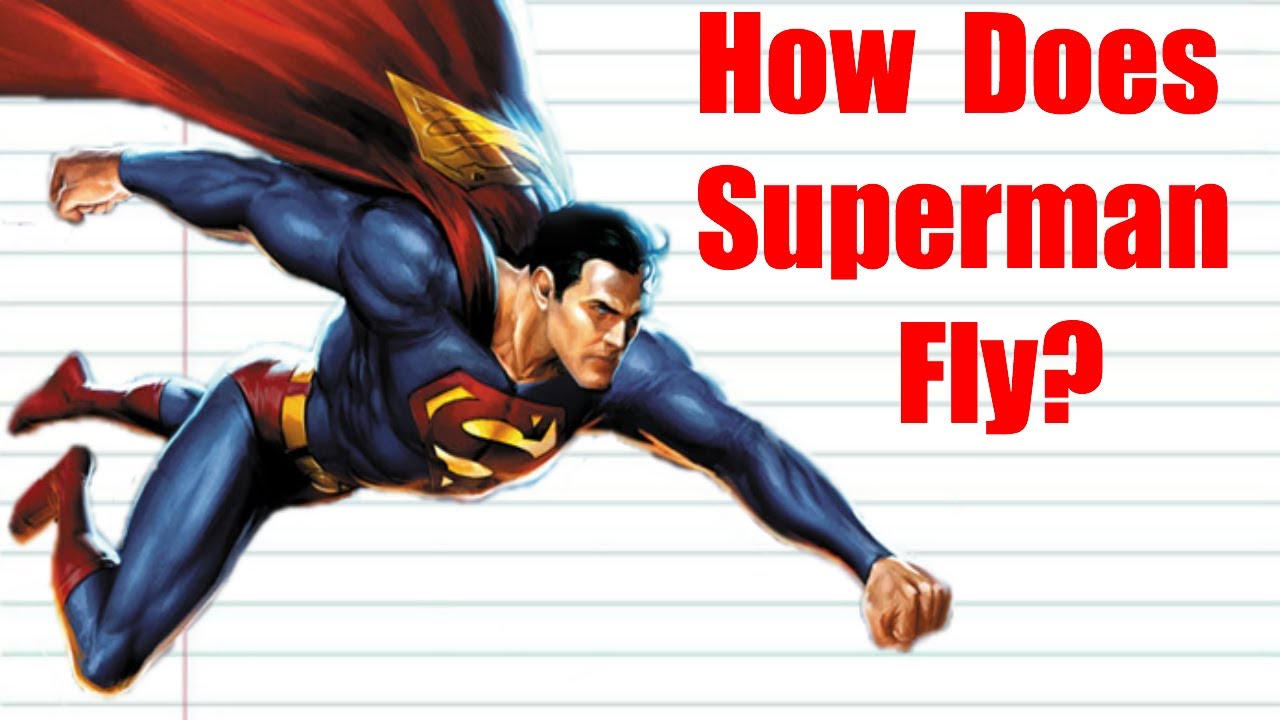
For example, Superman can fly because he's an alien. No more explanation is required or necessary. We don't need to know that his body converts the light of the sun into kinetic or propulsive energy. The audience learning the hows and whys of his ability to fly doesn't add anything of value to the character. He flies because he's Superman and Superman can fly.

Image result for superman flying
He's an alien and a superhero. That's how.

However, I think another problem linked to this literal watching of film is that people often think not liking a movie means it is therefore bad and poorly made. Since if a film doesn't fit this narrow view of what you think films should be, then its a failure and "just bad writing", right?

The fact that few people seem to be able to articulate what they mean by "bad writing" says more about how we fail to watch films then about writing of the film itself.

For example, let's talk The Last Jedi. I know so much has been said about The Last Jedi that at this point I'm just adding to the ceaseless cacophony of the void but here we are.

Firstly, The Last Jedi is a competently made film. It simply is. The visuals look great, the editing is fluid, it's a well-directed and the story addresses a number of interesting themes that challenges our expectations of what a Star Wars movie can or should be.

Not to mention that each character in the trio of Rey, Poe, and Finn has an arc and is positioned between two other characters' worldviews (Rey: Luke and Kylo, Poe: Leia and Holdo, Finn: Rose and DJ), and that is just great storytelling and narrative structure.

Wow, it's almost like the guy who wrote this knew how to structure narrative and set up character arcs or something.
Now, you can argue on how successful it was in its execution of these themes and whether or not the narrative or character arcs landed for you but it is a well-made film.

Because here's the thing, you can dislike something and still recognise it was good. Just as you can love something while acknowledging it has flaws. Things are rarely perfect and nothing is going to please everyone, regardless of how well-made it is or what ideas it is trying to convey.

And that's okay. Citizen Kane is a fantastic film that deserves its reputation as a masterpiece due to its innovation in storytelling and technique and place in cinema history. It also fails to move me or make me care. This does not diminish its status as well-crafted and design film. It just means I don't like it.

Unfortunately, some people, especially fanboys, can't seem to think critically about movies. They can only criticise, which is not the same thing. Which is odd reaction towards something you claim to love but I digress.

As per the ever eloquent Film Crit Hulk, "It is downright impossible for them to think the storytelling of the film is on-point as hell, all because it does not reflect their emotional experience of watching it". It doesn't matter that the film is well-made on a technical or narrative level, their emotional response to it renders it moot. They didn't like how they felt watching it, therefore, it was badly made.

I think part of it is because of that side of fandom which claims ownership over the content they love. Since they tie the content so closely to their own sense of identity that Star Wars becomes a 'part of who they are', not a franchise owned by Disney or a movie directed by Rian Johnson. It's THEIRS.

So if they don't like a Star Wars film, the filmmakers have failed them because they are not catering to their sense of self. Because if you can't relate to the content you defined your identity by, then who are you? If the character you identify with is shown to be wrong or mistaken, what does that say about you? Case in point: "Why didn't Holdo tell Poe [me] her plan? This is bullshit!". This is why they get so angry, any subversion of expectation or familiarity feels like a betrayal.

"What?! They made Luke grumpy and drink green milk instead of blue! How could they ruin the franchise like this?!." 

On a side note, this why I have a problem with people who defined their identity by the pop culture they consume. Art should supplement and enrich your sense of self, not BE your sense of self.

Now please don't misunderstand me, I am not saying you shouldn't be proud of what you like or celebrate your nerdiness or geeky interests. We are all in part shaped and identified by the content we consume and love.

And I love Star Wars. My childhood favourite movie was Return of the Jedi. My favourite movie for most of my twenties was A New Hope. However, I always recognised that Empire Strikes Back was a far better film, in terms of story-telling, the development of character, and deepening the mythology of The Force. It simply is a better film.

I only had a stronger emotional reaction to A New Hope but this did not make A New Hope a better film in my eyes. It was just the one that made me happy watching since it suited my sensibilities more than Empire (that said I love Empire so very much).

I will never stop laughing myself silly at this bickering couple.
This scene simply makes me feel things.

Let's circle back to themes and The Last Jedi. So what are its themes? What is it trying to say. Well, lucky for us the film wears its themes on its chest and often states them loud and proud.

Luke Skywalker tells Rey that "This isn't going to go the way you think" (not fall victim to our expectations), Yoda wisely impacts to Luke that "Failure, the greatest teacher is" (the importance of failure and what we learn from it), and Rose informs Finn that "That's how we're gonna win. Not fighting what we hate. Saving what we love" (love is how you win the war, not hate). Even the Kylo Ren's one from the trailer about "Letting the past die" (letting go of those things in your past which are preventing you from moving forward").

So it's odd that so many people often critic aspects of the story even though they are entirely in line with the themes that the film is trying to explore. "Canto was a waste of time, it didn't even work" is a criticism I've seen repeatedly. And it makes no sense to me since of course it was a waste of time, that was the point. It's what they learnt from their failure that was important.

It's Poe learning that he can't keep going through this war as a hothead when he has people under his command who depend on him. That it is better to fail and lose the battle in order to save your people and continue the war than it is to sacrifice their lives just to win.

And I know some of you weren't on board with Rose's and thought it was stupid. Well, not only was it not stupid, it's been a significant theme for all of Star Wars as this thread succinctly articulates.

I'm not going to rehash what she says in the thread but will just pose this question: how is Rose's line not directly in line thematically with Luke's refusal to kill Vader in anger at the end of Return of the Jedi? Luke's refusal to give in to anger and hate leads to Vader's redemption, it's kinda the thematic climax of the original trilogy.

It also is the thing that distinguishes the good guys from the bad guys in Star Wars. The Empire or First Order are fascists, using their power to destroy those they hate. Literally, the thing that turns Anakin Skywalker into Darth Vader in the first place is losing himself in anger and then hate.

It's like you win by saving the ones you love, not by fighting those you hate or something.

And this is the thing when people don't watch films thematically, they criticise without considering context, being uncharitable to the material and the story. If you only watch films literally and in terms of plot, being only concerned with what events happen, you are missing what the movie is about.

Which is fine, I guess, if you don't want to allow movies to move you or get you to think about things differently to how you did before. There are many films which have strong plots but are boring as hell since their characters are just devices to move the plot along and they don't say anything.

And I don't know. Maybe that's a good thing. Probably not, since it fosters an environment where plot is more important than character, where a film's ideas are less important than whether or not it satisfied a fan theory or expectation. And that seems like a bad time.

I'd rather enjoy films, allowing them to take me on a journey and explore their themes with them. But that's just me.


Note: There is so much more I could say, especially about The Last Jedi. I only watched it twice in theatres but it has resonated so much with me that I could talk about it forever. If I didn't get round to your specific nitpick, sorry about that. Maybe next time. 

Friday, 19 June 2015

Wickedly Frozen: The Witches Are Doing It For Themselves

Ever notice how the musical Wicked: The Untold Story of the Witches of Oz and the Disney pop cultural juggernaut Frozen are kinda the same story? Well, not the exactly the same story but both hit a lot of the same narrative beats and touch on the same themes.

Because everyone knows Frozen, right? How could you not? It was absolutely everywhere at the beginning of last year, an unstoppable phenomenon which comes along once a generation. A film which resonated with the cultural zeitgeist, making its presence felt throughout the popular consciousness.

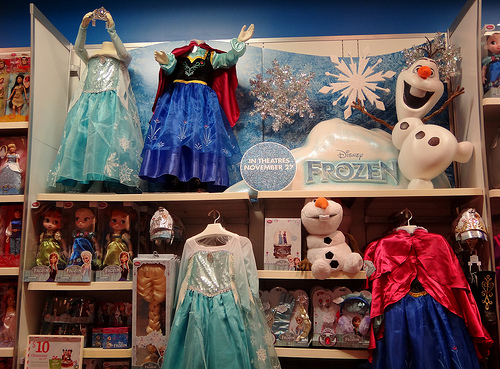
Don't forget the merchandise, oh god, the merchandise.

Perhaps part of Frozen's success can be attributed to the fact it is a tale of two sisters as the central protagonists, a rarity in Western popular storytelling. This seemed to strike a nerve by identifying a story which society wanted told but wasn't getting.

To be fair, in the light of Frozen's success, people seem to have forgotten that Lilo & Stitch was actually the first Disney movie to prominently feature two sisters as the central protagonists and have the story revolve around their relationship.

Additionally, Lilo & Stitch, while being mostly remembered for having a blue alien in it, featured a rather unique sister-sister dynamic for an animate Disney movie since this is a story about an older sister raising a younger sister after their parents die. It actually dealt with the hardships of parenthood and the frustration of being a substitute parental figure in a meaningful way which gave real gravitas to the sisters' relationship.

"Does it still count as sibling rivalry if I'm now your parental figure?"

Not trying to derail my own argument about Frozen and sisters but Lilo & Stitch is a rather overlooked movie, especially considering that at the time it also had quite the run of success, with merchandise galore, a spin-off TV show and sequel movie. Also I dislike it when people say this movie was the first to do this or say this without doing their research.

Also, Frozen wasn't the first Disney movie to make fun of love at first sight (Enchanted for one did that a lot and was kinda the main point of that movie). This is not to take away from Frozen, which is a great film, but to give credit where credit is due and deflate some of the more hyperbolic claims surrounding the film.

"Can you believe some people think we're the first Disney film to show magic?"

Another thing which played a massive part in Frozen's ridonculous commercial and critical success is its fantastic soundtrack with possibly the best set of songs in a Disney movie since the peak of the Disney Renaissance in the 1990s.

Probably even more critical to that success is that these are definitely the most memorable batch of songs Disney have put out since perhaps Hercules, or maybe even Lion King. While Tangled had some decent songs, none of them really resonated the same way those from Frozen did.

I'm talking about songs like "Do You Wanna Build a Snowman?", "For the First Time in Forever", and of course, the colossal mega supernova hit, "Let It Go", which spawned more covers and drove more parents insane than was previously thought statistically possible.

"Awww... you're trying to get this song out of your head. That's adorable"

And "Let It Go" really is the centre piece to Frozen, the song which transformed the film and really captured the zeitgeist leading to the film's massive success. Prior to "Let It Go', Elsa was supposed to be the villain of the film but the song was so uplifting and empowering that it couldn't be a villain song.

But instead of ditching the song, they changed the script to accommodate it, rewriting Elsa's character from a literal ice queen to a young woman struggling to gain her own agency and self-acceptance due to her emotional repressed state from the (near abusive) conditioning from her parents to hide her feelings.

She is legit afraid of her wondrous and miraculous ice powers because of the emotional repression her parents enforced on her.

Before I get into the similarities between Frozen and Wicked, I'd like to talk about Prince Hans for a bit. Since there is a real issue with Hans' completely out of fuckwhere betrayal in the final third of the film when he is revealed to be the villain.

Since there is no indication in the first two acts of the film that Hans is anything less than a nice guy, perhaps not the guy who Anna will get with in the end but definitely not sinister. And then BAM! in the final act, he's bad and apparently had an evil ulterior motive to gain the throne the whole time.

Now, I could completely accept the sudden bad guy reveal for Hans if it wasn't for one moment in the very first scene he's in. If the last 3 second of this scene were cut, while the reveal would still have been a bit out of nowhere, I could have accepted it. But it wasn't and I can't.

This moment. This one right here.

The moment is after Hans and Anna meet, Hans falls into the harbour with the boat capsizing and then lifts it to look at Anna dashing off to the palace and smiles. Who is he smiling for? If he was supposed to be the villain from the beginning of the story, he would have smiled for Anna to keep up the pretense, but she has already run off, so she can't see the smile.

So the smile is solely for himself, which means it is really for the audience. However, it isn't a smirk to indicate something sinister or that he isn't being completely honest. It is a genuine and warm smile. A smile someone would make when they've just seen someone or something they like.

Therefore, this is either a storytelling trick to emotionally mislead the audience by a false cue, or it was a hangover from an earlier draft of the film before Hans was the villain. Either way, it is manipulative storytelling and ruins the ultimate 'bad guy Hans' reveal. Since the sincerity of that smile undercuts the revelation he was supposed to be always bad since he would never have smiled like that in that situation if he was evil.

Yes, that's more like it, but could you be more overtly evil?

Back to "Let It Go". The song completely changed the nature of the story since it gave Elsa's character a completely different character arc than originally conceived leading to a focus on the relationship between two sisters. As Frozen's Art Director, Michael Giaimo, said in an interview:
It changed her into someone that was being driven by fear, ruled by fear and Anna was ruled by her own love of other people and her own drive and then that gave us the foundation so much, that song changed so much that Jennifer Lee (Screenplay by) had to go back and rewrite the first act and then that rippled through the entire movie. So that was when we really found the movie and who these characters were.

The song also makes the most striking or overt link to Wicked since it acts as a big self-empowering YOLO song. A big diva belter which marks the end of Act 1 and sets up the rest of the story, much like Wicked's own "Defying Gravity".

No strings, she's levitating solely on that last high note.

Wicked is based on Gregory Maguire's novel, Wicked: The Life and Times of the Wicked Witch of the West, and is obviously based in the world of Oz from the 1939 film, The Wizard of Oz which itself based on the novel, The Wonderful Wizard of Oz by L. Frank Barum.

As an alternative retelling of The Wizard of Oz, Wicked explores the relationship between the Wicked Witch of the West, Elphaba, and the Good Witch formerly known as Galinda, Glinda, through school, revolution, and rivalry over the same love interest. So like Frozen (or possibly inspiring Frozen), it focuses on the relationship between two women, although they aren't sisters but friends in this case.

Both also feature a young woman who is different and has a talent she is shamed into hiding but then learns to accept and strikes out on her own, gaining her own agency. Subsequently, there is a lot of lyrical crossover between "Let It Go" and "Defying Gravity".

No? Really?

For example, here are a couple of lines from one of the songs:
I'm through accepting limits
'Cause someone says they're so
Some things I cannot change
But till I try, I'll never know!
And here are some lines from the other song:
It's time to see what I can do,
To test the limits and break through.
No right, no wrong, no rules for me.
I'm free!
Can you even tell which lines came from "Let It Go" and which came from "Defying Gravity"? Seriously, can you? I doubt it, at least not at first glance. 

For the record, the first couple of lines are from "Defying Gravity" but without looking them up, if I told you it was the other way around, would anyone know it was wrong?

"You would never know!"

Another thing that cements the whole Frozen is a Scandinavianish version of the self-empowered Wicked witch story is the fact that both Elphaba and Elsa are played by Idina Menzel. Providing her impressive voice to both characters creates an aesthetic link between the characters and their respective Fuck It, I'm Me and I'm Free songs.

I guess I just noticed that these two stories and songs had a lot in common despite not being stories that are told in Western culture all that often. Also, after watching both Frozen and then Wicked, it really seemed like Elphaba is a proto-Elsa, inspiring much of the narrative beats in her character arc.

Plus, I wanted to talk about princesses, queens, sisterly relationships, and witches this week, so this was a nice in and I got to listen to a couple of great soundtracks during the process, so I'm good. Maybe I'll go back to superheroes or gush about Mad Max: Fury Road next week. 

Friday, 5 June 2015

True Mouse Detective

Released in 1986, The Great Mouse Detective was the last animated Disney movie released before the Disney Renaissance in the 1990s which started with The Little Mermaid.

Due to its critical and commercial success, The Great Mouse Detective, which tells the tale of a mouse detective, Basil of Baker Street, was actually the movie that convince Disney studios not to scrap their feature length animation division leading to that Renaissance in the first place.

All this Disney magic because of the success of an anthropomorphic mouse film.

Because it is an anthropomorphic mouse film, a genre which was surprisingly common in the 1980s and early 1990s with films like The Secret of NIMH, An American Tail and its sequel, An American Tail: Fievel Goes West, as well as The Rescuers and its sequel, The Rescuers Down Under.

Now, that may only be six anthropomorphic mouse films (including The Great Mouse Detective) spread over a decade but that seems to be at least four more anthropomorphic mouse movies than I would have thought necessary to inflict on audiences within 10 years.

"Why would you do such a thing?"

Sometimes there would even be two anthropomorphic mouse movies released within six months of each other and essentially compete with each in the box office (or least within the public consciousness since they come out so close to each other) like An American Tail and The Great Mouse Detective. This is also a tradition which has continued more recently with Ratatouille and The Tale of Despereaux in 2007/2008.

Apparently, the film industry believes there is such a great demand for films starring talking mice wearing human clothes that it sometimes decides to push out competing talking mice movies in order to satisfied the insatiable desire to see films with mice in clothes talking.

Seen as the root cause of the public's unceasing need for anthropomorphic mice in film.

Now, I actually have nothing against movies staring anthropomorphic mice (The Rescuers was my favourite movie as a young child with some of my first words being "it's stuck tight") but making a movie star talking mice has to have some point rather than simply having talking mice for the sake of having talking mice.

There should be some thematic or narrative reason for having them be mice, like with The Rescuers or The Secret of NIMH where the fact the protagonists are mice is used as a means of emphasizing the odds they face or the danger they face.

This is because there is such a stark contrast between how small and relatively helpless the mice are compared to the epic adventure they find themselves in, where the dramatic tension comes from that contrast and can be used to highlight the theme that you can overcome any obstacle even if you seem small in contrast to the problem.

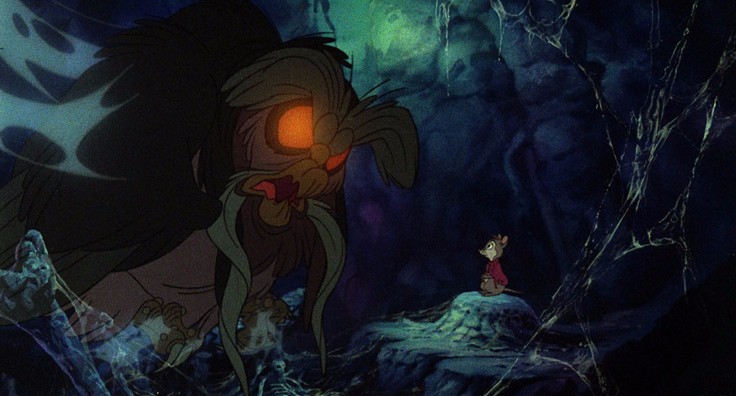
The only time when an obstacle could be an owlstacle (I'm so very sorry).

This is why I think a movie like Cars (aside from being a feature length Hot Rods commercial) just doesn't work as a movie. Like with films with talking mice, there needs to be some point for everyone to be cars, something about the story that needed the narrative device of being set in a world of anthropomorphic cars.

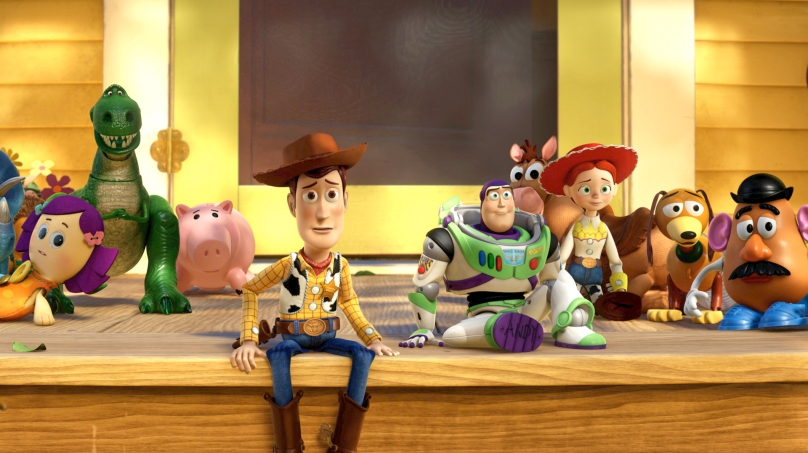
For example, the Toy Story movies use toys as the characters to emphasise the film's themes like fears of abandonment and the desire to want to be considered useful and loved. Making the characters toys makes sense since it's the perfect way to get across the type of story they're trying to tell, it adds an extra element that enhances the narrative.

Right in the feels.

But the story in Cars (of a city hot rod being stuck in a small town but growing fond of the small town folk and their rustic ways in lieu of his city lifestyle) could have been told with anything as the characters, although humans make the most sense.

It's a story that has been told a hundred times with always the same narrative beats and outcome [Spoilers: The city hot rod stays in the small town and renounces his city ways]. There's nothing about this type of story which suggests telling it with cars will enhance the narrative in any way.

There is literally no reason for them to be cars aside from making the occasional car pun and while I admit making car puns is very important it shouldn't be at the expense of good storytelling.

Why are they cars? Why even? Why?! 

With that all out of the way, let's focus on The Great Mouse Detective. Based on rather loosely on the adventures of Sherlock Holmes, Basil actually lives at 221 and 1/2 Baker Street underneath Sherlock Holmes' apartment. Therefore, rather than being Sherlock Holmes as a mouse, he is a mouse who mimics Sherlock Holmes' character and profession (although it's not clear if that is because he purposely copied Sherlock or if it was just the screenwriters trying to be clever).

And actually like Cars, there is very little to no reason that this story needed to be told with anthropomorphic animals/objects. I understand there is a children's book series, Basil of Baker Street, which the movie is based on but it seems like those are just retellings or reimaginings of Sherlock Holmes' tales with mice just because.

They don't often make much use of the juxtaposition between the size of the human world and the mouse world aside from a thrilling climax in the clocktower Big Ben and this is still a detective story with no twists that make it particularly mousy.

"Ah, yes my dear Dawson. Nothing mousy here at all."

However, despite all that, The Great Mouse Detective is such an enjoyable and well crafted animated movie with a couple of genuinely funny moments and memorable characters that the fact it stars mice for no real reason doesn't negatively impact the film.

The story is rather straightforward detective story, even if the details of the villains plan seem a little puzzling (he wants a toymaker to create a robot version of the mouse Queen of England so he can have the robot doppelganger declare himself the ruler of all Mousedom which doesn't sound convoluted at all). Simply put, Basil has to find Olivia's father, the toymaker, who has been taken hostage by Professor Ratigan (so he can make the aforementioned robot Queen).

But the plot isn't the real draw here, although it is told well. Rather it is in how dark the movie is (it opens with a brutal abduction and features a number of murders which, although are offscreen, are shown through shadow play onscreen) and in the fierce rivalry between Basil and Ratigan.

Oh, I know you were expecting a photo of Basil and Ratigan but I forgot to mention how there's a song and dance number with this scantily clad mouse which probably cause a few future-Furries their first confused boner.

Basil is an interesting protagonist, often egotistical and wrapped up in his own genius, doing the right thing for selfish reasons or without really thinking of others although his heart is in the right place. He's energetic and vibrant. Also, you actually get the sense that he is smart rather than the film just telling you he is, it shows him thinking and deducing, working things out.

But it is Ratigan who steals the show. Voiced by Vincent Price, who gives an absolutely marvellous vocal performance, Ratigan is the dark side of Basil taken to extremes. Completely engulfed by his own ego and bloated meglomania, he is utterly flamboyant and a true villain's villain, willing to kill if his ego is bruised. Price is perfectly cast and is obviously having an absolute blast playing the character.

"I couldn't be more gloriously evil if I tried, and belive me, I've tried."

And that is what makes their rivalry so thrilling and enjoyable, the fact the characters are so interesting and perfectly cast. It truly is the centrepiece of the film and elavates it above its cutesy talking mice premise. Basil and Ratigan make such perfect foils that you can really feel the hatred between them but also the joy they take in trying to one up each other.

So, in this one instance, I'm giving a movie a pass for being an anthropomorphic mouse movie when there's no reason whatsoever for having the characters be talking mice who wear late 19th century clothing.


References:

The Great Mouse Detective Wikipedia page

Disney Renaissance Wikipedia page

Nostalgia Critic - Disneycember The Great Mouse Detective

Vincent Price Wikipedia page