Friday, 19 June 2015

Wickedly Frozen: The Witches Are Doing It For Themselves

Ever notice how the musical Wicked: The Untold Story of the Witches of Oz and the Disney pop cultural juggernaut Frozen are kinda the same story? Well, not the exactly the same story but both hit a lot of the same narrative beats and touch on the same themes.

Because everyone knows Frozen, right? How could you not? It was absolutely everywhere at the beginning of last year, an unstoppable phenomenon which comes along once a generation. A film which resonated with the cultural zeitgeist, making its presence felt throughout the popular consciousness.
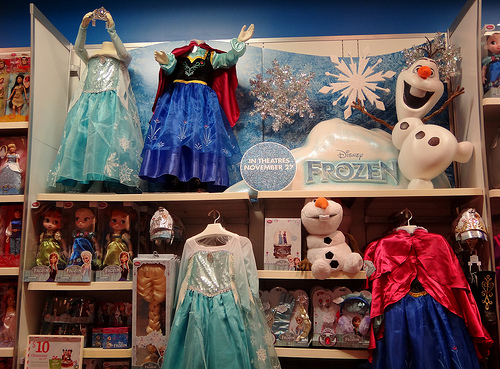
Don't forget the merchandise, oh god, the merchandise.

Perhaps part of Frozen's success can be attributed to the fact it is a tale of two sisters as the central protagonists, a rarity in Western popular storytelling. This seemed to strike a nerve by identifying a story which society wanted told but wasn't getting.

To be fair, in the light of Frozen's success, people seem to have forgotten that Lilo & Stitch was actually the first Disney movie to prominently feature two sisters as the central protagonists and have the story revolve around their relationship.

Additionally, Lilo & Stitch, while being mostly remembered for having a blue alien in it, featured a rather unique sister-sister dynamic for an animate Disney movie since this is a story about an older sister raising a younger sister after their parents die. It actually dealt with the hardships of parenthood and the frustration of being a substitute parental figure in a meaningful way which gave real gravitas to the sisters' relationship.

"Does it still count as sibling rivalry if I'm now your parental figure?"

Not trying to derail my own argument about Frozen and sisters but Lilo & Stitch is a rather overlooked movie, especially considering that at the time it also had quite the run of success, with merchandise galore, a spin-off TV show and sequel movie. Also I dislike it when people say this movie was the first to do this or say this without doing their research.

Also, Frozen wasn't the first Disney movie to make fun of love at first sight (Enchanted for one did that a lot and was kinda the main point of that movie). This is not to take away from Frozen, which is a great film, but to give credit where credit is due and deflate some of the more hyperbolic claims surrounding the film.

"Can you believe some people think we're the first Disney film to show magic?"

Another thing which played a massive part in Frozen's ridonculous commercial and critical success is its fantastic soundtrack with possibly the best set of songs in a Disney movie since the peak of the Disney Renaissance in the 1990s.

Probably even more critical to that success is that these are definitely the most memorable batch of songs Disney have put out since perhaps Hercules, or maybe even Lion King. While Tangled had some decent songs, none of them really resonated the same way those from Frozen did.

I'm talking about songs like "Do You Wanna Build a Snowman?", "For the First Time in Forever", and of course, the colossal mega supernova hit, "Let It Go", which spawned more covers and drove more parents insane than was previously thought statistically possible.

"Awww... you're trying to get this song out of your head. That's adorable"

And "Let It Go" really is the centre piece to Frozen, the song which transformed the film and really captured the zeitgeist leading to the film's massive success. Prior to "Let It Go', Elsa was supposed to be the villain of the film but the song was so uplifting and empowering that it couldn't be a villain song.

But instead of ditching the song, they changed the script to accommodate it, rewriting Elsa's character from a literal ice queen to a young woman struggling to gain her own agency and self-acceptance due to her emotional repressed state from the (near abusive) conditioning from her parents to hide her feelings.

She is legit afraid of her wondrous and miraculous ice powers because of the emotional repression her parents enforced on her.

Before I get into the similarities between Frozen and Wicked, I'd like to talk about Prince Hans for a bit. Since there is a real issue with Hans' completely out of fuckwhere betrayal in the final third of the film when he is revealed to be the villain.

Since there is no indication in the first two acts of the film that Hans is anything less than a nice guy, perhaps not the guy who Anna will get with in the end but definitely not sinister. And then BAM! in the final act, he's bad and apparently had an evil ulterior motive to gain the throne the whole time.

Now, I could completely accept the sudden bad guy reveal for Hans if it wasn't for one moment in the very first scene he's in. If the last 3 second of this scene were cut, while the reveal would still have been a bit out of nowhere, I could have accepted it. But it wasn't and I can't.

This moment. This one right here.

The moment is after Hans and Anna meet, Hans falls into the harbour with the boat capsizing and then lifts it to look at Anna dashing off to the palace and smiles. Who is he smiling for? If he was supposed to be the villain from the beginning of the story, he would have smiled for Anna to keep up the pretense, but she has already run off, so she can't see the smile.

So the smile is solely for himself, which means it is really for the audience. However, it isn't a smirk to indicate something sinister or that he isn't being completely honest. It is a genuine and warm smile. A smile someone would make when they've just seen someone or something they like.

Therefore, this is either a storytelling trick to emotionally mislead the audience by a false cue, or it was a hangover from an earlier draft of the film before Hans was the villain. Either way, it is manipulative storytelling and ruins the ultimate 'bad guy Hans' reveal. Since the sincerity of that smile undercuts the revelation he was supposed to be always bad since he would never have smiled like that in that situation if he was evil.

Yes, that's more like it, but could you be more overtly evil?

Back to "Let It Go". The song completely changed the nature of the story since it gave Elsa's character a completely different character arc than originally conceived leading to a focus on the relationship between two sisters. As Frozen's Art Director, Michael Giaimo, said in an interview:
It changed her into someone that was being driven by fear, ruled by fear and Anna was ruled by her own love of other people and her own drive and then that gave us the foundation so much, that song changed so much that Jennifer Lee (Screenplay by) had to go back and rewrite the first act and then that rippled through the entire movie. So that was when we really found the movie and who these characters were.

The song also makes the most striking or overt link to Wicked since it acts as a big self-empowering YOLO song. A big diva belter which marks the end of Act 1 and sets up the rest of the story, much like Wicked's own "Defying Gravity".

No strings, she's levitating solely on that last high note.

Wicked is based on Gregory Maguire's novel, Wicked: The Life and Times of the Wicked Witch of the West, and is obviously based in the world of Oz from the 1939 film, The Wizard of Oz which itself based on the novel, The Wonderful Wizard of Oz by L. Frank Barum.

As an alternative retelling of The Wizard of Oz, Wicked explores the relationship between the Wicked Witch of the West, Elphaba, and the Good Witch formerly known as Galinda, Glinda, through school, revolution, and rivalry over the same love interest. So like Frozen (or possibly inspiring Frozen), it focuses on the relationship between two women, although they aren't sisters but friends in this case.

Both also feature a young woman who is different and has a talent she is shamed into hiding but then learns to accept and strikes out on her own, gaining her own agency. Subsequently, there is a lot of lyrical crossover between "Let It Go" and "Defying Gravity".

No? Really?

For example, here are a couple of lines from one of the songs:
I'm through accepting limits
'Cause someone says they're so
Some things I cannot change
But till I try, I'll never know!
And here are some lines from the other song:
It's time to see what I can do,
To test the limits and break through.
No right, no wrong, no rules for me.
I'm free!
Can you even tell which lines came from "Let It Go" and which came from "Defying Gravity"? Seriously, can you? I doubt it, at least not at first glance. 

For the record, the first couple of lines are from "Defying Gravity" but without looking them up, if I told you it was the other way around, would anyone know it was wrong?

"You would never know!"

Another thing that cements the whole Frozen is a Scandinavianish version of the self-empowered Wicked witch story is the fact that both Elphaba and Elsa are played by Idina Menzel. Providing her impressive voice to both characters creates an aesthetic link between the characters and their respective Fuck It, I'm Me and I'm Free songs.

I guess I just noticed that these two stories and songs had a lot in common despite not being stories that are told in Western culture all that often. Also, after watching both Frozen and then Wicked, it really seemed like Elphaba is a proto-Elsa, inspiring much of the narrative beats in her character arc.

Plus, I wanted to talk about princesses, queens, sisterly relationships, and witches this week, so this was a nice in and I got to listen to a couple of great soundtracks during the process, so I'm good. Maybe I'll go back to superheroes or gush about Mad Max: Fury Road next week. 

Friday, 5 June 2015

True Mouse Detective

Released in 1986, The Great Mouse Detective was the last animated Disney movie released before the Disney Renaissance in the 1990s which started with The Little Mermaid.

Due to its critical and commercial success, The Great Mouse Detective, which tells the tale of a mouse detective, Basil of Baker Street, was actually the movie that convince Disney studios not to scrap their feature length animation division leading to that Renaissance in the first place.

All this Disney magic because of the success of an anthropomorphic mouse film.

Because it is an anthropomorphic mouse film, a genre which was surprisingly common in the 1980s and early 1990s with films like The Secret of NIMH, An American Tail and its sequel, An American Tail: Fievel Goes West, as well as The Rescuers and its sequel, The Rescuers Down Under.

Now, that may only be six anthropomorphic mouse films (including The Great Mouse Detective) spread over a decade but that seems to be at least four more anthropomorphic mouse movies than I would have thought necessary to inflict on audiences within 10 years.

"Why would you do such a thing?"

Sometimes there would even be two anthropomorphic mouse movies released within six months of each other and essentially compete with each in the box office (or least within the public consciousness since they come out so close to each other) like An American Tail and The Great Mouse Detective. This is also a tradition which has continued more recently with Ratatouille and The Tale of Despereaux in 2007/2008.

Apparently, the film industry believes there is such a great demand for films starring talking mice wearing human clothes that it sometimes decides to push out competing talking mice movies in order to satisfied the insatiable desire to see films with mice in clothes talking.

Seen as the root cause of the public's unceasing need for anthropomorphic mice in film.

Now, I actually have nothing against movies staring anthropomorphic mice (The Rescuers was my favourite movie as a young child with some of my first words being "it's stuck tight") but making a movie star talking mice has to have some point rather than simply having talking mice for the sake of having talking mice.

There should be some thematic or narrative reason for having them be mice, like with The Rescuers or The Secret of NIMH where the fact the protagonists are mice is used as a means of emphasizing the odds they face or the danger they face.

This is because there is such a stark contrast between how small and relatively helpless the mice are compared to the epic adventure they find themselves in, where the dramatic tension comes from that contrast and can be used to highlight the theme that you can overcome any obstacle even if you seem small in contrast to the problem.

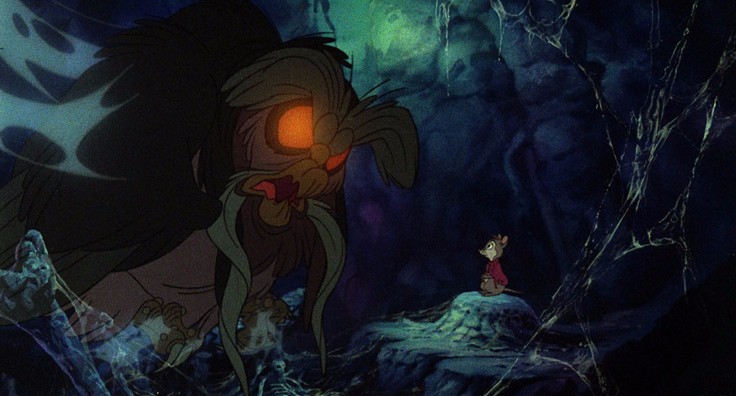
The only time when an obstacle could be an owlstacle (I'm so very sorry).

This is why I think a movie like Cars (aside from being a feature length Hot Rods commercial) just doesn't work as a movie. Like with films with talking mice, there needs to be some point for everyone to be cars, something about the story that needed the narrative device of being set in a world of anthropomorphic cars.

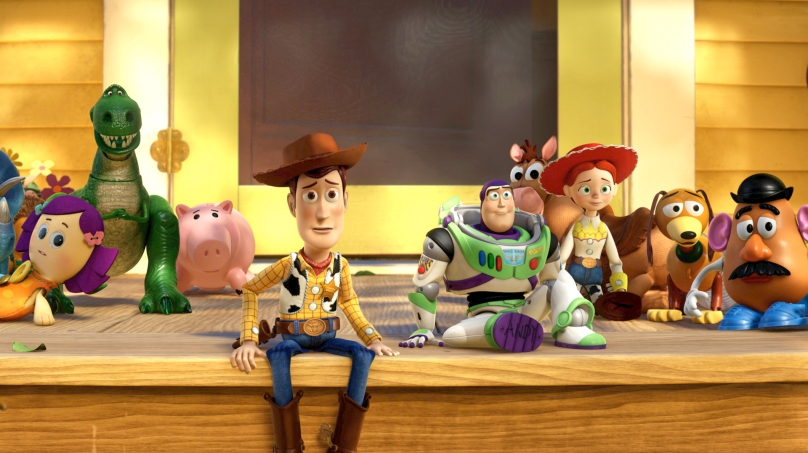
For example, the Toy Story movies use toys as the characters to emphasise the film's themes like fears of abandonment and the desire to want to be considered useful and loved. Making the characters toys makes sense since it's the perfect way to get across the type of story they're trying to tell, it adds an extra element that enhances the narrative.

Right in the feels.

But the story in Cars (of a city hot rod being stuck in a small town but growing fond of the small town folk and their rustic ways in lieu of his city lifestyle) could have been told with anything as the characters, although humans make the most sense.

It's a story that has been told a hundred times with always the same narrative beats and outcome [Spoilers: The city hot rod stays in the small town and renounces his city ways]. There's nothing about this type of story which suggests telling it with cars will enhance the narrative in any way.

There is literally no reason for them to be cars aside from making the occasional car pun and while I admit making car puns is very important it shouldn't be at the expense of good storytelling.

Why are they cars? Why even? Why?! 

With that all out of the way, let's focus on The Great Mouse Detective. Based on rather loosely on the adventures of Sherlock Holmes, Basil actually lives at 221 and 1/2 Baker Street underneath Sherlock Holmes' apartment. Therefore, rather than being Sherlock Holmes as a mouse, he is a mouse who mimics Sherlock Holmes' character and profession (although it's not clear if that is because he purposely copied Sherlock or if it was just the screenwriters trying to be clever).

And actually like Cars, there is very little to no reason that this story needed to be told with anthropomorphic animals/objects. I understand there is a children's book series, Basil of Baker Street, which the movie is based on but it seems like those are just retellings or reimaginings of Sherlock Holmes' tales with mice just because.

They don't often make much use of the juxtaposition between the size of the human world and the mouse world aside from a thrilling climax in the clocktower Big Ben and this is still a detective story with no twists that make it particularly mousy.

"Ah, yes my dear Dawson. Nothing mousy here at all."

However, despite all that, The Great Mouse Detective is such an enjoyable and well crafted animated movie with a couple of genuinely funny moments and memorable characters that the fact it stars mice for no real reason doesn't negatively impact the film.

The story is rather straightforward detective story, even if the details of the villains plan seem a little puzzling (he wants a toymaker to create a robot version of the mouse Queen of England so he can have the robot doppelganger declare himself the ruler of all Mousedom which doesn't sound convoluted at all). Simply put, Basil has to find Olivia's father, the toymaker, who has been taken hostage by Professor Ratigan (so he can make the aforementioned robot Queen).

But the plot isn't the real draw here, although it is told well. Rather it is in how dark the movie is (it opens with a brutal abduction and features a number of murders which, although are offscreen, are shown through shadow play onscreen) and in the fierce rivalry between Basil and Ratigan.

Oh, I know you were expecting a photo of Basil and Ratigan but I forgot to mention how there's a song and dance number with this scantily clad mouse which probably cause a few future-Furries their first confused boner.

Basil is an interesting protagonist, often egotistical and wrapped up in his own genius, doing the right thing for selfish reasons or without really thinking of others although his heart is in the right place. He's energetic and vibrant. Also, you actually get the sense that he is smart rather than the film just telling you he is, it shows him thinking and deducing, working things out.

But it is Ratigan who steals the show. Voiced by Vincent Price, who gives an absolutely marvellous vocal performance, Ratigan is the dark side of Basil taken to extremes. Completely engulfed by his own ego and bloated meglomania, he is utterly flamboyant and a true villain's villain, willing to kill if his ego is bruised. Price is perfectly cast and is obviously having an absolute blast playing the character.

"I couldn't be more gloriously evil if I tried, and belive me, I've tried."

And that is what makes their rivalry so thrilling and enjoyable, the fact the characters are so interesting and perfectly cast. It truly is the centrepiece of the film and elavates it above its cutesy talking mice premise. Basil and Ratigan make such perfect foils that you can really feel the hatred between them but also the joy they take in trying to one up each other.

So, in this one instance, I'm giving a movie a pass for being an anthropomorphic mouse movie when there's no reason whatsoever for having the characters be talking mice who wear late 19th century clothing.


References:

The Great Mouse Detective Wikipedia page

Disney Renaissance Wikipedia page

Nostalgia Critic - Disneycember The Great Mouse Detective

Vincent Price Wikipedia page

Friday, 29 May 2015

Enter the Fray: The Last Vampire Slayer

"In every generation, there is a chosen one. She alone shall stand against the vampires, demons, and forces of darkness. She is the Slayer."

I'm of course talking about Melaka (Mel) Fray the Vampire Slayer. While most will be able to recall the awesomeness that was Buffy the Vampire Slayer television series, not many are aware of the comic book series sequel, Fray.

Written by Joss Whedon, geek overlord, Fray was a continuation of the Slayer mythos set in the Buffyverse, just several centuries after the events of the television show. It follows the story of Mel as she learns that she is the Slayer and has to accept her destiny. Of slaying undead things.

Not to mention getting to grips with her innate Slayer ability to strike cool posses while making impassioned speeches.

Fray has all of the usual Whedonisms: relatable characters, snappy dialogue with an interesting vocabulary and inventive vernacular, a strong central female character who resists the destiny she is told she must fulfill, the death of an enduring secondary character as motivation for the main character to spring into action in the final act [SPOILERS, I guess], great writing with a couple of questionable or awkward moments, and a rollicking good time.

Whedon has recently come under fire in the Twittersphere from incensed fans for the direction Black Widow's character arc took in Avengers 2: Age of Ultimately How Many of These are There Going to Be Exactly?.

"Uh... what? Come again?"

Now, minor spoilers here, but a number of people didn't really get into the, admittedly rushed/forced, romance between Black Widow and Bruce "I'm always angry" Banner, with one scene in particular causing a certain sectors of fandom to cry (no hyperbole) misogyny.

Before I get into the details, let's just put this in perspective. This is Joss Whedon we are talking about. A prominent and outspoken feminist. A man who has repeatedly been praised for his efforts in addressing the issues facing feminism and gender equlaity, whether through his own actions or the support of other vocal feminists.

A man, who when asked why he constantly writes strong female characters, responded, "Because you keep asking that question".

That's who we are talking about here.

"And people said what, now?"

However, as this wonderful article by Todd Van Der Werff for Vox points out, while Whedon is personally and politically a feminist, his creative work doesn't always fit that label, at least not wholly. This is not to attack his work but rather an acknowledgement that it sometimes not always occasionally isn't as feminist as it could/should be.

This has to do with Whedon's creative priorities, or as Van Der Werff puts it:
Whedon's work trends toward feminism, but his true great cause is storytelling, and he always prioritizes the latter if it makes for a better story. Whedon likes to tell stories that test the strength of communities, stories where horrific actions are often forgiven and written off because the larger community requires it. And though this is why his stories are so frequently good, it also has a tendency to clash with his fictional feminism.
Essentially, if it fits the type of story he wants/feels compelled to tell, he will occasionally write his (still strong and relatable) female characters into narrative tropes that aren't particularly feminist and verge on old gender stereotypes for the sake of the greater story.

"I don't like where this is going,"

Where this relates to Avengers 2: This One Has Robots In It is that Black Widow's character arc has been sacrificed to an extent for the greater story being told. Not sacrificed really. More like poorly handled with a not so well-written scene which seems to suggest a far more stereotypical (and almost insulting) trope than I think was intended.

The scene in question involves Natasha (Black Widow), played again to perfection by Scarlett Johansson, and Bruce Banner discussing their (somewhat forced) feelings toward each other when all of a sudden the topic of having children comes up. I'm sure it's completely normal for that topic of discussion to come up before you even go on a date, right guys? That's what normal people do. It's not jumping the gun at all.

"Was that too soon? It was too soon, wasn't it?"

So in this completely normal discussion about having kids and a 'normal life', Banner describes how he can never have or offer that since he's a monster or something because he gets a little green sometimes. Then Natasha retorts with her back-story and how the procedure that made her so badass and top secret spy-y was terrible and that Bruce isn't the only monster on the team.

That would have been fine but, unfortunately for the scene and Whedon, it's rather clumsily written and this is where the whole thing kinda Hulk-busts apart. The graduation for the hardcore spy training was an infertilization procedure. Therefore, it makes it sound like Natasha is saying that it is her inability to have children makes her a monster.

To be honest, that's how I initially interpret that scene and I did take some issue with it, purely on the basis that the inability not to reproduce isn't at all monstrous and it was sorta odd hearing a character who never before displayed any interest in having children saying it.

"Hulk confused..."

However, having thought about it, I think the scene was supposed to convey how being subjected to the procedure and having her agency to choose taken away is what made her a monster. But something obviously got lost in the translation, which is something Scarlett Johansson knows all about. If that had got across, it obviously would have avoided the "women are limited to or defined by their reproductive abilities" trope. But it didn't. So it kinda doesn't.

Also, for the record, I also can totally see why out of all the Avengers, Black Widow would be romantically involved with the Hulk because in him she sees the same dilemma she sees in herself, of controlling the monster and not giving into her darker impulses.

Of course, the fact that they never had never had anything more than friendly flirty and little to no full blown romantic chemistry kinda derails that, but I can kinda see why they went there.

Oh yeah, I was supposed to be talking about Fray.

How could I not be talking about Fray?!

As stated way up above, Fray is about a vampire slayer... in the future! There are blasters and flying cars! In this timeline, vampires and the other demons have been expelled from Earth for centuries because of something Buffy did in the past (I think she might have locked the door preventing them from coming in).

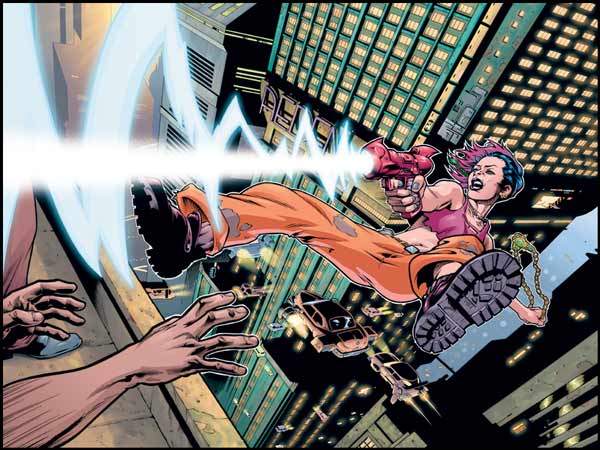
Our protagonist is a thief who doesn't realise that it isn't common for normal people to survive falling from a building while crashing into a bunch of flying cars (they have flying cars!). Anywho, she meets a demon who wants to train her so she can become the Slayer and prevent the lurks (what vampires are now called) from reopening the portal to the demon dimension.

What's most striking reading this again after seeing Whedon's Avengers movies is that this comic is essentially the blueprint for the script of the first Avengers movie, just minus the multiple superheroes in brightly coloured tights and with vampires instead of aliens. All the same narrative beats can be found within the pages of Fray.

The Avengers never had the hero shoot a horned demon with a blaster however.

Like The Avengers, it takes a good chunk of the beginning to just establish the world and characters before the plot even gets going or the characters interact (it took 40 minutes or so before the Avengers are actually assembled). Then the protagonist(s) mistrusts their new comrades and/or Nick Fury-father figure because they're a rebel or don't work with well with others.

They will then get into a fight with the bad guys and kinda get their asses handed to them. However, the death of an endearing secondary character motivates the protagonist(s) to go into serious mode and they approach the climactic battle with more determination and unrivaled badassery ensues.


However, there was something that both The Avengers and Fray had in their climactic battles. Something that proves my point Whedon used Fray as a bluepoint for The Avengers script. Something that is far too amazing not to share.

This something was not simply a narrative beat or similar story arc repeated again (since most stories do tend to follow common narrative beats which form the building blocks of storytelling). No, this was something far more tangible and concrete. A repeated element that suggests that Fray pretty much inspired the climatic battle in The Avengers.

Yes, that's right. There is a giant worm dragon thing that flies over the city in the final battle.

Almost identical to the giant alien dragon things that fly over the city in The Avengers, Fray has to kill the Gateway demon in the climatic battle. True, she gets swallowed by it and kills it by going for its brain opposed to just hulking out and punching it in the face, but you get the idea.

Also, there are twins in Fray and there are twins in Avengers 2: Ages 12 and up, so those movies are practically identical.


References:

Fray Wikipedia page

Buffyverse Wikipedia page

Buffy the Vampire Slayer Wikipedia page

A guide to the growing controversy over Joss Whedon’s Avengers and Marvel’s gender problem

How Avengers: Age of Ultron dropped the ball with Black Widow

Friday, 15 May 2015

The Most Murderous Monster is an Invisible Man

When discussing the greatest movie monsters of all time, Dracula, Frankenstein (and no, I'm not going to call him Frankenstein's monster as some pedantics since in the original novel, he takes on the name Frakenstein), the Wolfman, zombies, and Bella Swan come to mind.

All these monsters have a distinctive visual aesthetic, something about the way they look that is striking and captivating. Dracula's famous pointed cape (and boob hair) or Frankenstein's neck bolts and stiff gait. The Wolfman's wolfiness or the rotting flesh of zombies, not to mention the dead vacant eyes of Bella Swan. Each of these iconic monsters have a striking visual image to stick in the imagination of the viewer.

It's like she's trying to emote to me, I just know it.

Which is probably why the topic of my post this week has probably suffered in terms of popularity or cultural resonance as a horror movie monster. Mostly because you can't see him at all. Being invisible and whatnot.

I'm speaking, of course, of the Invisible Man, created by science fiction icon, H.G. Wells (you know, the guy who basically invented the time travel story and alien invasion narrative), in his novella, The Invisible Man. I've spoken (well referenced) the Invisible Man before in my post about rape in pop culture.

That was because the Invisible Man in Alan Moore's League of Extraordinary Gentlemen uses his invisibility to rape young women/girls in the "Correctional Academy for Wayward Gentlewomen" resulting in 'immaculate conceptions', or rather, children conceive in immoral violation.

Although I left out the part how he is raped in turn by Mr Hyde.

The character of the Invisible Man as a concept basically explores what is now a pretty common assumption, that if someone was invisible they would get up to crazy shit, yo. Therefore, it's no suprise that Alan Moore being Alan Moore would make the character utterly reprehensible and a psychopath.

Essentially the thought process is that the ability to be invisible and get away with things without getting caught will inevitably cause someone to become evil and drunk with power, specifically the power to get away with things. That does kinda ignore that Invisible Woman from the Fantastic Four is a superhero though.

To be fair, even the other members of the Fantastic Four forgot about Invisible Woman before she developed force field powers and become badass.

However, I'm not going to focus on H.G. Wells' novella but rather the 1933 movie adaptation by James Whale, who also directed Frankenstein. Unlike his adaptation of Mary Shelley's Frankenstein, which took a number of liberties with the source material, The Invisible Man is a relatively faithful adaptation with some minor changes.

And by minor changes, I mean changes which if they were made today would probably result in a number or angry tweets and blog posts about how it was so much better in the book. But before I get into that, I'd like to go back to the changes they made for the movie version of Frankenstein I mentioned.

For example, this shot of the monster reciting Shakespeare.

I don't know about back in the day but today we have a lot of book snobs who criticise any and all changes made in the transition from novel to film. This is despite the fact that some of the most iconic and memorable things we associated with a cultural object can come from that film adaptation.

Case in point, everyone knows Igor, right? Victor Frankenstein's hunchback servant with the slight speech impediment. Well, he is wholly a cinematic creation. There is no Victor in the original novel. Nor is there in James Whale's film for that matter. There's a hunchback alright but his name is Fritz, not Igor.

The hunchback Igor would only appear in a much later sequel but somehow the name stuck in the popular consciousness and was retroactively attributed to the first movie by people not paying attention. He's probably the most popular hunchback in pop culture and he wasn't even in the book.

"Hey... I'm the most popular hunchback in pop culture."

Now with The Invisible Man, most of the changes are cosmetic changes, essentially giving the character some back story, a support base (girlfriend and mentor where in the book he was basically on his own), and a first name.

Much of the plot remains the same aside from minor details, like having a colour-removing drug in the invisibility process causes Griffins (the Invisible Man) to go mad where in the novel he's just bad because he's bad.

On a completely different note, what is rather refreshing watching this movie is that in an age where we are quite figuratively drowning in origin stories, the plot just starts with him already invisible and bitchy.

We are giving the details of how he become invisible in the dialogue but it's so nice not have to go through the whole origin narrative because I think we're all getting origin fatigue at this point.

Remember when people were upset that this was an origin story?
Yeeaaah... the new Marvel reboot will be an origin story. The third once within 15 years or so. 

But what is really interesting about the Invisible Man, for me at least, is just how unrelentingly murderous he is. Especially in regards to the other horror movies made by Universal Pictures at the time. In the Frankenstein movie, the monster only kills one little girl (by accident) and while Dracula definitely is menacing and presumably kills a crew of sailors, his murders are off screen.

However, the Invisible Man is utterly ruthless. He strangles a policeman to death just because he can in the first half of the movie. But it is in the second half of the movie, particularly in the final act when he goes on a killing spree that he truly shows what a monster he is.

He calmly declare that he will begin a reign of terror with "a few murders here and there" but when he goes on the lamb, he goes on a murderous rampage that Dracula could only dream of. He causes the derailment of a train killing hundreds and forces volunteers looking for him off a cliff without a care in the world. A true psychopath.

I know it's hard to believe. He looks like such a reasonable fellow.

Frankenstein is mindless aberration whose mere existence is terrifying but his intentions aren't actually evil. And while Dracula's actions are creepily menacing, he lacks the ambition to really use his dark powers to their full potential, mainly terrorising a single family for some reason.

The Invisible Man however fully intends to use his invisibility to gain dominion over others and commit heinous acts of murder. His ambitions probably exceed the opportunities given to him by being invisible but nevertheless makes the most of it to become one of, if not the, most murderous monsters of his time.

Definitely among the most fabulous and well-dressed.

It's the utter glee and exuberance with which he carries out his evil that truly makes him a psychopath. He deals out pithy one liners and makes grand speeches about the world succumbing to his power, every word tinged with mad-eyed gleam.

It's a fantastic performance by Claude Rains, who endues Griffins with real force and malice that makes the Invisible Man even more terrifying since you can tell how unhinged he is due to the power granted to him.

Oh, to sign off, just a thought. Just remember that whenever he's out strangling people to death with his bare hands or causing the death of hundreds due to public transport, he's completely naked.

His balls could be inches from your face and you would never know.

You would never know.


References:

The Invisible Man Wikipedia page

The Invisible Man (film) Wikipedia page

Hawley Griffin League of Extraordinary Gentlemen Wiki page
Frankenstein Wikipedia page

Friday, 8 May 2015

Who Put the Glad in Gladiator?

Hercules is often considered one of the weaker movies Disney put out in the 1990s and came towards the end of the Disney Renaissance started with The Little Mermaid in 1989 that continued with such classics as Beauty & the Beast and The Lion King. While not seen as terrible or boring, it seemed to be missing that extra bit of magic that most Disney movies had in the early to mid-1990s.

The thing with Hercules is that it's kinda hard to know where to start with it since it isn't a bad movie by any stretch of the imagination and is rather enjoyable but something just doesn't seem to work. Like staring a piece of art for a while before you realise you've hung it upside down, there's just something about Hercules that just seems off.

"Wait... do cities normally do that?" Ellen Page's character, probably.

Actually, that's not fair. It's more that the individual elements of the film don't really come together into a cohesive whole. Or that there are meh elements of the film that detract from the great parts so the film seems less than the sum of its parts.

No, that's not it either. There are things that just feel out of place and don't mesh. That's what it is. Things that just stick out as being odd or raising the question "why?" a lot. I'll get to that in a sec but perhaps I should start with those meh elements before I go onto the stuff that works or doesn't (Hey look, I find a place to start. That wasn't so hard after all).

I guess the first thing is Hercules himself. He's okay, I guess. Nothing wrong with him, he isn't annoying or obnoxious, nor is he a jerk. He is perfectly likable and nice. And that's about it. He's not particularly funny or witty, doesn't crack any wise or supply any of the film's more memorable lines.

"But I can go the distance"

He's just a nice guy. Although he is endearingly naive, nothing really sticks out about him or makes him notable as a character. To be fair, just how nice he is is itself rather interesting, or at least somewhat unique. He is so completely nice and agreeable that it's literally the only thing that is notable about him. Which isn't really something I think can be said of most movie protagonists, so he's got that going for him.

That said, this doesn't mean I don't like the character or think he's character arc is lacking. He still has a character and expresses desires and goals, gets excited and disappointed, hits some dramatic moments and conveys realish emotions effectively. And you do want to follow his hero's journey even if the hero on the journey is just the nice guy next door.

Because that's kinda who this version of Hercules is, the nice guy who's slightly sly but has a good heart and is just so nice, you guys. Like the nicest guy.

"I hope you don't mind but I'm going on this hero's journey and would like you to come along.
But, you know, only if you want to. No pressure either way, whatever you want to do is cool with me."

Moving past the character, the story itself isn't particularly unique. It's a pretty straightforward hero's journey without that many thrills. Especially since the more dramatic elements such as the betrayal by a brother with Hades plotting Zesus' downfall and trying to kill his nephew aren't actually portrayed with any melodrama, there isn't much weight to the story.

I mean, there are a couple of little touches here that differentiate it, such as giving the protagonist a literal reason to become a 'hero'. Most hero's journeys give the protagonist a oblique reason to get going and drive the narrative forward, usually dead parental figures. Think Luke's uncle and aunt being killed in A New Hope, Peter Parker's uncle Ben, Batman's parents, Superman's parents, the letter from Hogwarts to Harry (who has dead parents), and so on.

However, Hercules is expressing trying to become a hero in order to be a god again and get back into Olympus with his family. That is his motivation. Become hero to become a god. Not because he is driven by words of responsibility from his dead uncle or holographic father. He needs to prove himself a true hero to become a god, so that's what he sets out to do.


"Eh, it's as good a reason as any."

But let's move to the things that don't work or at least seem to be an odd choice, like the Muses. Now, I like the Muses, I think they serve as good narrators and their songs are great. By why do they sing gospel music? Who made that call?

Who thought, "Hercules, fantastic classic Greek tale, needs more gospel singing though"? This is the first little touch that just seems a bit off. There's nothing wrong with it per se, and the songs themselves are enjoyable, but the question is why?

And this question continues to pop up throughout the film. Why are there so many pop cultural references? Like everywhere in the film. During the training montage, Hercules rides Pegasus through the stars or something and a constellation of a woman holds her dress down in a very familiar way...

Oh, hi there, Marilyn. Didn't know you were a constellation.
Maybe think about pants though, since having something blow up your dress seems to happen a lot to you.

There's also the scene when they arrive in Phebes and Danny DeVito's character Phil yells "I'm walking here" echoing Dustin Hoffman's famous line from Midnight Cowboy (and I think the first time I ever heard the line).

Now, none of these pop cultural references are really obtrusive or ruin the film but when you watch the film as an adult, they do kinda feel out of place. Like they belong more in an episode of The Simpsons or Family Guy than a Disney animated feature.

I think they were trying to go for the feel of Aladdin in that sense but where the pop cultural references in Aladdin seemed to work since they were tied mostly to Genie (who is magic and possibly a time traveler), there's no such reason for the references here.

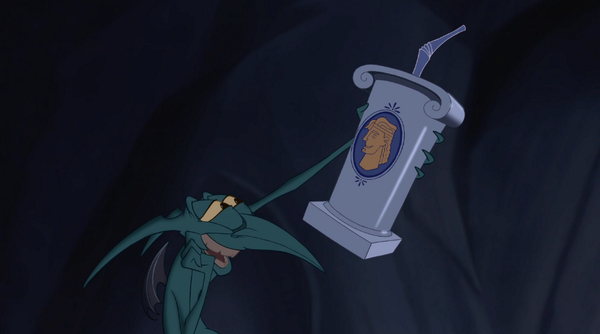
Oh, and I can't forget the merchandise. Oh, holy Zeus, the merchandise. Why does Hercules have his own merchandise in the movie about him? Is that supposed to be a comment on the rampant commercialisation of our heroes? That's a pretty neat idea but why in tale based on ancient Greek mythology?

"Rampant commercialism?"

Also, it makes little to no sense. How can they have shoes and bottles made out of plastic and synthetic materials with Hercules logo slapped on them in Ancient Greece? That might sound like I'm thinking about this too much, but it makes no sense in the world of the film, doesn't it?

If they have plastic, while does anyone bother with pottery? Since there is a lot of pottery in the film. I know that it's supposed to be just for a joke... and you know what, I can actually forgive all that just for this short scene with Hades:


That is a brilliant scene. Which brings me to the things in this movie that really work, namely Hades and Meg. James Wood is so delightfully excellent and entertaining as Hades it's incredible. Again this is another point where the film makes you ask "why?". 

Why does Hades talk like a used car salesman at a hundred words per second? When has Hades ever been portrayed in such a way? What suggests that he ever should have been? Absolutely nothing and yet we have been truly blessed Woods decided to go with used car salesman Hades.

He's just so funny and engaging in the role. The only reason every scene he's in wasn't stolen by him is because it was always his to begin with, you just didn't know it yet. You can just tell he is having so much fun with this character and that excitement is infectious. 

"Hey, what can I say? You remove the traditional approach to a character and bada bing bada boom, you're away."

Hades is great and Meg is perfect. She truly is one of Disney's greatest (and most underrated) female characters. Not a princess or girly girl, Meg is her own person. Her whole presence and character is a big comment on previous Disney female characters. Not that I'm knocking earlier Disney princess since there are a lot of great female characters among them despite their limitations.

However, Meg is such a strong and independent character. I know that's a bit rich saying since she is enslaved to Hades because she gave up her soul for a man. But that already differentiates her. How many previous Disney female characters, princess or otherwise, had an existing romantic relationship before the start of the movie? With someone other than the male lead?

I guess Duchess from the Aristocats since she has kittens if we are gonna split hairs, because of course we are, but they never discuss or mention that reality although it must have happened. With Meg, they actively discuss her past romantic relationship and it helped shaped who she is when we see her in the movie. It is an integral part of her backstory.

"It's been a slice." - Actual dialogue

Beyond that, Meg is a confident and no nonsense type of character. She holds her own with any of the male characters and probably has the best lines aside of Hades, cracking the wise while Hercules can only splutter and stutter in reply.

While she may be bound into servitude to a god because of a man, she doesn't let it define her and often actively resists Hades despite the fact he is a literal god. Also, her song (the best song in the movie by quite a large margin) is all about not falling in love due to how much she's been hurt in the past but that she might be willing to for Hercules since he's so nice, you guys.

And to be honest, the lyrics and tone of her song provide the perfect example of why I really like Meg as a character, she is a woman and has a back-story. She isn't a girl or young adult but a full-grown woman with a past experiences that have shaped her into the person she is now. She's been in love in the past and been hurt before which lead her to become rather skeptical and a bit cynical.

Meg being skeptical and cynical.

However, that also explains why she would be drawn to Hercules since he is so sweet and so nice, it makes a change from the jerks in her life and something that would attract her. He's sensitive and when he says he would never t do anything to hurt her she believes him because he is so sweet and sincere.

Meg furthermore takes an active role in the story with her actions effecting the narractive, not serving as trophy for the protagonist or just have things happen to her. She even saves Hercules by pushing him out of harm's way and sacrifices herself for him since, you know, she dies (it's okay Hercules brings her back from the dead - SPOILERS, I guess).

"You had a movie that came out in 1997 spoiled by a blogger on the internet? How terrible that must be for you."

There are other things in the movie that seem a bit off, like the goofy Looney Tunes sound effects that pop up in a couple of scenes or Phil's oddly sexual jokes and slightly misogynistic attitude but maybe that's a satyr thing. And there are other things that are meh like the young Hercules scenes. There are other things that are great too like the unique character designs (especially for the gods) and the fast pace of the animation.

But mostly I wanted to say that Hercules is an odd movie that's great yet somehow less than the sum its parts but one that I love with some of my favourite characters from any Disney movie. And I guess that's more then enough for it to be a true hero or something.


References:

Hercules (1997 film) Wikipedia page

Hades - Loose Canon


Friday, 1 May 2015

Faster Than a Speeding Bullet, More Heroic in Full Colour

I'm gonna talk about Superman because of course I am. The Batman V Superman: Yawn of Justice teaser trailer landed a week or so ago and the time is ripe for me to talk about Superman once again. It's not like I've talked about Superman that often before on this blog...

Well, aside from my first ever post, that one time I argued Nicolas Cage would have given us the greatest Superman movie of all time, or those other times I discussed how Superman and Captain America are similar icons and why it's okay he killed Zod in the movies. Oh, I also wrote about how Wonder Woman is the perfect balance between Superman's light and Batman's dark.

I think my point is that I've written about Superman quite a bit on this blog and often in regards to the same theme: that Superman is a symbol of hope and inspiration, embodying our most noble ideals. I've repeatedly belaboured this point since I don't think people realise just how important having icons that we can aspire to are in terms of the types of stories we tell ourselves and narratives we weave in our culture.

"I don't know how to put this, but I'm kind of a big deal."

When I was younger, I always seemed to be more geared towards more flawed superheroes like Spider-Man and saw more idealistic superheroes like Superman as boring since they were perfect. However, as I've gotten older I've come to truly appreciate icons like Superman and Captain America who are fearlessly good and true.

Whereas Spider-Man and the majority of Marvel's superheroes are characters we relate to and feel we are like, Superman and the majority of DC's superheroes serve as aspirations to what we could be. This isn't an original observation but I think it's an interesting one and also highlights how Zack Snyder has no idea what to do with DC's iconic characters.

"I just don't know if they're dark and gritty enough." - Zack Snyder, definitely.

As many people before me have pointed out before me, notably Patton Oswalt, you can't have different superheroes bouncing off of each other if each character is brooding because then they aren't bouncing off of each so much as they having an angst party with a colour theme of gray-scale and a platter of self-important cake.

What got me thinking about this yet again is that I saw someone do the impossible, make Man of Steel look like a Superman movie. Now, don't get me wrong, despite the many issues I have with the film, there were brief moments where Man of Steel almost got it right and felt like a Superman movie.

The best example of that sense of hope and awe that Superman is supposed to inspire the movie ever got to was when he learns to fly for the first time. It is one of the few legitimately awe-inspiring moments in a film desperately needing such hopeful moments.


That actually feels like Superman. Going beyond what should be possible and inspiring some sense of wonder. Russell Crowe's overwrought and on-the-nose narration aside, it is a great scene and possibly my favourite in the movie.

Superman flying across the sky. Such a simple image yet one that seems to carry more weight and inspires more awe than should be possible. Just the idea that a man in a cape could soar amongst the clouds overhead seems to stir something in the imagination.

Now, what made Man of Steel look Superman-y was a video by VideoLab which restored the natural colour to a film which had been heavily desaturated to the point it looks as though it was shot in gray. It is, in all honesty, a revelation to see what could have been.


That first flight scene I mentioned above would have been truly awe-inspiring with the contrast of Superman's bright red cape streaking across the blue sky, solidifying that simple but powerful image. But even more so than that scene just seeing the bright primary colours of Superman's costume in all their glory is such a pleasant sight.

Superman is a bright and hopeful character. He isn't Batman. He doesn't live in the shadows nor is he morally ambiguous. He lives in the sun and is wholly good. He isn't self-important or angsty. He is self-effacing and optimistic.

I have nothing against gritty superhero movies as long as the source material is gritty. Batman is a gritty character in the comics and works perfectly for gritty movies. Superman is a light character in the comics and works terribly for gritty movies.

Well... that's not a nice thing to say.

That said, they could still have made a gritty Superman movie and that could have worked... if they had made Superman the one beacon of light in that movie. A symbol of hope in a world shrouded in gray and cynicism. That could work since then the character of Superman remains constant and expresses the ideals he should while people can get their gritty fix or whatever.

However, I'd like to move backwards in time to a more simpler and less desaturated era when Superman fought giant dinosaurs and mad scientists on a regular basis, mainly to save Louis Lane since she routinely and recklessly put herself in danger.

I'm talking, of course, about the 1940s animated Superman serials. Did you know you can see all of these 10 minute clips in one single YouTube video? Because you can and it's wonderful.


Every episode follows the exact same structure:

-A mad scientist or antagonist does something evil which will cause destruction to Metropolis
-Louis investigates the story on her own and gets captured or in danger's way
-Clark Kent says, "This looks like a job for Superman" and changes into his costume, flies over to the scene
-Superman beats the bad guy or monster and saves Louis
-Louis writes an article about the incident
-The episode ends with Clark Kent winking at the camera while someone says it's all thanks to Superman.

Essentially, they found a formula that worked and ran with it, and to be honest, due to the short length of the clips and pace of the story, coupled with the fantastic old-timey animation, this formula works really well.

It might be repetitive but that repetition isn't really annoying and I actually think works somehow. Maybe because with such a simple set up, merely changing the details of the scenario is enough for an episode to work. Also, I think the repetitiveness gets a pass since they nail the character of Superman so perfectly.

I mean, they got the pose down and everything.

But more than that they got the ideal of Superman, that he will never stop trying to save the day, no matter the odds or how hard it may be. That he will suffer or struggle through anything in order to protect everyone and will always come flying across the sky to help anyone he can (mostly Louis).

There was a moment in [SPOILER] The Avengers: Age of Ultron where Captain America is faced with saving a city full of people or the rest of the world. So of course, he resolves to save everyone in the city and the world and won't leave until everyone is saved even if it means he would die trying.

Steve Rogers: Perfect human.

That is exactly the type of ideal character that Superman is. Where characters like Batman would consider the possibility of not being able to save everyone (even if only for a moment), Superman would never even entertain that option.

For example, in an episode of the 1940s cartoon, Superman needs to hold two bunches of broken cables in order to create a current that runs through his body to complete the circuit so a giant magnet can repel a comet hurtling towards the city (it's kind of as silly as it sounds). And he holds onto those cables despite the fact they are causing him serious pain since he won't let nothing stop him from saving everyone.

Nothing.

And that is who Superman is. That is what he stands for. He is a symbol of hope, of inspiration.

That's why I don't want to see Batman make Superman bleed in Batman V Superman. I want to see Superman fly up above while Batman scales rooftops before they hang out later in a cafe.


References:

What if Man of Steel was IN COLOR?

The Biggest Superman Compilation: Clark Kent, Lois Lane and more! [Cartoons for Children - HD]

Patton Oswalt Talks DC, Marvel, Star Wars & More!

Super Cafe: Batman v Superman - It's On!